

S-Reit DPUs weighed down by higher interest rates in H1, but tide to turn in H2
Nevertheless, positive rental reversions have lifted the performance of S-Reits

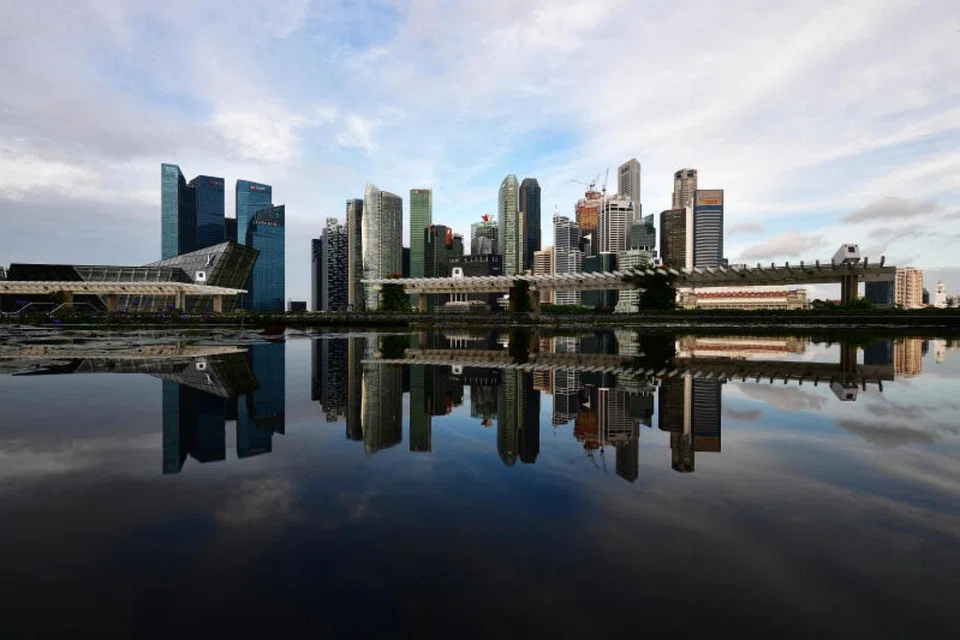
HIGHER interest rates and financing costs remained “the biggest villains” for Singapore-listed real estate investment trusts, or S-Reits, weighing down on their distributions in the first half of 2024. However, interest rate cuts, which appear to be increasingly likely, will “turn the tide” for S-Reits in the second half of this year, said market watchers.
Distributable income and distribution per unit (DPU) continued to fall for the majority of S-Reits in the latest reporting season. Out of the 36 S-Reits and property trusts that disclosed their financial information in the latest earnings season for the period ended June, 26 posted lower distributions, while 29 reported lower DPUs, data compiled by The Business Times showed.
Performance was mixed when it came to revenue growth, with an even split between those who posted higher revenue growth and those that did not.
The “lacklustre” growth in DPU across most S-Reits was mainly due to higher interest costs, said DBS Research Group in a note on Aug 20.
“Interest rates continue to be the biggest villains of the period, impacting counters with higher gearing levels and those who have exited in-place interest cost hedges,” said DBS.
The strong Singapore dollar compared with regional currencies has also resulted in foreign exchange losses and cuts to DPUs for S-Reits, said DBS. This has dragged down overall distributions through 2023 and 2024, and will remain a focus in 2025.
“Looking ahead, we retain a close watch on the impact of foreign exchange on distributions, especially the Japanese yen against the Singapore dollar,” added the bank’s research group.
Positive rental reversions lift performance
Nevertheless, positive rental reversions, particularly for the retail sector, helped to lift the performance of S-Reits in H1, said analysts.
Some downtown malls, such as Paragon Reit ’s Paragon Mall and Suntec Reit ’s Suntec City Mall, saw positive rental reversions of more than 20 per cent, noted Darren Chan, a senior research analyst at Phillip Securities.
Retail properties have also benefited from robust local spending and a resurgence in tourism, added Ritesh Ganeriwal, the managing director of investment and advisory at Syfe, a digital investment platform.
Among those with “exceptional results” were prime retail assets such as Mapletree Pan Asia Commercial Trust ’s VivoCity, which reported a 99.8 per cent occupancy rate and 19.9 per cent rental reversion for its latest Q1 results, as well as OUE Reit ’s Mandarin Gallery which had a 98.3 per cent occupancy rate and 28.4 per cent rental reversion in its latest H1 results.
The logistics sector also saw positive rental reversions. Frasers Logistics & Commercial Trust , which is focused on industrial and logistics properties, reported a 14.8 per cent increase in rental reversions for space leased in the quarter ended June 2024.
Analysts highlighted CapitaLand Integrated Commercial Trust ’s performance as one to watch as well. The trust reported a year-on-year DPU growth of 2.5 per cent in its H1 results. It also had occupancy rates of close to 97 per cent, with positive rental reversions across its retail and office portfolio.
US offices lag
However, the trio of US office S-Reits continued to perform poorly.
Chan of Phillip Securities noted that all three – Manulife US Reit , Prime US Reit and Keppel Pacific Oak US Reit (Kore) – reported a lower net property income across the board.
Manulife US Reit and Kore have suspended dividend payouts, while Prime US Reit’s partially reduced payout of 0.18 Singapore cent for H1 translated to “a mere” 2 per cent of its annualised yield, said Chan.
Tide turning for S-Reits
With the US Federal Reserve expected to cut interest rates in September, Ganeriwal of Syfe says that the tide could turn for S-Reits.
“As the Fed is expected to start rate cuts in September, S-Reits are likely to see lower financing costs moving forward. This could positively impact Reits’ financial performance,” he said.
DBS Research Group said that interest rate cuts will have a more immediate impact on Reits with a lower proportion of loans hedged to fixed rates.
The bank’s analysts added that they expect the growth momentum for S-Reits in the second half of 2024 to “remain robust” for the retail, office and warehouse sectors.
However, they expect softer demand for hotels in H2. Most hoteliers have become more price sensitive given that demand from Chinese tourists has picked up slower than expected.
Chan of Phillip Securities also expects positive rent reversions to continue at mid to high single-digit levels for most S-Reits.
He said that Phillip Securities continues to be overweight on S-Reits due to their attractive valuations. On average, S-Reits are trading at a 12 per cent discount to their net asset value. They also have an average forward dividend yield of 6.1 per cent, which matches the 10-year average of the FTSE S-Reit Index.
Maybank Securities analyst Krishna Guha said that unless there is a strong growth or deep rate cuts, S-Reits’ distributions will continue to trend lower into 2025 as they will be weighed down by refinancing.
“In terms of stock price performance (in H2), we expect volatility to set in as interest rate and growth transition to normalised levels,” he added.
TRENDING NOW

Fed hike throws Singapore banks a margin lifeline; UOB likely to benefit more

He built the Vingroup empire. Now South-east Asia’s richest man is handing some key roles to his sons
Chagee, Mixue and Luckin won the market. Sustaining their edge is the harder part

Canada is upping oil flows to Asia, but South-east Asia’s refineries aren’t ready to handle them yet

