
S-Reits’ Q3 results mixed as higher financing costs, currency headwinds dampen distribution growth

Jude Chan
Published Thu, Nov 17, 2022 · 05:50 AM
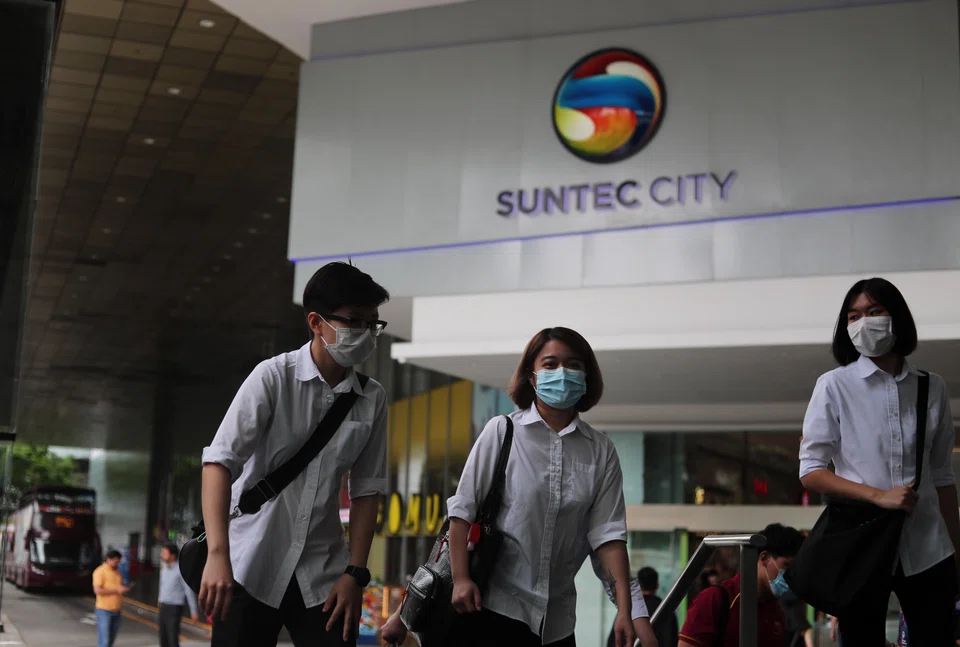
    • The manager of Suntec Reit says its stronger operational performance was weighed down by interest rate and exchange rate pressures.
    • The manager of Suntec Reit says its stronger operational performance was weighed down by interest rate and exchange rate pressures. PHOTO: BT FILE

    SINGAPORE-LISTED real estate investment trusts (S-Reits) have mostly reported topline growth for the third quarter. But higher interest rates and currency headwinds have taken a chunk out of distributable income to unitholders.

    Of the 34 S-Reits that reported gross revenue figures for the quarter, 28 saw an improvement – mostly on the back of a global lifting of pandemic-related curbs. Among the 33 that reported net property income (NPI) data, 26 did better year on year.

    The S-Reits that posted topline declines were those whose assets are mostly overseas.

    For example, China-focused e-commerce logistics player EC World Reit reported a 5.5 per cent decline in gross revenue and 5.4 per cent drop in NPI for Q3.

    S-Reits with malls in China also reported a drop in their topline figures.

    Dasin Retail Trust ’s revenue and NPI fell 7.8 per cent and 8.3 per cent, respectively, for the nine months to September, while Sasseur Reit reported a 2.1 per cent dip in income for the third quarter.

    Both retail Reits pointed the finger at the temporary closure of malls and resultant reduced shopper traffic, due to sporadic Covid-19 outbreaks in parts of China.

    At the other end of the world, the US office Reits also reported drops in NPI.

    Prime US Reit posted a 6.1 per cent decline in NPI in Q3, largely due to occupancy declines, while Keppel Pacific Oak US Reit ’s Q3 NPI was down 1.9 per cent.

    Revenues and NPIs could improve in the coming quarters, as the leasing outlook was stronger across the board. Nearly all the S-Reits reported positive rental reversions for the period.

    Against this seemingly positive backdrop, however, more than a third of the S-Reits saw a decline in distributable income to unitholders. This was largely due to higher financing costs, amid a surge in interest rates, as well as the relative strength of the Singapore dollar (SGD) against a number of foreign currencies.

    For example, Suntec Reit reported a 5.8 per cent decline in distributable income and 6.6 per cent drop in distribution per unit (DPU) for Q3. This was despite a 15.7 per cent and 12.1 per cent increase in gross revenue and NPI, respectively.

    The Reit manager said its stronger operational performance was weighed down by interest rate and exchange rate pressures, as the Australian dollar and British pound weakened against the SGD. About a third of Suntec Reit’s portfolio is located outside Singapore, with 20 per cent in Australia and 13 per cent in the United Kingdom.

    Frasers Logistics & Commercial Trust (FLCT), which has over half of its portfolio based in Australia and another 38.7 per cent in the UK and Europe, is also grappling with currency volatility.

    FLCT’s revenue and adjusted NPI fell 9.7 per cent and 10.6 per cent, respectively, in the H2 ended September, mainly due to the sale of Cross Street Exchange in March and weaker exchange rates over the period. Distributable income was flat for the second half, but DPU fell 2.8 per cent.

    The Reit manager said higher inflation and tightening monetary policies are expected to persist over the near-term and will pose challenges, noting that both the USD and SGD have appreciated against its key operating currencies.

    On the retail front, Frasers Centrepoint Trust (FCT) saw gross revenue and NPI rise 7.9 per cent and 6 per cent, respectively, for the H2 ended September. But distributable income fell 2.8 per cent.

    Both income available for distribution to unitholders and DPU were flattish in H2, helped by the release of distributable income retained in the first half.

    The Reit manager said the muted DPU growth and reduced overall distribution income for H2 were “largely” due to rising interest rates.

    It added that FCT’s average all-in cost of debt, which rose 10 basis points to 2.5 per cent as at end-September, is expected to rise further to “above 3 per cent” in FY2023.



