

S$8m director pay, Iran war risks among issues raised by Sheng Siong investors ahead of AGM
Asked about declaring special dividend, group says maintaining balance sheet strength is ‘prudent’

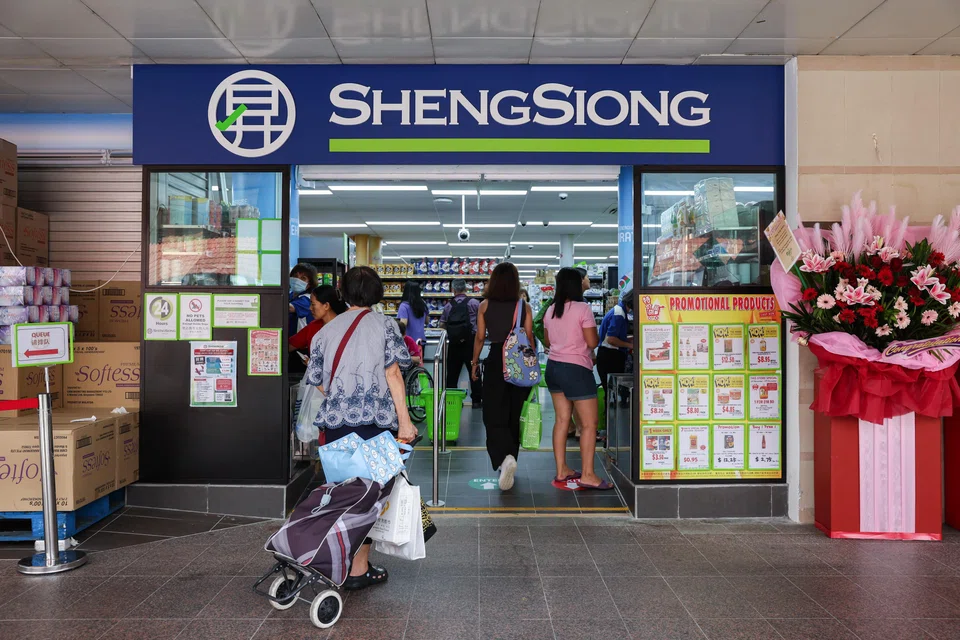
[SINGAPORE] Grocery store operator Sheng Siong said it sees further room for margin improvement, although the Iran conflict could exert “upward pressure on costs and prices”, in response to shareholder queries ahead of its annual general meeting on Apr 29.
“While there may still be room for further improvement over time, the group remains focused on balancing competitiveness and value for customers, rather than maximising margins in the short term,” said Sheng Siong on Thursday (Apr 23).
A shareholder had asked if there remains leeway for growth since Sheng Siong’s gross margin has been on the rise and hit a record high of 31.3 per cent for 2025.
The company said that its gross profit margin improvement was driven by a better sales mix, stronger contributions from fresh produce, direct sourcing, efficient supply chain management and the efforts to manage higher costs.
In response to a query on the Iran war’s impact, Sheng Siong noted that the Middle East conflict has increased costs for energy and freight but said it manages such risks through diversified sourcing and direct procurement.
“At this stage, the group does not foresee any major disruptions that would materially affect the availability of essential products,” it said.
Special dividend and director pay
In response to a shareholder’s query on whether the group plans to declare a special dividend, Sheng Siong said it “believes it is prudent to maintain financial flexibility and a strong balance sheet”.
The shareholder had pointed out that the group’s 70 per cent dividend payout ratio has not changed since 2017, while its balance sheet is flush with cash, comprising 40 per cent of total assets.
Sheng Siong added that it retains a strong cash position not only for working capital needs, but also to respond to growth opportunities.

Another shareholder pointed out that the pay of three executive directors – Lim Hock Eng, Lim Hock Chee and Lim Hock Leng – seemed “excessive”, at around S$8 million per person.
Sheng Siong said that while their annual basic salaries range from S$300,000 to S$375,000, the majority of their pay depends on the group’s financial performance.
“For FY2025, the group delivered a strong set of results, including record revenue, profit and store expansion,” Sheng Siong said. “If the group performs less well, (the directors’) remuneration would also be significantly lower,” it said.
Store network strategy, RTS threat
A shareholder asked if there was a shift in the group’s strategy of opening stores in heartland areas, given its three new stores in suburban and downtown malls.
Sheng Siong said that it takes into account factors such as reasonable rent, suitable space configuration and “a strong or potentially strong catchment population”.
“Historically, such opportunities have been more readily available in heartland locations, although more opportunities in malls have emerged in recent years.”
It added that the mall-based stores “may carry a slightly different product mix depending on the catchment profile and available space”.
Sheng Siong said it is “satisfied” with the performance of the new mall-based stores and will continue exploring “suitable opportunities in malls where the economics are attractive”.
To a question on how the upcoming Johor Bahru-Singapore Rapid Transit System (RTS) Link may affect business at Sheng Siong’s stores in northern Singapore, the group said the potential impact is “uncertain”.
The impact of the link, set to launch in 2027, “will depend on factors such as exchange rates, relative pricing and consumer preferences”, said Sheng Siong.
“For the supermarket sector, management believes that convenience, proximity and the need for frequent purchases will remain key drivers of grocery shopping behaviour,” the group said.
“While some consumers may choose to shop across the border more often after the RTS opens, the higher opportunity cost of time relative to the absolute savings on groceries may limit the overall impact.”
The company also said it is exploring alternative partnerships with delivery platforms to provide delivery services after the termination of its joint venture with Deliveroo.
Decoding Asia newsletter: your guide to navigating Asia in a new global order. Sign up here to get Decoding Asia newsletter. Delivered to your inbox. Free.
Copyright SPH Media. All rights reserved.






