

Sabana internalisation requires trust deed amendment, but court bars ESR from voting
The court ruling will likely provide greater clarity for Sabana Reit’s unitholders

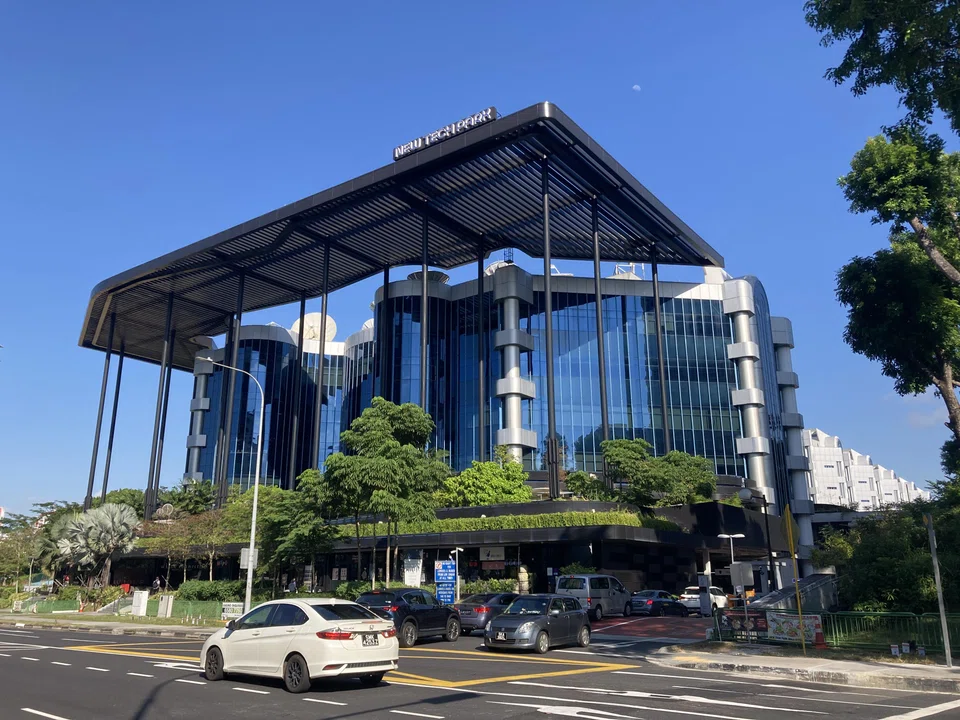
THE Singapore High Court has ruled that trust deed amendments are required to effect the internalisation of the manager function of Sabana Industrial Real Estate Investment Trust (Sabana Reit).
But it also ruled that ESR entities are prohibited from voting on the amendments, said HSBC Institutional Trust Services (Singapore) – the trustee of Sabana Reit – in a bourse filing on Friday (May 24).
The court ruling, which arose from an Order 32 application by the trustee to clarify steps for the internalisation process, would likely provide greater clarity for Sabana Reit’s unitholders, who have been through several extraordinary general meetings (EGMs) and witnessed disagreements between the various parties in the saga that began nearly a year ago.
The trustee filed the application in January, seeking court declarations that proposed amendments to the trust deed are required to implement internalisation. It also sought a declaration on whether ESR entities ought to be permitted to vote on the amendments.
The application was heard in court this week. It has been ruled that certain amendments to the trust deed are necessary to permit the trustee to invest trust funds in the manager. The amendments are in relation to Clause 16.4. Amendments to other clauses, such as those relating to authorised investments or disclosure requirements, are not necessary to effect internalisation.
Meanwhile, the court also ruled that Sabana Reit’s trust deed prohibits ESR entities from voting on the proposed amendments, as ESR has an interest from fee income the external manager earns.
Sabana Reit’s trust deed has a provision that prohibits the manager and any associate from voting on a matter where the relevant controlling shareholders of the manager or any associate has a material interest.
The ruling may come as a surprise to some investors. Singapore Exchange Regulation (SGX RegCo) said last month that ESR Group and its related parties would not need to abstain from voting on any proposed trust deed amendments based on listing rules.
In response to queries from The Business Times, a spokesperson from SGX RegCo said: “We note the court’s decision which provides clarity for the trustee, who can now consider whether an EGM is necessary to effect the changes to the trust deed. We look forward to the expeditious completion of the internalisation process for the benefit of all unitholders.”
The trustee said it is assessing the Order 32 ruling and is working with advisers on the appropriate next steps for internalisation.
“The progress of the internalisation has been delayed and impeded by disagreements over the proper interpretation of the trust deed. With the confirmations and guidance provided by the court, the trustee will now seek to make significant and substantive progress without further disruptions and delay,” it said.
The bid to internalise the manager function of Sabana Reit began nearly a year ago. In June 2023, activist investor Quarz Capital requisitioned an EGM to pass two resolutions relating to the internalisation of Sabana Reit’s manager. It said that the cost savings to be reaped from the removal of the external manager would benefit unitholders.
However, Sabana Reit’s manager, the trustee and sponsor ESR Group, warned that the process was not so straightforward, as there were risks and uncertainty for unitholders. The trustee also noted that the process would take a considerable amount of time – at least 12 months – and that costs would be incurred in the process.
On Aug 7, 2023, unitholders of Sabana Reit voted in favour of internalisation, and both resolutions were carried. But the process has not been straightforward, with the amendment of the trust deed having been a sticking point.
The trustee has held the view that such an amendment is needed for internalisation, requiring an extraordinary resolution, which has a 75 per cent approval threshold. Quarz, however, disagreed. It previously said that this was an “impossibly high threshold”, and requiring a trust-deed amendment has a “serious and negative impact” on unit holders.
Havard Chi, head of research at Quarz Capital, called the court ruling a “landmark victory” for unit holders.
“Sabana unitholders are now even closer to the successful completion of internalisation, where all unitholders will own the manager and benefit from the increase in DPU (distribution per unit) and corporate governance,” he said.
“With the clarity and clear direction from the court, the Sabana Growth Internalisation Committee urges the trustee to work with unitholders and the internalisation committee such that the process can be completed as expeditiously and efficiently as possible for the benefit of all unit holders.”
BT has reached out to ESR Group for comment.
Units of Sabana Reit closed flat at S$0.355 on Thursday.
TRENDING NOW

Things to know about DBS’ incoming chairman Anthony Lim
DBS eyes prime brokerage business as Q3 profit falls 5% on weaker trading income

Royal Group and Sunset Hospitality abandon plans to open Casa Mett hotel off Orchard Road

George Yeo adds 100,000 Wilmar shares at S$2.97 apiece, taking stake to over 1 million shares

