Sabana Reit posts 21.2% fall in H2 DPU to S$0.0115, with 10% kept for capital management
Raphael Lim &
Samuel Oh
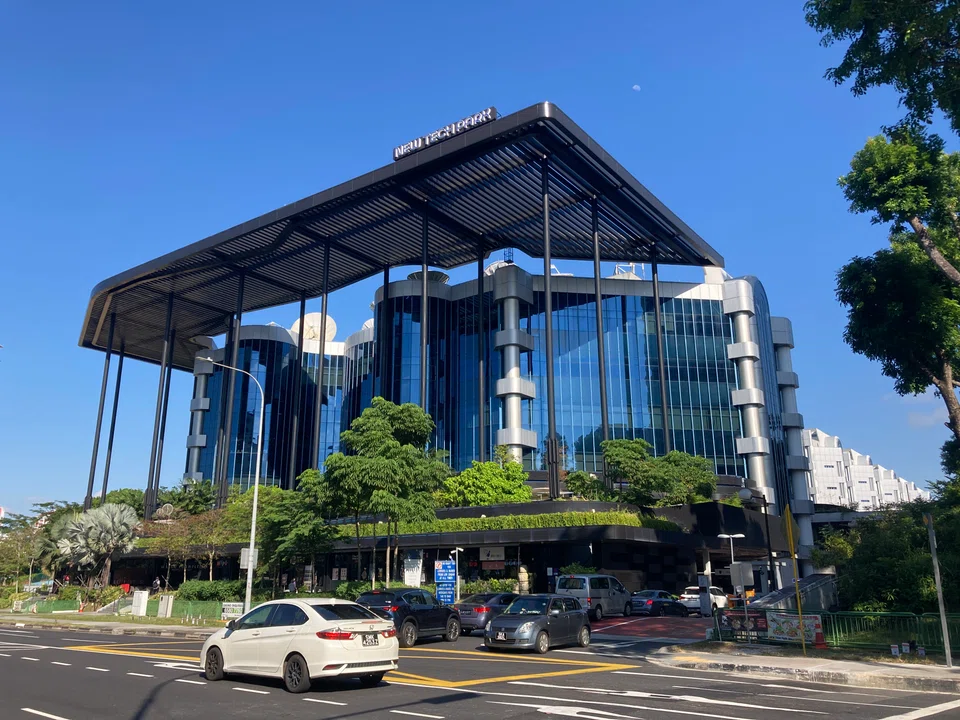
SABANA Industrial Real Estate Investment Trust (Sabana Reit) posted a distribution per unit (DPU) of S$0.0115 for the half-year ended Dec 31, 2023, down 21.2 per cent from the year-ago period.
The sharp decline came as 10 per cent of total income available for distribution in FY2023 was retained for “prudent capital management”, in view of additional costs that would be incurred during the internalisation of the Reit manager, according to a bourse filing on Tuesday (Jan 23).
The manager also warned that further retention of distributable income may be required in FY2024 and FY2025.
Without the retention, total income available for distribution in H2 2023 remained stable on year, at S$15.9 million.
Gross revenue for H2 2023 rose 13.1 per cent on year to S$56.6 million, uplifted by positive rental reversions across the portfolio as overall occupancy rate remained stable.
Net property income (NPI) improved slightly to S$27.8 million in H2 2023 from S$26.3 million in the corresponding period a year ago.
The H2 results bring Sabana Reit’s FY2023 DPU to S$0.0276, down 9.5 per cent from S$0.0305 in FY2022.
In a press briefing, chief financial officer Lim Wei Huang said the reason for retention was due to the uncertainties in the internalisation process, which is being handled by the trustee.
“As the manager, we have no certainty on the timing, as well as the cost to be incurred,” he said. “We believe the retention of the 10 per cent is really necessary for capital management purposes.”
The amount being retained is the maximum allowed under tax transparency rules.
Last June, activist investor Quarz Capital requisitioned an EGM to pass two resolutions: to remove Sabana Reit’s manager, and to direct the trustee to internalise the Reit’s management function.
It said that the cost savings from the removal of the external manager would benefit unitholders. However, Sabana’s manager, the trustee and sponsor ESR Group, had warned that the process was not so straightforward, as there were risks and uncertainty for unitholders.
The unitholders voted in favour of the resolutions last August, so the trustee has been working on steps to implement the resolutions.
The manager said on Tuesday that S$1.37 million of expenses were incurred in connection with and up to the requisition of the EGM, the majority being legal costs. Following the EGM, an additional S$3.27 million of internalisation expenses were incurred and accrued as of Dec 31.
The trustee said in an update on Tuesday that the issues considered for the internalisation were “interconnected and nuanced, and should not be oversimplified”.
It added that costs have been incurred and will continue to be incurred as various tasks are carried out, such as ensuring continued compliance with the relevant laws, securing the necessary regulatory licences, and identifying and appointing qualified employees and directors of the internal manager.
It added that additional costs are expected to be incurred in the coming months.
Amid the uncertainty of internalisation, the Reit manager has also faced high attrition and challenges in retaining and recruiting staff.
Donald Han, chief executive of the manager, noted that the departures of existing staff had been a key concern ahead of the EGM, and that previous estimates had been for an attrition rate of about 30 per cent, but it has crossed that level.
While the manager has found some replacements, not all vacancies have been filled.
“We are working doubly hard to ensure that we keep the manager a tight and steady ship, but at the same time, making sure we continue to make progress in the Reit’s performance,” he said.
For the full year, gross revenue was up 17.9 per cent at S$111.9 million; NPI rose 3.2 per cent to S$55 million on the back of three consecutive years of positive double-digit rental reversions and stable overall occupancy rate, said the manager.
As at end-December 2023, the Reit’s portfolio occupancy rate remained at 91.2 per cent, unchanged from the previous year.
Sabana Reit, which has 18 properties under its management, achieved a higher portfolio valuation of S$903.9 million as at end-2023, up 2.1 per cent on year. This was attributed to ongoing asset enhancement initiatives, asset rejuvenation and higher signing rents for both new and renewed leases across the portfolio.
With an aggregate leverage of 34.3 per cent as at end-2023, the Reit has a debt headroom of S$145.7 million. The manager added that the portfolio’s weighted average lease expiry has remained consistent at three years, underpinned by proactive leasing efforts.
The manager expects interest rates to stay elevated and operating costs to remain high. The manager will continue to aim to convert all financing facilities into sustainability-linked or green loans by 2025.
Units of Sabana Reit ended Tuesday unchanged at S$0.39.
TRENDING NOW
‘My grandfather’s legacy’: Sherman Kwek lays out three-year plan for CDL to drive returns
CDL to hire dedicated CEO for fund management as it steps up push into private funds
Built on trust since 1964: How this award-winning finance company has grown with its SME customers
VSMC opens US$7.8 billion chip fab in Singapore, bets on ‘physical AI’ demand