

Sakae attempts to defend the indefensible after humiliating query from SGX RegCo
Corporate governance survey suggests standards lifted by Singapore regulators even as companies weigh on them; local institutional investors could do more

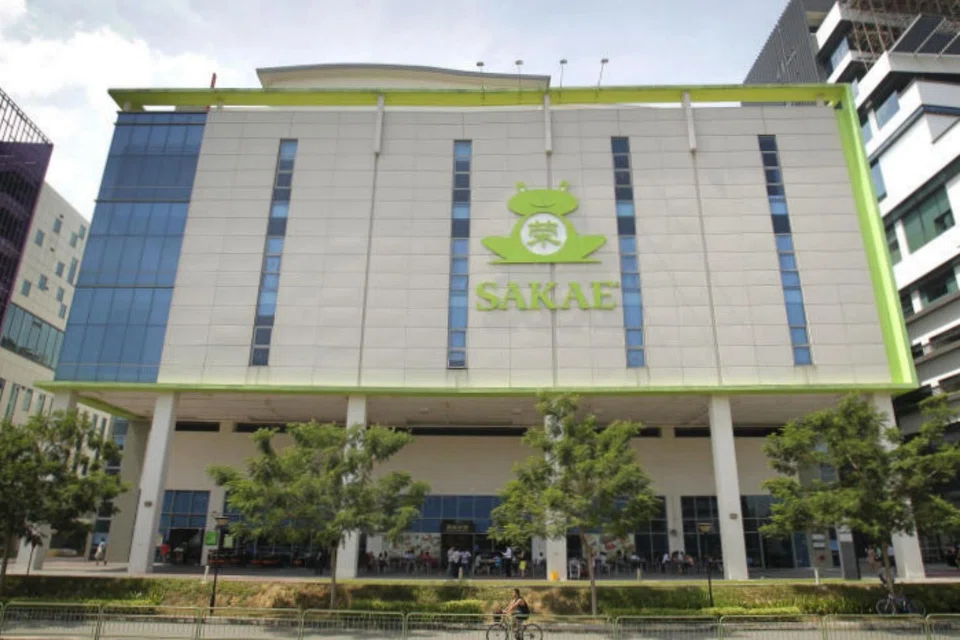
THE tortured justification from Sakae Holdings this past week for using the term "close collaboration" to describe its interactions with Singapore Exchange Regulation (SGX RegCo) was both amusing and troubling.
Sakae used the term in an announcement on May 20 that sought to clarify a report in The Business Times related to concerns raised by the Securities Investors Association (Singapore), or Sias, about accounting errors and internal control weaknesses at the company.
Sakae had engaged KPMG to conduct an independent audit of its soured investment in a Chilean seafood company called Cocosa Export; and Deloitte & Touche to look into the reconciliation of intragroup differences totalling S$1.54 million identified in its auditor's report for the financial year to June 30, 2019.
Both KPMG and Deloitte issued their respective final reports on May 12.
In the May 20 announcement, Sakae responded to the concerns raised by Sias and emphasised the steps taken to sort out its audit issues.
Sakae added that it "also appreciates the close collaboration and working relationship it has with the SGX RegCo".
SGX RegCo subsequently queried Sakae about what it meant by "close collaboration", stating flatly that it had not collaborated with the company on anything.
On May 25, responding to the humiliating query, Sakae said it took the word "collaboration" to mean "to work with another person or group in order to achieve or do something".
Its use of the word "collaboration", Sakae went on to say, should be taken to mean that KPMG and Deloitte have reported to the company's audit committee as well as to SGX RegCo.
Sakae finished off by stating it has "cooperated" with SGX RegCo on regulatory matters and will continue to do so.
Clearly, the dictionary definition of "collaboration" provided by Sakae does not comport with the meaning the company ascribed to it in the same breath. Does receiving the same reports from KPMG and Deloitte mean that Sakae and SGX RegCo are working together?
Besides seemingly defending the indefensible, Sakae's explanation also suggests a disturbing lack of awareness of its current situation, and its obligations as a public-listed company.
Sakae has conducted itself in a manner that has given the market reason to doubt the effectiveness of its internal controls and the veracity of its financial statements.
KPMG and Deloitte were not engaged to collaborate with anyone but to provide an independent assessment of what happened.
The role of SGX RegCo in this matter is to ensure that Sakae takes appropriate remedial action that is in keeping with the standards of the local market.
Sakae is not supposed to collaborate, or even cooperate, with SGX RegCo. If the company wants to remain listed, it should simply comply with the directions of the regulator.
Regulators versus companies
The state of corporate governance in Singapore, for better or worse, is often attributed solely to the effectiveness of regulators and regulations. Yet, a great deal depends on other factors - not least, the attitude of listed companies towards their stakeholders.
The Corporate Governance Watch report for 2020, which was released May 20, noted that listed companies were a particular area of weakness in Singapore's overall performance.
The biennial report produced by the Asian Corporate Governance Association and CLSA ranks corporate governance standards of 12 markets in the region, based on surveys across seven categories, namely: government and public governance, regulators, corporate governance rules, listed companies, investors, auditors and audit regulators, and civil society and the media.
The 2020 survey put Singapore in overall joint second place with Hong Kong. Australia was in first place. In the 2018 survey, Singapore ranked third, behind Hong Kong and Australia. "Singapore's improved score over the 2018 survey result has been driven more by government and regulators than by companies, civil society groups and investors," the report said.
In fact, the "listed companies" category was the only area where Singapore scored less than it did in 2018 - 60 per cent versus 64 per cent. Among the shortcomings cited in the report were that listed companies here do not properly break down their operating expenses, and that disclosure on shareholder engagement is lacking.
In addition, companies surveyed were found to provide little information on the work of board committees. They also made insufficient disclosures on the skills of their directors and how their fees were derived.
On top of that, there were "areas of weakness" in the independence of board chairmen and audit committee chairmen.
By contrast, the "regulators" category was the biggest area of improvement for Singapore - it achieved a score of 63 per cent in 2020, up from 54 per cent in 2018.
The report noted that the Monetary Authority of Singapore and SGX RegCo have introduced several reforms to enhance the regulatory landscape. They have also been "talking and acting tougher" on the enforcement front.
For instance, SGX RegCo proposed in a consultation last year that its powers be widened to allow it to issue public reprimands, deny access to the market, impose conditions on issuers and demand that directors resign or not be appointed.
In addition, SGX RegCo's continuous disclosure queries more than doubled to 771 in 2020 compared to 384 in 2019. While this sharp increase was due to Covid-19, the report noted that some of SGX RegCo's questions have become "refreshingly punchy" and that companies are at times put under detailed and dogged scrutiny.
"The process puts the public spotlight on questionable corporate behaviour, from sketchy disclosure and murky finances to dicey relationships and cryptic payments. Ultimately the interrogations may lead to nowhere, discipline-wise, but have the effect of a public flogging nevertheless," the report said.
Silent institutional investors
There is probably only so much regulators alone can do to change the conduct of public-listed companies though. To effect a wider change in attitudes, the support of investors prepared to hold boards to account will probably be necessary.
Unfortunately, the report said this is another area of weakness for Singapore.
While Singapore's score in the "investor" category improved - to 39 per cent in 2020 from 32 per cent in 2018 - it was no better than the average score across the region. Singapore's scores in the six other categories - including the "listed company" category - were above average.
Worse, this average score was achieved only because Singapore's score in the "retail investor" sub-category was the second highest in the region at 52 per cent - thanks to the high-profile efforts of Sias and outspoken corporate governance advocates such as Professor Mak Yuen Teen.
Its score in the "institutional investor" sub-category was 34 per cent, putting it in 9th place across the 12 markets. This low score was a reflection of very limited disclosure by local institutional investors on matters like their corporate governance policies, their engagement with local companies, and their voting records.
This does not mean the likes of Temasek Holdings, Fullerton Fund Management, UOB Asset Management or Lion Global Investors do not support good corporate governance standards. But it suggests they do not talk loudly enough about what they are doing.
It is time they stepped up. Corporate governance standards in Singapore might improve significantly if it wasn't left to SGX RegCo and Sias alone to call out the antics of companies like Sakae.
TRENDING NOW

Could stablecoins be the future of money?

Vietnam’s northern provinces, not Hanoi or Ho Chi Minh City, are powering near 10% GDP growth

The Assembly Place expands beyond co-living as it targets 10,000 keys by 2030

Once staunchly pro-China, Malaysian Chinese businesses are now distancing themselves from Beijing

