Sanli Environmental - a play on Asia's water story
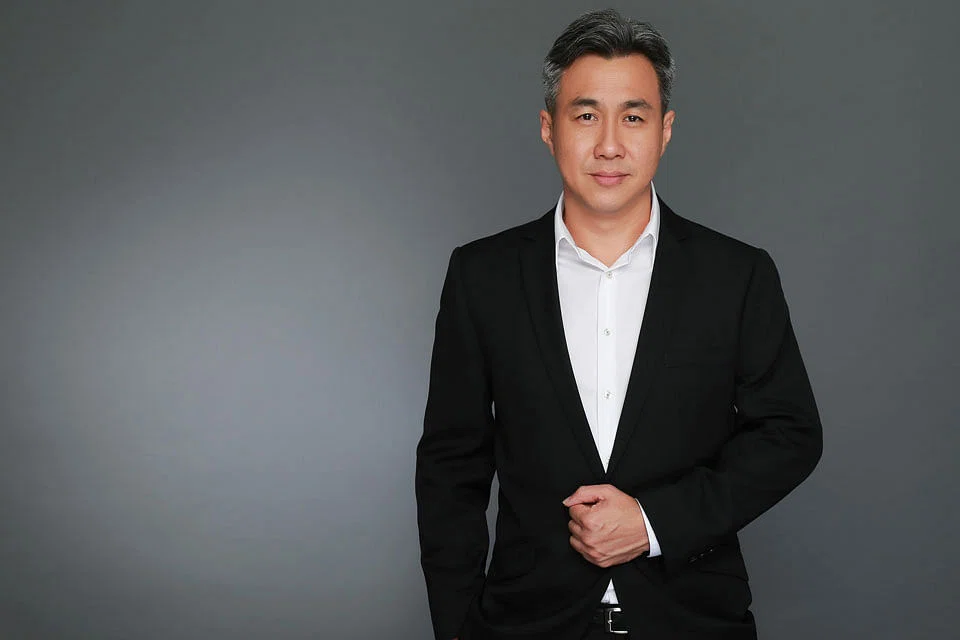
TO Sanli Environmental chief executive officer Sim Hock Heng, a challenge is more of a stepping stone than an obstacle.
Having spent more than two decades of his career in the water treatment industry, Mr Sim is well-versed in the market's opportunities as well as its risks.
"The water industry, like every other industry, has its challenges. Risk is always an issue, but the ability to accurately assess risk is critical in managing the business," Mr Sim noted.
"To me, a challenge is just another step in the journey - once you overcome it, you will be able to move on to the next level. In other words, failure is just a step away from success, because it provides you with valuable experience. And persistence is the key that allows you to reach your goal."
Mr Sim began learning about the water business in 1995 when he joined Dayen Environmental, a water solutions provider that later listed on the Singapore Exchange (SGX) and was renamed Moya Holdings Asia Ltd.
"In the late 90s, a dispute erupted between Malaysia and Singapore over water tariffs, and Malaysia threatened to turn off the taps. From the spat, I saw how critical water is to Singapore's survival," he recalled.
"Following that, it became clear that our government possessed a strong political will to prioritise water and invest in water infrastructure, and that started opening up many opportunities in the sector."
To capitalise on these growing prospects, Mr Sim and two other colleagues - Kew Boon Kee and Pek Kian Boon - founded Sanli in 2006 by pooling their savings of S$30,000, while a third colleague - Lee Tien Chiat - joined them a year later.
"Right from the beginning, we wanted to be very conservative," Mr Sim noted. "There are many players in the water space in Singapore, but there are also many companies that struggle and have to wind up eventually."
WINNING STRATEGY
To build a stable earnings stream, Sanli focused on servicing municipal contracts. Currently, nearly all of Sanli's revenues are derived from the Singapore government.
"We chose to go into the municipal sector, because the government is a good paymaster and a consistent revenue generator," Mr Sim said.
"With industrial clients, the possibility of facing losses and write-offs is much higher, while competition is stiffer and the margins thinner."
That proved to be a winning strategy. "As a result, we've grown in tandem with the Singapore water story," he added.
Sanli Environmental Ltd listed on SGX's Catalist Board in June 2017. The environmental engineering company, which has a market capitalisation of over S$75 million, has seen its shares rise more than 24 per cent from their initial public offer (IPO) price of 22.5 Singapore cents.
In the 2018 year-to-date, the stock has registered a price gain of 3.7 per cent, compared with declines of 2.2 per cent for the FTSE ST All-Share Index and 2.3 per cent for the benchmark Straits Times Index.
The group has expertise in the design, delivery, installation, commissioning, maintenance, repair and overhaul of mechanical and electrical equipment, as well as process, instrumentation and control systems in wastewater treatment plants, water reclamation plants, NEWater plants, waterworks, service reservoirs, pumping stations and incineration plants.
It has two core business segments - engineering, procurement & construction (EPC,) which provides services in water and waste management; as well as operations & maintenance (O&M), which offers repair and maintenance services for equipment used in water and waste management infrastructure.
Heliconia Capital Management, the private equity arm of Singapore government investment firm Temasek Holdings, holds a 7.97 per cent stake in Sanli post-IPO.
For the six months ended Sept 30, 2017, Sanli reported a pretax profit excluding one-off IPO expenses of S$2.3 million, compared to S$2.7 million in the previous period. Gross profit margin rose to 15.8 per cent from 14.4 per cent in the year-ago period, while net assets increased to S$22.3 million as at Sept 30, 2017, from S$8.5 million as at March 31, 2017. It had a net cash position of S$4.8 million as at end-September.
Other water stocks on SGX include SIIC Environment Holdings Ltd, China Everbright Water Ltd, Hyflux Ltd and Moya Holdings Asia Ltd.
Mr Sim's mantra revolves around the principle of simplicity. "If you focus on the basics and build up your fundamentals, everything will fall into place," he said. "When the right opportunities come, you will be able to reap the benefits."
Conservatism is another watchword. "We should start small and go slow. Stability plays a very important part in achieving consistent growth," he added.
With water being such an essential and scarce commodity in the region, Mr Sim is optimistic about the group's outlook. "I'm not worried about prospects. The opportunities are there, the only issue is prudence."
According to market research firm Hexa Research, the global water and wastewater treatment market is forecast to reach US$674.7 billion by 2025, driven by rising demand for freshwater for drinking, industrialisation and agriculture. The Asia-Pacific was the largest market, accounting for about 44 per cent of the revenue share in 2016. This is anticipated to gain momentum over the forecast period, driven by growing demand for filtered water for various applications.
In Singapore, the government has announced various initiatives to boost the city-state's water infrastructure as domestic demand escalates. To develop its reputation as a global hydrohub, the Ministry of Environment & Water Resources set up the Environment & Water Industry Development Council to coordinate efforts of various government agencies. The Council is led by PUB - Singapore's national water agency - and the Economic Development Board.
Between 2000 and 2015, Singapore spent about S$430 million every year in water infrastructure, and this expenditure is expected to rise to S$800 million annually between 2017 and 2021 to fund major investments in water plants, pipes and pumps, Deputy Prime Minister Teo Chee Hean said in March 2017.
This will prepare Singapore for the 2061 expiry of its second water agreement with Malaysia, which now meets about half the island's water needs, Mr Teo added.
By 2060, Singapore's water use is forecast to more than double from about 430 million gallons a day currently, according to PUB data. Reclaimed water - or NEWater - and desalinated water are expected to make up for 85 per cent of supply, up from 65 per cent today.
In 2000, the government also implemented the Deep Tunnel Sewerage System (DTSS) - a super highway for used water management. The DTSS is an overhaul of Singapore's entire sewerage system, where used water from across the island is collected and treated at three centralised water reclamation plants.
The second phase of the DTSS is targeted to be completed by 2025, and is expected to translate into a series of project tenders over the next few years.
"Sanli will get a fair share of these domestic municipal contracts because there are limited bidders in this sector," Mr Sim noted. "We're targeting contract values of S$200-300 million in this segment."
ROBUST MOMENTUM
On the private sector front, the management of industrial water use will increasingly become a priority for many water-intensive businesses operating in Singapore, particularly in the petrochemicals, electronics and pharmaceuticals sectors.
In light of this, Sanli is hoping to bag contracts for larger scale projects. "We want to compete with the big boys, such as Keppel and SembCorp. That was why we took the IPO route - this will give us better credibility and more funding."
Sanli's order book stands at over S$114 million as at Jan 10, 2018. "This will easily give us good momentum over the next two years," he added.
The group is also exploring opportunities to expand into the Asean region, particularly in Malaysia, Myanmar, Vietnam and Indonesia, where there is demand for industry professionals to invest, build and operate privately owned water treatment facilities to mitigate the challenge of limited access to fresh water.
"For overseas projects, it's all about the risk. There are plenty of opportunities, as demand for water is everywhere, but the risks are also very high," Mr Sim said.
Sanli has identified local partners in a number of markets, and is focusing on municipal as well as build-own-operate (BOO) projects.
"We are targeting contract values of US$20-30 million, and participation through partnership ventures or equity sharing. In this way, the risks will be very manageable," he added.
For Mr Sim, every problem that crops up has a solution. "As an engineer, I believe there's nothing that cannot be solved. If you have the right mindset, you will be able to make a decision and move forward," he added.
Outside the office, Mr Sim loves pottering around the kitchen. "I enjoy going to the market, buying ingredients and cooking dishes for my family," he said with a grin. He usually prepares steamed fish for his youngest daughter, 11, and a meat dish - either fried pork or pork ribs soup - for his eldest daughter, 16.
Values that he tries to impart to his children include staying focused and keeping a cool head. "The goal is to keep it simple - pursue happiness and stability in all things. This doesn't mean you won't face problems in life, but it does mean you can be steadfast and unshakeable in the face of difficulty and conflict."
As a result, nothing keeps Mr Sim up at night. "There's no point in worrying, because worry doesn't make you more effective. Instead, meet the challenge head on, and overcome it."