

Sapphire's rail acquisition puts turnaround on track
FY2015 profit jumps to S$6.5m from S$138,000 the year before

Anita Gabriel
Singapore
A BOUT of losses and a "drastic" sale of its sagging core steel business later, Sapphire Corp is starting to show some pizzazz as it rides on China's urban rail boom following a glint-inducing 360 million yuan (S$77 million) acquisition of Ranken Infrastructure five months ago.
The buyout has raised fresh hope for Sapphire with Ranken having snagged jobs over the past couple of months worth 1.3 billion yuan to build rail lines in three cities and tunnel work in China.
On Friday, Sapphire announced a stark improvement in its financial showing for the year ended December 2015 with net profit coming in at S$6.5 million versus S$138,000 the year before.
Maiden contribution from Ranken, a rail engineering specialist, also helped lift revenue two-fold to S$116.4 million in 2015 - the rail firm lopped some S$62 million in the group's fourth-quarter topline, making it the group's biggest revenue contributor - from S$58.5 million in 2014.
Earnings per share climbed to 0.76 Singapore cent from 0.01 Singapore cent; no dividend was recommended for the period, the same as the previous year.
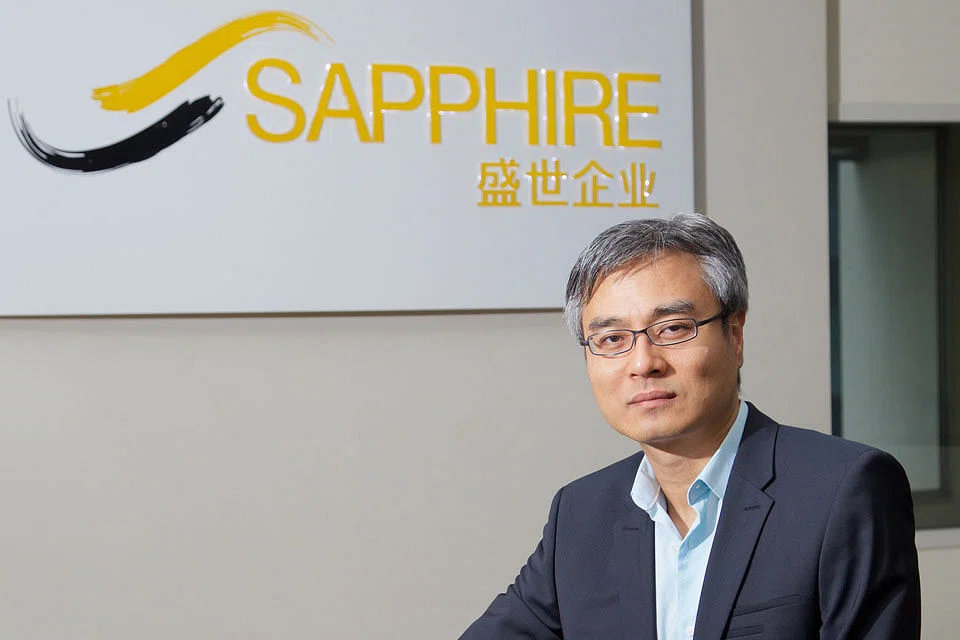
It took a lot of steely resolve to get here as Sapphire's chief executive Teh Wing Kwan - who took over the reins in October 2013 when the firm was en route to its third straight year of losses and on the brink of joining Singapore Exchange's dire "watch list" - admitted.
"We streamlined the businesses, cut production, closed down businesses to cap losses but overall, we were still bleeding. So we took the drastic decision to sell the steel business," Mr Teh told The Business Times in an interview.
Thinning margins due to the potent combination of overcapacity-led low steel prices and rising cost on the back of higher prices of imported materials, thanks to weak conditions in China, had hit the firm whose core business was producing steel and vanadium products.
But Sapphire has put that all behind since it unloaded its steel business just after Christmas 2014 with only an Australian mining business under its belt and swung to a small profit position in 2014 from a loss of S$157 million in 2013.
The Ranken acquisition had fallen neatly on the tracks of Sapphire, which was on the prowl for new businesses to reinvigorate its derailed fortunes.
What started out as a "friendly chat" for a joint venture to help Ranken embark on a project in South-east Asia very quickly led to an outright opportunistic acquisition of China's second largest privately owned integrated rail construction group by Sapphire.
"Sapphire didn't have a track record in the business and we thought the acquisition would be a strong case for an operational turnaround. For Ranken, Sapphire offers a platform to diversify and expand outside China," Mr Teh explained.
The acquisition of the Chinese railway firm has clearly overshadowed the 2013 buyout of Mancala, the Australian mining services firm which although profitable has dim prospects on the back of falling commodity prices and weakening of the Australian dollar against the reporting currency (Singapore dollars) as evinced in the latest 2015 results where mining revenue dipped S$3.9 million to S$54.6 million.
"I wouldn't call that business (Mancala) a stop gap but we need to cautiously manage it," said Mr Teh. By that, he means potentially bringing in a strategic equity investor into Mancala, which Sapphire wholly owns now, to expand the mining business, chiefly in China which is yearning to modernise mining technology and control pollution. "We are quite positive as we have already identified the party which has major concessions in China," said Mr Teh, adding that he hoped the tie-up would be sealed within two months.
There are risks. Much of Sapphire's great big hope hinges on China, whose reputation as the world's voracious consumer may be waning as its economy slows.
That may be true for mining but not quite for rail as Beijing appears intent on lifting its sagging economy with mega infrastructure projects, a substantial portion of which includes railway.
This could provide Sapphire sufficient ground to ride on Ranken and speed ahead with its turnaround.
Sapphire's stock is currently trading at 9.9 Singapore cents, having fallen off its 52-week high of 12 Singapore cents in early November, not too long after it was announced that the rail acquisition was a done deal.






