

Satellite R&D facilities could be the future of specialised car development

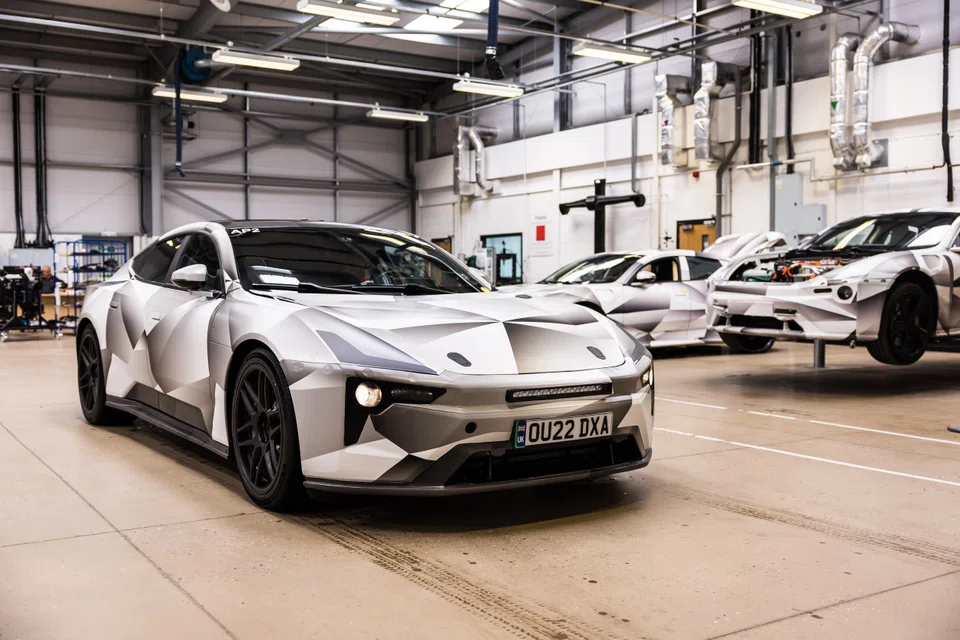
[WARWICKSHIRE, UK] Making a car is typically expensive, slow and a massive undertaking, spread across multiple sites near the company’s headquarters or regional office. One Swedish automaker, however, has an unusual new approach. Electric vehicle (EV) brand Polestar is developing two of its newest cars in a satellite research and development (R&D) facility in the United Kingdom, far from its headquarters in Gothenburg, Sweden.
Owned by Chinese auto giant Geely through Volvo, Polestar is still a minnow in the EV space. In the first half of 2023, it delivered a record 27,900 cars; EV giant Tesla delivered “over 466,000” cars in Q2 alone.
From just one mass-production model – the 2020 Polestar 2 sedan – Polestar plans to roll out four more by 2025, including the two luxury models developed in its UK facility. (* see amendment note below)
These will be its most expensive and sportiest cars to date. The Polestar 5 four-door grand tourer debuts in 2024 and aims to compete against the Porsche Taycan, which costs around S$400,000 without a Certificate of Entitlement (COE). The Polestar 6 two-door convertible debuts in 2025, with its closest rival being the Porsche 911 Turbo Cabriolet that costs around S$1.1 million without COE.
These two models represent a crucial – and risky – step up into the sports and luxury segment for Polestar, which positions itself as a startup that can respond to market changes quicker than established brands.
Proving new ground
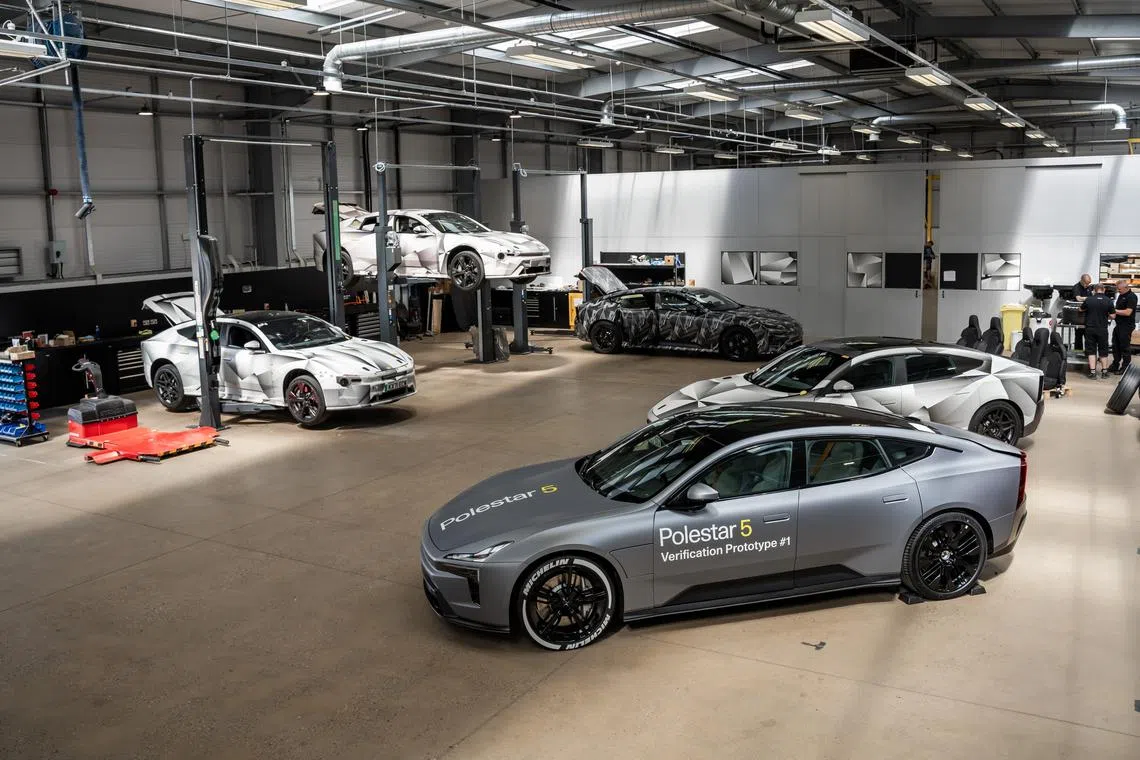
Developing a new car is an expensive business, with cost estimates ranging from US$1 billion to US$6 billion. With design, engineering, and production stages, it typically takes about six years, involving hundreds to thousands of people.
Final production or assembly aside, development happens mostly in one country or region – usually the automaker’s home. Operations elsewhere tend to be for models specific to that region; Asian carmakers Nissan and Toyota have major operations in Europe for sales, development, and production of their continental models.
But Polestar says its satellite approach is faster, cheaper, and will result in a better product.
Its 500-person outfit in the MIRA Technology Park in Warwickshire, UK has high-level development facilities such as a test track, wind tunnel, and crash laboratory. Most major automakers have these, but rarely all in one place.
Fast and curious
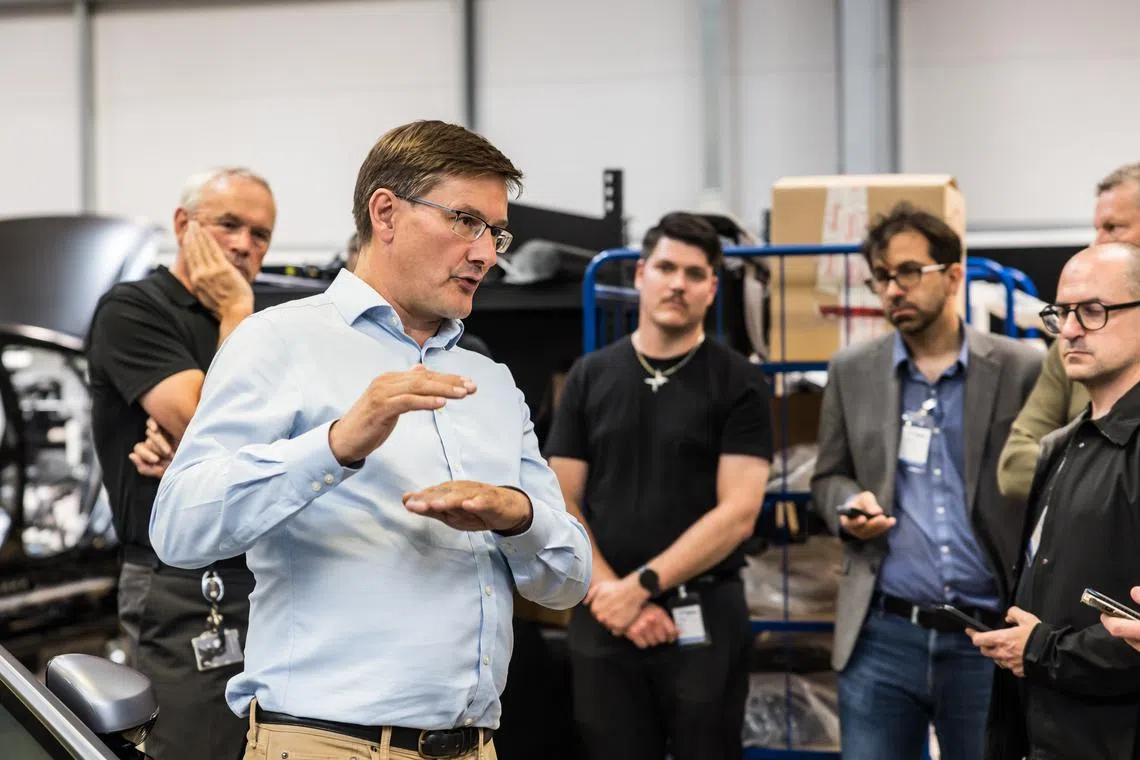
The UK offshoot is “deliberately located” in the British Midlands region, where established carmakers – including Bentley and Jaguar Land Rover – mean an existing talent pool and supply chains, says Pete Allen, the head of research and development at Polestar UK.
The Midlands is also home to many motorsport manufacturers and Formula One teams. Bringing in former motorsport talent was key for Polestar to develop the hot-bonded aluminium chassis technology for its luxury models. The team also used motorsport-derived techniques, such as rapid prototyping, to speed up development.
“We’re making an entirely new vehicle in the same time as it would traditionally take to adapt an existing platform,” says Allen, referring to how a single platform, or modular chassis, is usually adapted for several car models.
Polestar’s approach is based on a “motorsport culture of moving fairly fast”, in contrast to established manufacturers with massive resources but a “slow pace of change”, he adds.
Platform engineering is one of the costliest and most time-consuming aspects of development. Volkswagen, for instance, is spending S$117 billion and five years on its next EV platform, due in 2026.
Polestar declined to comment on cost, but it is confident in its speed – the Polestar 6 has a faster-than-average four-year gestation period.
The company has an advantage as a relatively young and lean operation, with 2,377 employees as at December. The question is whether it will maintain its agility as it grows, with the aim of selling 230,000 cars a year by 2025.
Opening up
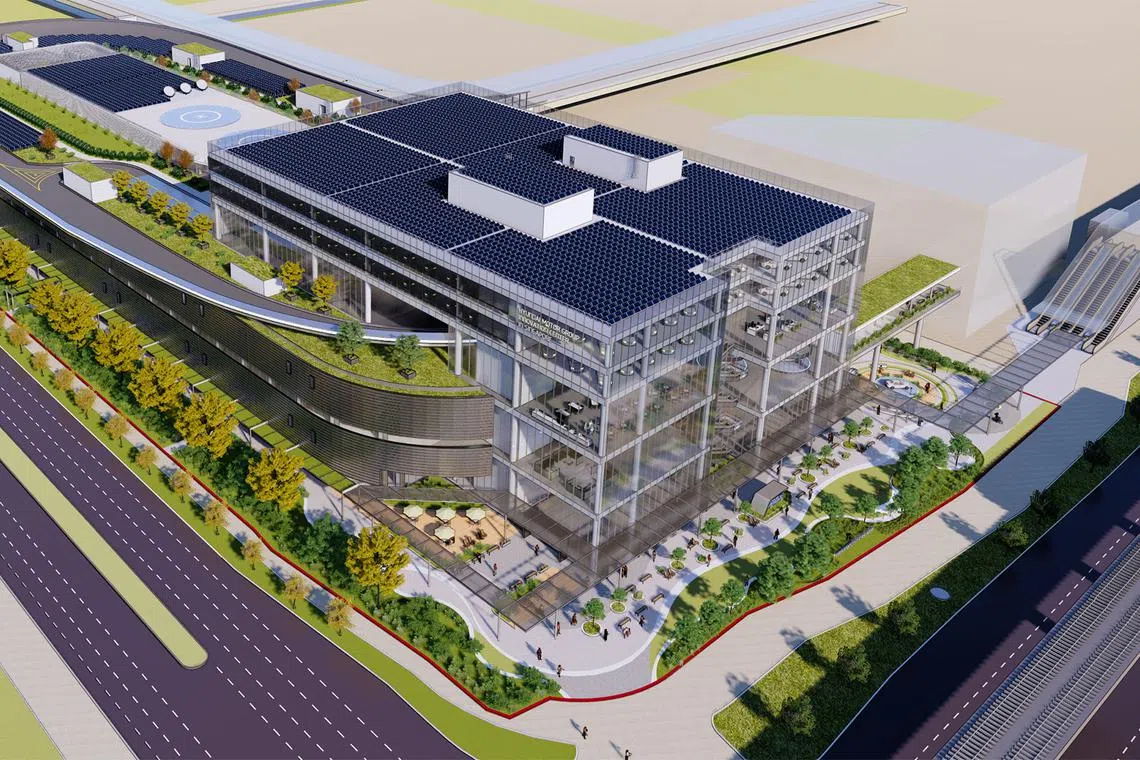
South Korean carmaker Hyundai is also going abroad to tap local talent, with the S$400 million Hyundai Motor Group Innovation Center Singapore opening in Q4 this year.
Hyundai chose Singapore because of its “strategic location, competitive workforce with superb talent pools, pro-business environment, and forward-looking economic policies”, says a spokesperson. The centre will serve as a test-bed or laboratory for developing “new EV business models, new mobility products” and an “advanced manufacturing platform”.
Jung Hong Bum, senior vice-president for the Hyundai Motor Company, says the centre aims to “encourage more collaborations with industry partners” and that successful ideas could be “scaled globally”.
Ten or even five years ago, having a small spinoff that provides outsized contributions would have been an alien concept for a major carmaker; even now, it might be hard for some.
With few technical obstacles to setting up a small research and development outfit elsewhere, the barrier is more of a cultural one – established carmakers with a firm belief in their own capabilities may be loath to let a small “external” group take the lead on a high-profile product.
Still, there are reasons to think that the satellite approach could spread. The fresh start represented by electrification might be the ideal chance to “start small” again – with Polestar’s own “small company” ethos being designed for this.
Nor is the agile approach entirely unfamiliar to the big boys. Both BMW and Mercedes-Benz had small outfits making products of outsized stature – BMW M and Mercedes-AMG. It is just that both have morphed into brands of their own, selling hundreds of thousands of cars a year and leaving small-unit thinking behind.
Polestar and Hyundai have realised that the EV age requires new ways of thinking, and that ideas will increasingly have to come from outside the box. Their new methods have yet to bear significant fruit – but if they do, other automakers are likely to jump on the bandwagon.
*Amendment note: An earlier version of this article incorrectly stated that the Polestar 2 sedan began production in 2017. It is in fact 2020. The article above has been revised to reflect this.
TRENDING NOW

Good Class Bungalow market activity picks up pace on ‘realistic’ pricing

Indonesia imposes US$116 million in fines over manipulation of Sinar Mas, Prajogo-linked stocks

Singapore identifies 7 firms responsible for haze fires, notices issued urging action: Grace Fu

Once staunchly pro-China, Malaysian Chinese businesses are now distancing themselves from Beijing

