

Saudi Aramco profit jumps 33% as US-Iran war boosts oil prices
Firm now faces more risks as Yemen’s Houthi group threatens to attack tankers using Red Sea route
SAUDI Aramco reported a 33 per cent increase in second-quarter profit as it benefited from a war-driven surge in oil prices, while keeping exports flowing through a pipeline that bypasses the Strait of Hormuz.
Adjusted net income rose to US$33.4 billion, from US$25.2 billion a year earlier, according to a statement on Tuesday (Aug 4). That beat analysts’ profit estimates of US$31.1 billion compiled by Bloomberg.
Benchmark Brent crude averaged almost US$97 a barrel during the quarter, as the closure of Hormuz caused the biggest oil supply disruption in history. That generated windfall profits for Aramco as it redirected most exports to the Red Sea, but now it faces further risks as Yemen’s Houthi group threatens to attack tankers using that route.
Aramco relied on “strategic infrastructure such as the East-West Pipeline, storage capacity, and export terminals” to keep operations running during the war, Aramco chief executive officer Amin Nasser said in the statement. That helped the company to “sustain production and exports while advancing key projects,” he added.
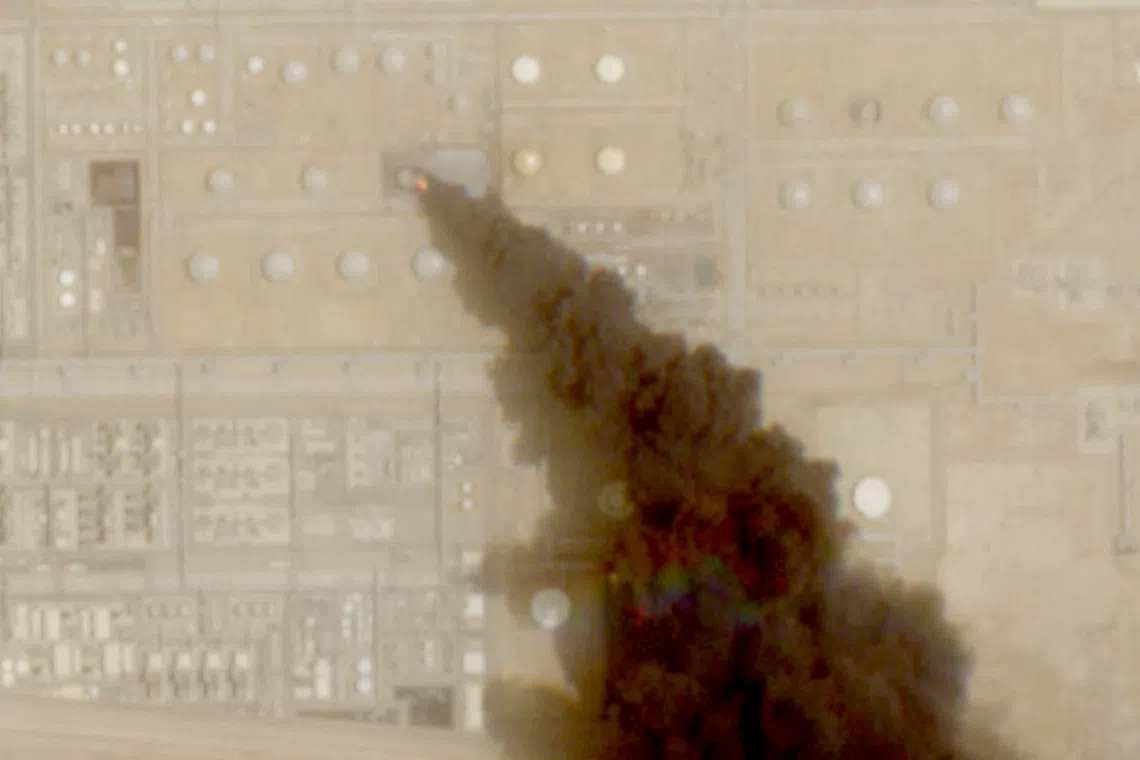
Key Aramco infrastructure was targeted in attacks in July and the company is continuing to assess impact on operations and financial performance, the company said. As of the end of the quarter, there was no material impact from attacks on its results or operations, according to Aramco.
State-controlled Aramco has also been benefiting from surging prices of oil products such as diesel and jet fuel, which have frequently outstripped gains in crude. Even when Brent fell back below US$75 a barrel following an interim US-Iran peace deal, product prices stayed elevated.
Aramco, which operates refineries along Saudi Arabia’s Red Sea coast, has previously said it was maximising such fuel exports to take advantage of higher prices and margins.
Those shipments are increasingly at risk as the Houthi militants attack vessels, opening up a new front in the war and threatening millions of barrels of Saudi crude and products.
Severe and prolonged disruptions to Red Sea supplies would rock the market further, pushing prices higher as maritime traffic via Hormuz remains severely constrained.
SEE ALSO




The company expects the refilling of global oil inventories to support demand.
Aramco sold its oil at about US$108.10 a barrel in the second quarter, compared with US$66.70 a year earlier. Liquids production fell 28 per cent to 7.57 million barrels a day, while natural gas output slumped 16 per cent.
The company maintained its base dividend at about US$21.9 billion, a payout that is key for Saudi Arabia’s public finances.
Aramco’s gearing, a measure of the company’s indebtedness, increased to 6.2 per cent at the end of June, from 4.8 per cent at the end of March.
Free cash flow – funds left over from operations after accounting for investments and expenses – of US$12.3 billion fell short of covering the dividend.
A short-lived peace deal from mid-June allowed Gulf countries to ramp up exports via Hormuz.
Even as the latest round of fighting again curtailed that route, the Saudi-led Opec+ group agreed to another production increase, unwinding previous output limits. While the move is symbolic for now, given restraints on Gulf production and exports, it will eventually allow Saudi Arabia to ramp up output close to 10.5 million barrels daily. BLOOMBERG
Decoding Asia newsletter: your guide to navigating Asia in a new global order. Sign up here to get Decoding Asia newsletter. Delivered to your inbox. Free.
Share with us your feedback on BT's products and services
TRENDING NOW

Grab CEO’s wife Chloe Tong on life with Anthony Tan and finding her purpose

US trade chief to consider trade deal tariff caps in excess capacity probe

Bee Cheng Hiang customers’ e-mail addresses exposed in Singapore’s first case of AI-related data breach

DFI Retail to take over Starbucks business in Asia from Maxim’s Caterers

