

Scarred by 2017, Singapore banks to face test on O&G exposure again
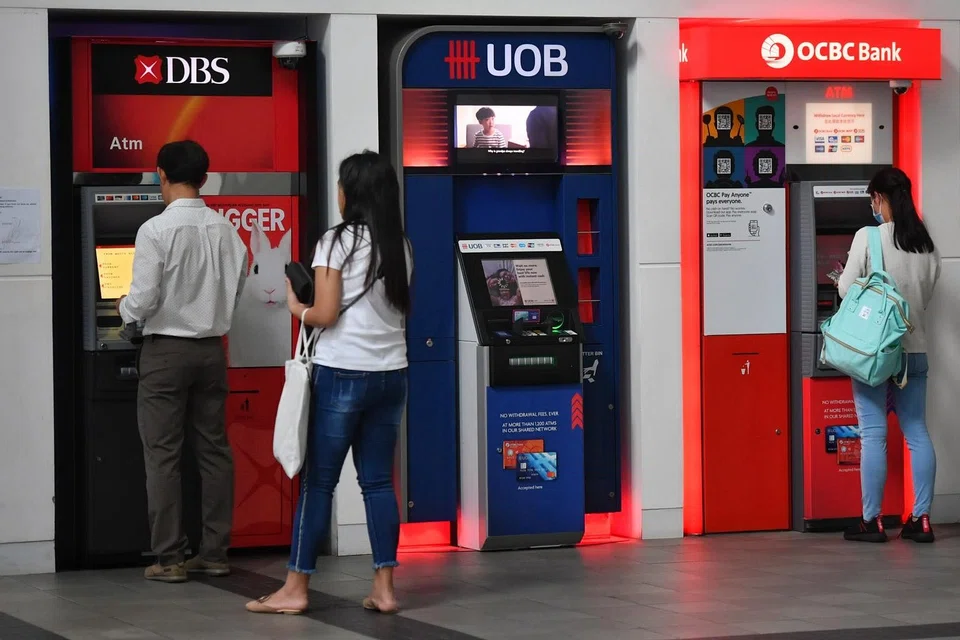
WITH oil trading giant Hin Leong making headlines amid the current collapse of oil prices, the Singapore banks are set to take charges against their broader exposure to the oil-linked sectors but in a more measured way given more prudence today, analysts said.
The Business Times reported that the Singapore banks have a total exposure to Hin Leong at about US$600 million. In 2017, the local banking trio was also hit by their exposure to the oil-and-gas (O&G) sector with the protracted slump in oil prices.
Analysts said that Singapore banks are likely to see an increase in non-performing loans (NPL) and credit charges given the volatility in the oil-and-gas (O&G) sector, with oil trading giant Hin Leong the most high-profile casualty.
But Singapore banks are now better positioned to weather the storm as they have been cleaning up their O&G loan books with significant provisions made since the 2017 shock, they added.
Darren Tan, chief financial officer of OCBC, told BT that the bank's O&G exposure makes up about 5 per cent of customer loans, with this figure encompassing lending across the industry that includes the oil majors, trading companies and the offshore support vessel sector. The exposure has been "relatively stable" over the past few quarters.
He disclosed that the bank's NPL ratio for O&G loans is about 0.8 per cent against total customer loans, down from 0.9 per cent a year ago. The bank has also "prudently set aside allowances for this sector", he said
"We continue to exercise vigilance over our credit portfolio and proactively monitor these for early signs of weaknesses," he added.
"We have always managed our business with a healthy respect for the 'unknown unknowns'. This philosophy translates to us having a diversified portfolio of businesses in banking, wealth management and insurance, and having strong levels of capital, funding and liquidity. In turn, we believe we would be able to ride this period of turbulence well, and remain well-positioned to support our customers and grow our franchise."
UOB told BT that the bank has been paring down its O&G exposure since 2016, and it now forms below 4 per cent of total loans.
DBS would only say that it "continues to support our long-term clients".
The Monetary Authority of Singapore (MAS) said in a statement late on Tuesday that it is in close contact with the banks on developments related to Hin Leong, "and has reminded the banks not to de-risk indiscriminately from the bunkering and oil trading sectors".
"The banks are well capitalised and diversified in their exposures to these sectors," said the statement. "MAS is also closely monitoring liquidity and credit conditions in the market which, on the whole, continue to be supportive of households and businesses."
That being said, Tay Wee Kuang, research analyst at Phillip Securities Research, said that the local banks started adopting "a more prudent approach" after 2017. "Apart from limiting exposure to the industry, the credit quality of borrowers has also been placed under scrutiny," he said.
"As such, while the scale of the current O&M (offshore and marine) price crash might be larger than the 2017 O&M crisis, I believe the banks are better poised to weather the shocks today."
Maybank Kim Eng analyst Thilan Wickramasinghe concurred that the banks have been "actively lowering their exposure to the sector since 2017 and also still carry significant levels of provisioning from that time".
While it is unlikely they will be fully immune from the current volatility, they should be in a better position to respond compared to 2017, he pointed out.
BT reported that among the three banks, DBS is understood to have the highest exposure to Hin Leong at around US$290 million; OCBC Bank is owed about US$220 million, and UOB had let Hin Leong draw down more than US$100 million as at early April. The three banks have declined to comment on the figures. More than 20 banks have a combined exposure of at least US$3 billion to Hin Leong, which reportedly suffered some US$800 million in losses from futures trading over the years that were not reflected in its financial statements.
In the case of Hin Leong, Citi analyst Robert Kong pointed out that the recoverable collateral "may not amount to much". While it is also not clear whether provisions will be taken in the Q1 results, banks "would be prudent to do so", he said.
By Citi's figures, DBS's reported exposure to Hin Leong represents about 11 basis points (bps) of 2019 gross loans. That of OCBC's reported exposure translates to about 12 bps of 2019 gross loans, while UOB's reported exposure amounts to about 5 bps of 2019 gross loans.
Figures from Jefferies equity analyst Krishna Guha show that as at 2017, O&G exposure by the banks stood at about 4 per cent.
In the Jefferies report, on the assumption that the banks' relative exposure to O&G traders is at the same level as in 2017, Mr Guha estimated that the provisions would be S$1.6 billion, S$1.1 billion and S$1.2 billion for DBS, OCBC and UOB respectively.
While the figures may be "large and concerning", these are still within his projections of an aggressive 60-100 bps credit cost.
"Anecdotally, lending spread has increased for smaller traders and if oil prices stay low, there may be consolidation," he added.
US oil prices saw a turbulent start to the week that saw US crude oil futures fall below zero on Monday for the first time in history, as a coronavirus-triggered demand shock led to traders paying to get rid of oil as storage space runs out. US oil prices have gone back to positive territory, with the US benchmark West Texas Intermediate for June delivery at US$13.76 a barrel, after steep declines in New York overnight.
To be clear, the oil price dive is not the only hurdle for the banks.
"The slowing economic activity as a result of the coronavirus pandemic also exacerbated the impact of the supply glut," noted Phillip Securities' Mr Tay.
DBS is due to report its Q1 results on April 30, UOB will report its set of numbers on May 6, and OCBC close off the Q1 reporting season for the banks on May 8.
At the end of trading on Wednesday, shares of DBS fell 10 Singapore cents to end at S$18.74. OCBC was down 8 cents to S$8.62, while UOB was flat at S$19.60.
TRENDING NOW

He built the Vingroup empire. Now South-east Asia’s richest man is handing some key roles to his sons
Despite the de-dollarisation debate, demand for dollar liquidity in Asia is growing
Can a first-time homebuyer couple earning S$18,000 a month afford a new EC unit?
Asia needs new energy security architecture

