Schneider Electric gears up for tsunami of power demand from AI, EVs, global warming fallout
Partnerships are a priority for innovations on the energy front

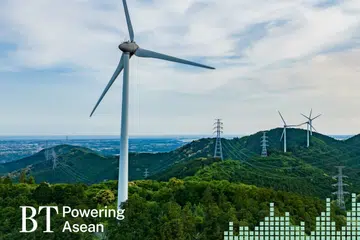
[SINGAPORE] Electricity demand’s unprecedented growth is coming from both technology and sectors undergoing electrification through digitalisation.
From buildings requiring more air-conditioning amid global warming to technology such as electric vehicles and artificial intelligence (AI), today’s demand is a big jump for a world which, for many years, needed electricity only for about 20 per cent of its functions.
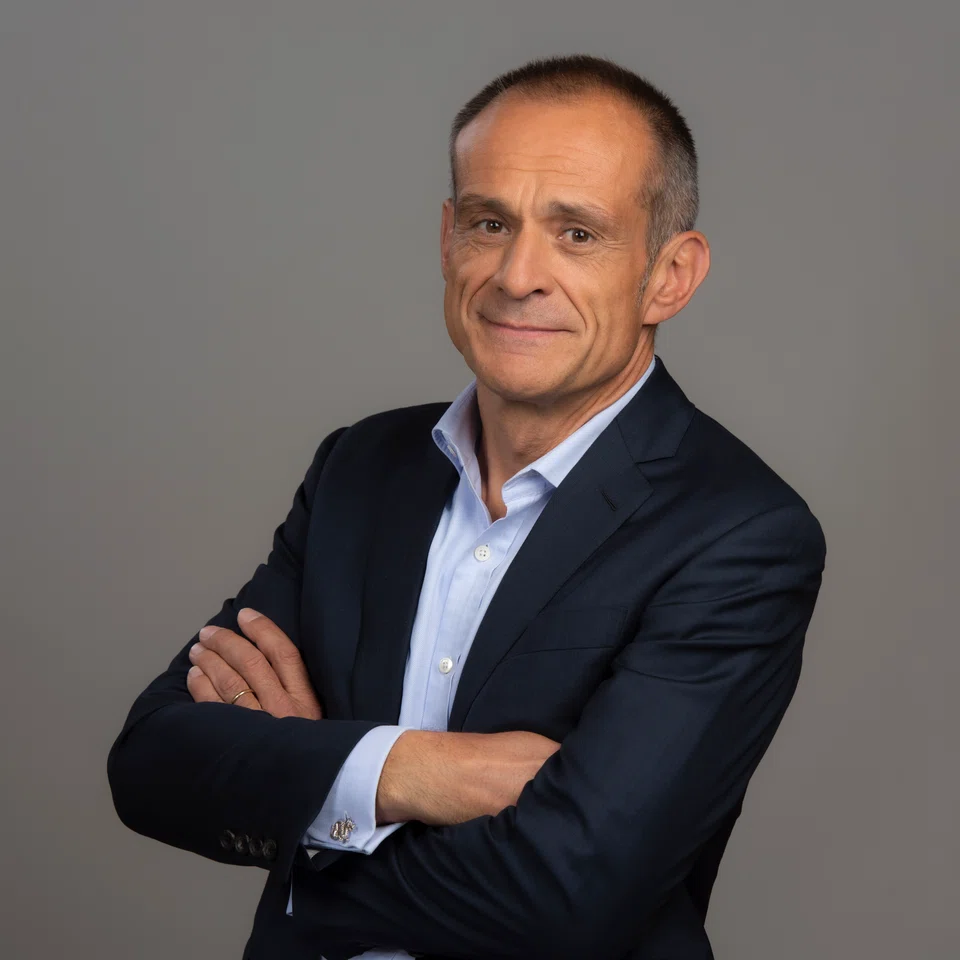
Jean-Pascal Tricoire, chairman of energy solutions giant Schneider Electric, believes that in 25 years’ time, the world will be “about 40 to 60 per cent” electric.
Singapore is Schneider Electric’s headquarters for East Asia and Japan, as well as its regional logistics hub through which finished products from its manufacturing facility in Batam are shipped. The French company employs 55,000 people across Asia, including 1,500 in Singapore.
Amid the rise of smart homes, smart buildings and smart cities, energy consumption grew much faster in 2024 compared with 2023, Tricoire noted. And against the last decade, electricity demand has jumped about four times more quickly in the past year.
Therefore, a big priority for Schneider Electric is to find as many partners as possible with whom it can innovate on the energy front. They can be utilities players, architects, designers, contractors, cities and even countries to smooth the electrification transition.
“Some new form of partnership will take place around AI, because AI will generate new (capabilities), new possibilities and new companies. And we have to work with all of the stakeholders,” said Tricoire.
Digital grid
Certainly, the company is not standing still. In 2023, it completed the acquisition of Aveva, a software firm which creates digital twins to help customers understand how energy solutions – which are energy company-agnostic – affect their buildings, industries and cities.
“We want to build more software which is close to the application of our partners on our customers; we want to also create from that digital twin automation systems which can act directly on the applications of our customers,” the chairman said.
SEE ALSO
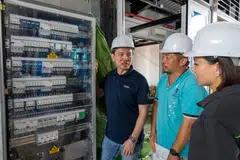
Digitalisation has spurred Schneider Electric to transform as well, from a level near zero per cent 20 years ago to 60 per cent now. It is one of the biggest changes the company has gone through and brings in close to US$25 billion, he noted.
When applied to the electric grid, more efficiencies can be unlocked for air-conditioning or charging a car, among others. Through a digital grid, utilities players can coordinate micro grids or localised, self-contained power grids, with the central grids providing electricity that may be from other countries.
“You’re going to see more micro grids, more decentralised grids, and this will be everywhere (all around) the world,” said Tricoire.
Even as digitalisation plays a big part in energy solutions, Schneider Electric continues to value strengthening relationships with its customers. To deploy new and disruptive technologies, the company has to understand what its customer needs are, Tricoire noted.
Rather than selling its solutions to integrators to figure out how to make them work for clients, the company is collaborating with its end-customers, integrators and others to create solutions and algorithms together.
“It can be utilities, integrators, architects, designers – it will be (with) a lot of customers... things that we invest (in) every day with our customers,” he added.
Focus on Asia
Asia is second only to North America for Schneider Electric. The region has been a focus for the company in the last 25 years, as it contains 60 per cent of the global population and has one of the most rapid paces of development in the world.
“Our energy technologies serve markets of urbanisation, industrialisation (and) digitalisation. Clearly, Asia has been at the centre... of these megatrends over the past decades,” said Tricoire.
Big markets such as China and India are developing and modernising quickly, but South-east Asia has also captured Schneider Electric’s attention. The region’s young population and geopolitical neutrality make it attractive for worldwide trade.
Tricoire added: “We are very committed to our investment here... and it’s not only money, it’s manufacturing, it’s about serving local industry, local customers, and enabling the development of these customers across the world.”
To that end, the company looks to execute its plans to serve customer needs, amid the electrification and digitalisation drive. It will “work with them on developing analytics, the algorithm, the software they need, on top of our systems of automation and electrification”, he said.
Decoding Asia newsletter: your guide to navigating Asia in a new global order. Sign up here to get Decoding Asia newsletter. Delivered to your inbox. Free.
Copyright SPH Media. All rights reserved.