

Scoot to raise fares by 5% as fuel costs bite
Singapore Airlines says it has no plans to raise the price of plane tickets, while other budget carriers such as Jetstar Asia and AirAsia are closely monitoring fares

Nisha Ramchandani
Singapore
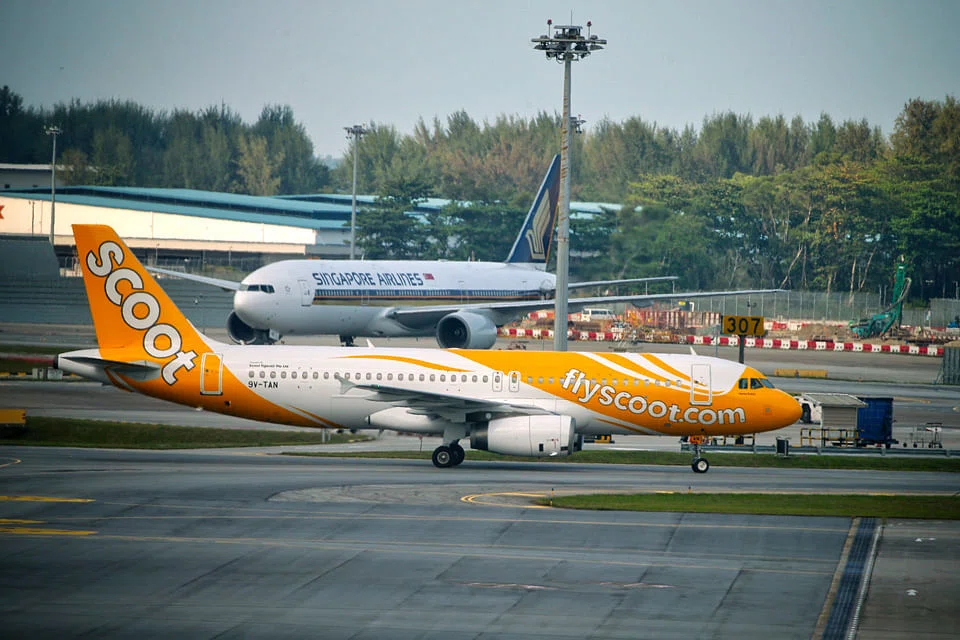
RISING fuel costs is prompting budget airline Scoot to up its fares by five per cent from Sept 1, after jet fuel price have surged nearly 40 per cent year on year to some US$90 per barrel.
Parent airline Singapore Airlines (SIA) said it has no plans to raise the price of plane tickets, while other budget carriers such as Jetstar Asia and AirAsia are closely monitoring their own fares.
Scoot's fares will increase by between S$5 and S$30 per sector from next month, depending on the flight duration. This comes after Scoot removed fuel surcharges from its fare structure in March 2016 as fuel prices slumped to a six-year low.
Fuel is a major operating cost for airlines, comprising roughly a third of Scoot's total operating costs. As a result, the rise in jet fuel prices has boosted Scoot's fuel expenditure by 31 per cent.
Scoot said: "Besides increasing fares, Scoot is also looking at containing its costs. Some initiatives being considered include exploring ways to reduce fuel burn, review of suppliers' contracts and measures to improve productivity and keep manpower resources lean."
The budget airline, which is wholly-owned by SIA, hedges fuel at the group level. For the remaining nine months of the financial year 18/19, the SIA group has hedged 46.3 per cent of its fuel requirements in jet fuel (21.8 per cent) and Brent (24.5 per cent) at weighted average prices of US$65 and US$54 per barrel, respectively.
Even with the five per cent increase, Scoot will still likely absorb some of higher costs from the spike in jet fuel prices, assuming that passenger volumes and load factors remain equal, Maybank Kim Eng analyst Mohshin Aziz estimates. "Consumers will ultimate decide whether there will be an impact on demand," he added.
Fuel isn't the only factor contributing to increased costs. Changi Airport recently raised airport charges and passenger fees from July 1, which will go towards partly funding its long-term expansion efforts. This makes the airport's passenger tax the second highest in the region after Sydney Airport, Mr Aziz pointed out. Budget carriers such as Scoot and Jetstar Asia - whose customers are price-sensitive - are expected to feel the heat more so than full-service carriers.
In the first quarter of FY18/19, Scoot saw its operating profit shrink to S$1 million from S$3 million a year ago on the back of increased fuel costs and an expanded operation. In addition, yields also slid, declining 1.8 per cent.
In response to queries from BT, a spokesperson for SIA said that there were no plans to raise fares or introduce a fuel surcharge for the parent airline. "Our airfare pricing is dynamic, based on supply and demand," the spokesperson added.
A Jetstar Asia spokesperson highlighted that it has not increased fares due to rising fuel prices at present. However, the airline regularly reviews its fares and makes changes based on market conditions, including fuel costs, she added.
Meanwhile, a spokesperson for AirAsia said: "We review our fares throughout the day based on a number of factors, including oil. We have built a lot of resilience into our business by being very disciplined about non-fuel costs, and we are confident we have sufficient latitude to manage any change in oil price."
Nonetheless, amid a competitive operating environment, Mr Aziz expects there could be some consolidation of capacity as some carriers reduce frequencies or even exit routes that aren't performing well.
Shares in SIA closed 11 cents lower at S$9.67 on Thursday, while the AirAsia counter dipped eight Malaysian cents to RM3.51.






