

SEC moves a step closer to delisting China firms in the US
It introduces new law requiring foreign companies to open their books to US scrutiny
 Add BT as a preferred source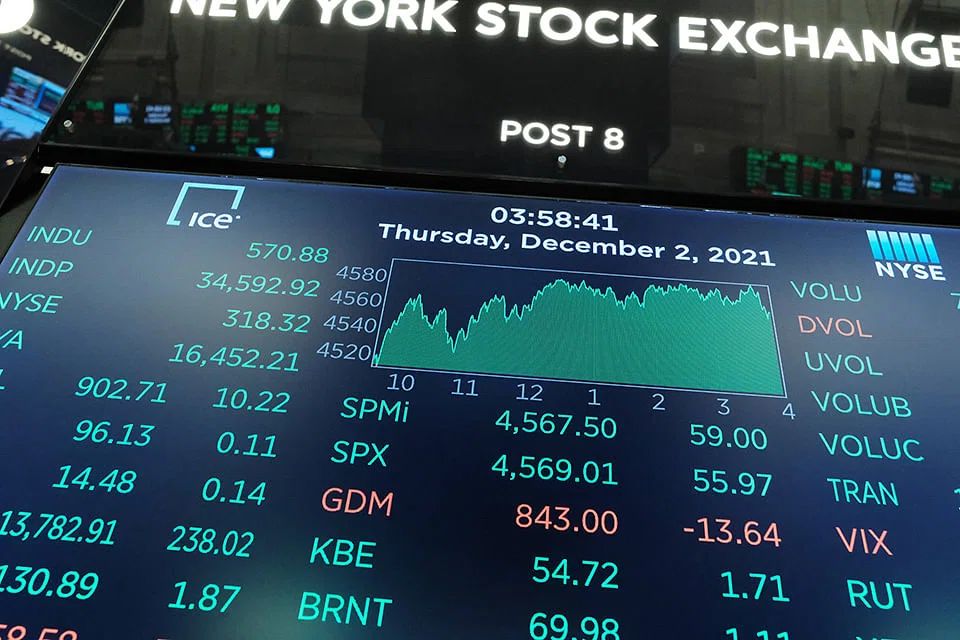
DeeperDive is a beta AI feature. Refer to full articles for the facts.
Washington
THE US government is inching further on efforts to boot Chinese companies off American stock exchanges for not complying with Washington's disclosure requirements.
The Securities and Exchange Commission (SEC) on Thursday (Dec 2) announced its final plan for putting in place a new law that mandates foreign companies open their books to US scrutiny or risk being kicked off the New York Stock Exchange and Nasdaq within 3 years.
China and Hong Kong are the only 2 jurisdictions that refuse to allow the inspections despite Washington requiring them since 2002.
The SEC's new rule, which lays out how the regulator will identify companies subject to delisting and the procedure for kicking non-compliant firms off exchanges, is the latest development in a tussle between financial officials in the world's 2 biggest economies.
While much of the recent tension has been around the shell companies that Chinese firms use to list in the US, Thursday's regulation dates back decades.
Navigate Asia in
a new global order
Get the insights delivered to your inbox.
"If you want to issue public securities in the US, the firms that audit your books have to be subject to inspection by the Public Company Accounting Oversight Board (PCAOB)," SEC chair Gary Gensler said in a statement. "While more than 50 jurisdictions have worked with the board to allow the required inspections, two historically have not: China and Hong Kong."
The rule gets the ball rolling on a process that could lead to more than 200 companies being kicked off US exchanges. China's refusal to let inspectors from the PCAOB review audits of firms such as Alibaba Group and Baidu that trade on American exchanges has vexed US regulators for more than a decade.
The issue has gained urgency due to rising tensions between the 2 countries and following the high-profile accounting scandal at Luckin Coffee. In a rare bipartisan move during the Trump administration, Congress in December 2020 mandated that Chinese companies finally open their books - and required the SEC to write rules for the ones that do not comply.
Thursday's final plan satisfies that requirement. After the rule was announced, the Nasdaq Golden Dragon China Index - which tracks 98 firms listed in the US that conduct majority of their business in China - extended its decline to as much as 3.8 per cent. Tech giants including Alibaba, JD.com and Pinduoduo slumped.
China has taken steps in a bid to end the impasse. A top official at the China Securities Regulatory Commission said last month the regulator is "working very hard" to resolve the audit oversight issues with its US counterparts.
The State Council, China's top government body, in August issued guidelines saying it would boost cross-border accounting cooperation, while also safeguarding its information security. That followed a statement from the nation's security regulator, which said it would work on enhancing conditions for cooperation with the US on company audits during the second half of the year.
Separately, Bloomberg News reported earlier this week that China was planning to ban companies from going public on foreign stock markets through variable inters.
As a first step in the new rule, the agency will identify companies that may not be in compliance with the audit inspection requirements. Once a company is classified by the SEC as a "commission-identified issuer", it will have to submit documentation proving it is not owned or controlled by a government.
The SEC rule lays out the process for imposing an initial trading ban on firms after 3 years of non-compliance, as required by the 2020 law. BLOOMBERG
Decoding Asia newsletter: your guide to navigating Asia in a new global order. Sign up here to get Decoding Asia newsletter. Delivered to your inbox. Free.
Share with us your feedback on BT's products and services
TRENDING NOW

Autobahn Rent A Car directors declared bankrupt over S$50 million each owed to DBS

Amazon’s MGM Studios gains creative control over ‘James Bond’ franchise
UOB’s Wee Ee Cheong says S$4.9 billion Citi deal ‘paying off’ as Asean push accelerates

In taxing wealth, how far can Singapore push property owners?

