Securities financing gains traction among Singapore banks amid global demand, wealth inflows
While interest for SGX stocks are still limited, equities reform can encourage more activity, observers say

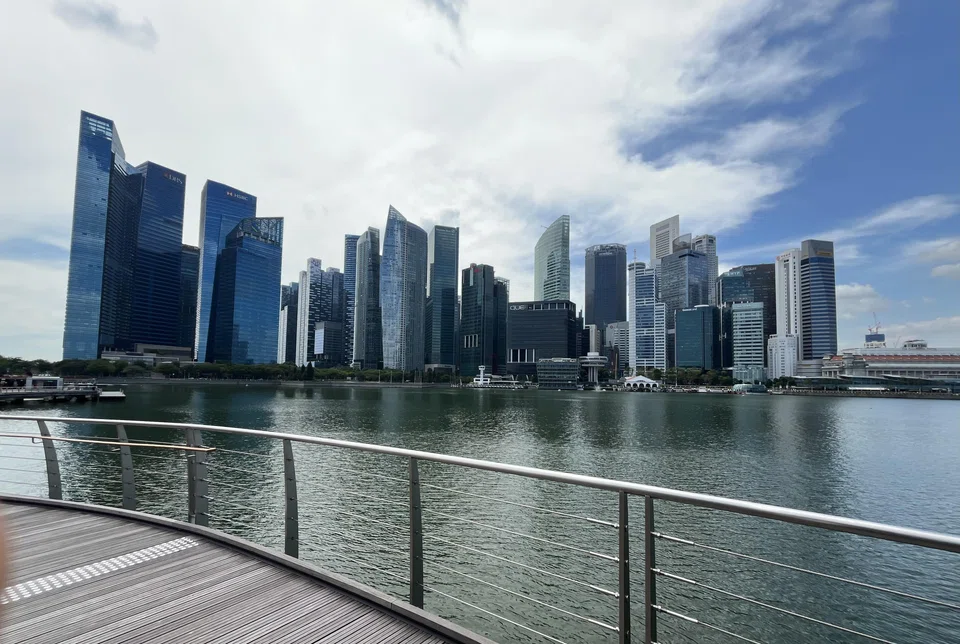
[SINGAPORE] More financial institutions in Singapore are eyeing the securities financing business, given increasing global demand and a growing supply of assets as wealth continues to flow into the Republic, observers said.
Singapore’s securities financing market is still relatively nascent compared with larger global centres, but it is growing rapidly, said Renu Menon, co-head of banking and finance at Drew & Napier.
“As investors focus more on liquidity and balance-sheet management, securities financing is becoming more widely used,” he said.
Earlier this year, OCBC set up a dedicated securities financing unit to meet demand from institutional customers.
The bank said demand for securities financing is rising globally, as sell-side providers focus on balance sheet efficiency, while buy-side companies look to optimise liquidity, meet collateral obligations, and manage risk amid volatile markets.
Securities financing typically involves the temporary lending or borrowing of financial assets such as stocks or bonds, in exchange for cash or other collateral.
Data from S&P Global Market Intelligence indicated that revenue generated by securities lending markets globally rose 27 per cent to US$14.9 billion in 2025, while revenue in the Asia-Pacific region jumped 54 per cent to US$3.3 billion.
As Asian capital markets mature, demand will likely continue to grow further, said Nick Silver, head of Asia-Pacific prime services at BNP Paribas.
This is being driven by higher volatility in markets, alongside client efforts to minimise funding costs and improve transparency, Silver added.
Singapore’s transparent, pro-business environment also gives hedge funds and asset managers the confidence to set up in the Republic, he added.
“This translates to more clients running strategies that require active borrowing of securities to cover their positions,” Silver noted.
In particular, Singapore banks have significant competitive advantage against other banks in the Asia-Pacific region to tap on the space, given their infrastructure and client franchise, said Nehal Mehra, head of securities financing and global collateral for Asia-Pacific at BNY.
In Singapore, repo financing – where investors agree to sell their securities for cash and repurchase them later at a pre-agreed price – is historically more prominent given the concentration of banks and broker-dealers, Mehra said.
Both sell-side and buy-side institutions in the Republic also keenly participate in securities lending, typically focused on fixed income assets used for financing needs, he said.
Singapore equities still limited
Singapore’s securities financing market is supported by an established licensing and regulatory framework, said Christy Lim, head of WongPartnership’s banking and finance practice.
Government entities and government-linked companies have also used securities borrowing and lending for international portfolios for many years, added Darren Measures, head of securities financing at Maybank Securities Singapore.
But demand for locally issued equities remains relatively limited, constrained by the depth and diversity of Singapore’s equity market, Measures said.
Singapore’s market had fewer new listings and a sector mix dominated by banks, real estate and utilities, compared with markets such as Malaysia, South Korea and Taiwan, he noted.
That said, government initiatives to boost the local stock market will likely improve market breadth and support a more balanced mix of securities lending activity over the near to medium term, Measures said.
“Broader market participation is also likely to improve liquidity, narrow trading spreads and support more balanced two-way positioning across listed stocks,” he said.
Furthermore, as more local banks progress in the area, the value of those holdings may increase, as previously idle pools of high-quality assets are more actively deployed, he added.
Meanwhile, Measures also expects growing interest in Singapore government bonds that qualify as high-quality liquid assets, as investors can use them in collateral trades to meet regulatory requirements.
Private wealth
Interest in securities financing is still mainly driven by institutional investors, which view securities lending as a core post-investment activity, as revenues help offset and enhance overall portfolio returns, said Maybank’s Measures.
But observers noted rising demand among high net worth individuals (HNWIs) as well, although Drew & Napier’s Menon said these HNWIs are generally on a smaller and more selective scale.
Measures said advances in technology have significantly lowered barriers to participation, especially in markets operating omnibus custody models, such as the US and Hong Kong.
The main constraint in Singapore and Malaysia is the account structure, however, where holdings are typically not pooled and account-level movements often require manual intervention, he said.
He said: “For a product that relies heavily on scale, this structural friction continues to limit broader individual participation.”
As participation broadens beyond government and government-linked entities to include institutional users such as asset managers, insurers, retail brokers and private wealth managers, securities lending is increasingly recognised as a source of incremental returns, he added.