

Sell in May and go away? Not when Goldilocks is around
GOLDILOCKS is back in town and she's throwing a party. The only question is whether the US consumer is going to show up.
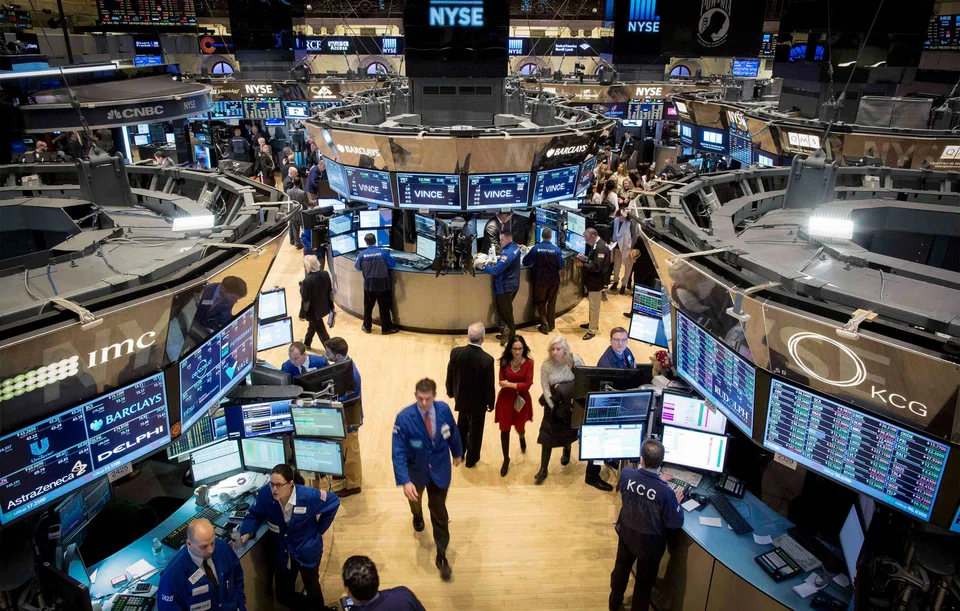
On Friday, US stocks staged one of their biggest rallies of the year, finishing near records as traders revelled in a jobs report that was neither too hot nor too cold. This state of affairs is known as the "Goldilocks" economy. Should retail sales and industrial-production data provide more readings of economic growth at the "just right" tepid temperature, major indexes could break out of the tight 2015 range and surpass those records this week. Rather than the traditional summer swoon, stock investors could be in for a fairytale season.
Roughly 223,000 jobs were added in April, and the unemployment rate fell to 5.4 per cent, according to the Labor Department. That was the hot part, alleviating fears that the likely contraction of the US economy in the first quarter would be a lasting problem. The tally for jobs growth in March, however, was revised down to a mere 85,000. Another "cold" feature of the report was the freezing of wage growth. Wage inflation is the early warning sign that economists watch to pre-empt inflation of consumer prices on supermarket shelves. Without wage inflation, the Fed is under little pressure to raise rates no matter how fast the economy is growing.
So the stock market rallied, with particular strength in financial and commodities areas, because traders interpreted the report as hot enough to foreshadow an acceleration of growth but cold enough to keep the Federal Reserve on hold as far as interest-rate hikes were concerned.
The earnings season told a similar story: Oil companies from the world's largest, Exxon Mobil, to shale specialist Continental Resources were cold. They reported diminished profits from the price collapse. Multinationals from McDonald's to International Business Machines told how translating overseas revenue into dollars chilled their growth.
There were pockets of heat, too. Biotech and drug companies like Gilead reported strong demand for pricey liver-disease and cancer treatments.
Overall, earnings of the Standard & Poor's 500 likely rose 2 per cent in the first quarter - much better than the decline that Wall Street analysts were calling for a few weeks ago, according to Thomson Reuters.
This week, economists expect similar hot-and-cold signals from a retail sales report, which is likely to show a decline in April (reflecting, in part, a shift in the calendar), and an industrial-production report. A positive surprise in retail sales - as long as it's not too hot - could cement a recent change in leadership.
The manufacturers and steelmakers that led the bull market for the past six years have passed the baton to banks and restaurants that are benefiting from a gradual return of the "spend-spend-spend" culture in the US. The 2008 financial crisis had an effect on US culture comparable to the Great Depression. Not only did millions of people lose their jobs, tens of millions changed their behaviour. Rates of savings spiked.
In March, the amount of credit extended to consumers rose by more than US$20 billion. Credit-card debt, the true measure of spending appetite, saw its largest increase since last July. "Casual dining" restaurants such as Chipotle, Shake Shack and last week's new stock market entrant, chicken joint Bojangles, are among the fastest growing companies.
But the US consumer's Goldilocks moment could be spoiled by the three bears: oil prices, higher interest rates and stockmarket volatility.
The rise of oil prices in April would be historic if the crash were not even more dramatic. Prices have risen about 40 per cent from their March lows. Those higher prices are going to reach the petrol pump soon.
Similarly, the Treasury market - the benchmark for consumer borrowing rates - has seen its biggest selloff of recent years. "The fun's really been in bonds and oil," said Joe Kinahan, chief derivatives strategist at TD Ameritrade.
These changes could take a while to slow down the consumer, however. A more instantaneous shock could occur on the stock market, which often sees them in the summer months.
"When we enter May we are greeted with the most well-known saying of them all, 'Sell in May and go away'," said one money manager, who couldn't be named because of his firm's policy. "May has been up more than 2 per cent each of the last two years and going back 20 years, May is actually the sixth strongest month. Now May-to-October is still a very weak timeframe, no question, but just because we hit May doesn't mean there is some magical sell button the market gods are pushing."
Plus, the greatest stockmarket investors - from contemporaries Warren Buffett and Carl Icahn to Benjamin Graham before them - are contrarians. They have a knack for picking up on conventional wisdom and then doing the exact opposite. The seasonal selloff may never come, as long as Goldilocks stays around.
TRENDING NOW

Peter Kwee’s Ridley Park bungalow on the market with S$100 million asking price

Motoring tycoon Peter Kwee is back in court: Here are his previous legal battles

Demand, tech capabilities position Apac and AI as Skyscanner’s next growth frontiers: CEO Bryan Batista

South-east Asia has lost Nvidia’s best salesman

