

Sembcorp CEO’s pay rises 6.3% to S$6.8 million for FY2025
Other management executives are paid a total of S$16.5 million

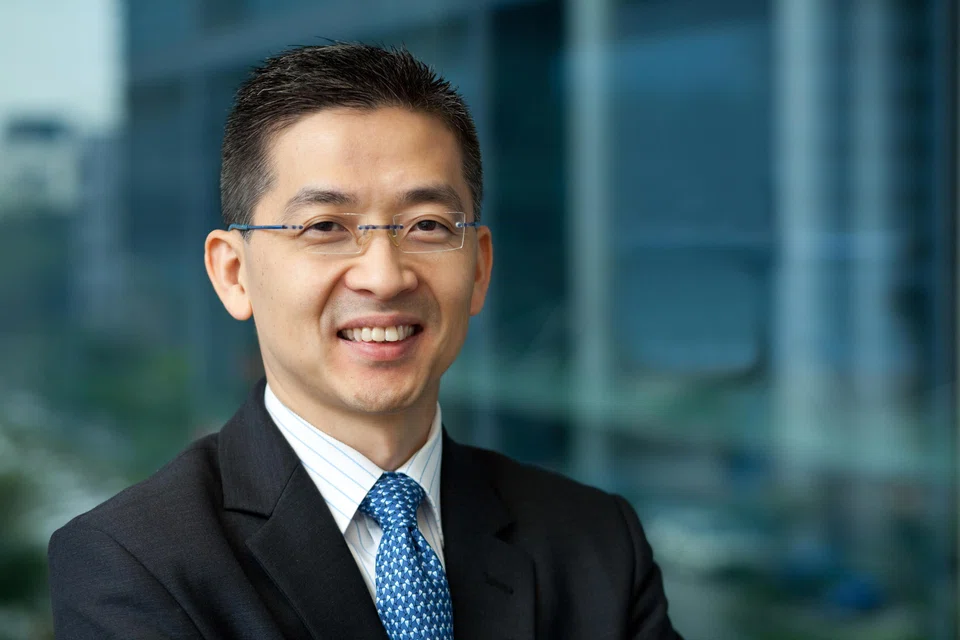
[SINGAPORE] Sembcorp Industries chief executive Wong Kim Yin’s total compensation rose 6.3 per cent year on year to S$6.8 million for FY2025, from S$6.4 million.
It comprised S$1.4 million in fixed pay, S$2.3 million in cash bonus, S$1.3 million in estimated value of shares granted under the restricted share plan, and another S$1.3 million in estimated value of shares under the performance share plan, based on the energy company’s latest annual report released on Tuesday (Apr 14).
It also included a S$550,000 bonus, which will be paid out in tranches and can be clawed back, that has been declared for the profits generated above the company’s cost of capital.
The exact compensation for other key management personnel was not disclosed after the board considered the highly competitive conditions for talent in the industry.
Instead, they were disclosed in bands, without naming specific individuals within each band.
There is one management personnel in each of these three salary bands: Between S$4.5 million and S$4.8 million, between S$3.5 million and S$3.8 million, as well as between S$2.8 million and S$3 million.
'%3e%3cpath%20d='M12.1475%2025.5262C13.7713%2025.4295%2014.94%2023.913%2014.94%2021.8832C14.94%2019.5359%2013.474%2018.093%2011.5917%2018.093C11.3745%2018.093%2010.9582%2018.093%2010.8393%2018.1413V25.2086L11.8891%2025.5745C11.8891%2025.5745%2012.207%2025.5262%2012.1475%2025.5262ZM11.4934%2017.6281C13.2567%2017.6281%2014.3843%2016.4292%2014.3843%2014.4501C14.3843%2012.372%2013.275%2011.2973%2011.4339%2011.2973H10.8393V17.6305H11.4934V17.6281ZM6.66078%2025.6482L7.39265%2025.5492C8.02617%2025.4502%208.26403%2025.3053%208.26403%2025.1097V11.6149C8.26403%2011.4193%208.1451%2011.3709%207.23484%2011.249L6.68137%2011.173L6.6219%2010.7588H11.9508C15.7153%2010.7588%2017.0624%2012.0797%2017.0624%2014.1578C17.0624%2015.9666%2015.7748%2017.1909%2013.4969%2017.6305V17.7041C16.111%2017.948%2017.6571%2019.5382%2017.6571%2021.7636C17.6571%2024.3318%2015.8937%2026.0417%2012.1109%2026.0417H6.60132L6.66078%2025.6482Z'%20fill='%232B2B2B'/%3e%3cpath%20d='M20.6287%2025.6505L21.5596%2025.5515C22.1725%2025.4779%2022.4104%2025.3076%2022.4104%2025.112V11.249H21.9346C20.073%2011.3479%2018.982%2013.0095%2018.408%2014.6227L18.1907%2015.5018H17.6555L18.1701%2010.7588H29.3837L29.6421%2015.4787H29.1664L28.9491%2014.6227C28.3728%2012.8645%2027.3047%2011.2743%2025.5002%2011.249H24.9856V25.1856C24.9856%2025.3812%2025.1251%2025.4548%2025.9965%2025.5515L26.7695%2025.6505L26.829%2026.0417H20.5693L20.6287%2025.6505Z'%20fill='%232B2B2B'/%3e%3c/g%3e%3cdefs%3e%3cclipPath%20id='clip0_5242_21648'%3e%3crect%20width='24'%20height='16.8'%20fill='white'%20transform='translate(6%2010)'/%3e%3c/clipPath%3e%3c/defs%3e%3c/svg%3e)
Another two were in the salary band of S$2.5 million to S$2.8 million.
In total, these management executives received S$16.5 million in compensation.
Business outlook
Sembcorp said in its annual report that the world’s transition to low-carbon energy sources has entered a more difficult and uncertain phase.
SEE ALSO


While the company focused on the rapid scale-up of renewables in the initial years following its low-carbon pivot launched in 2021, the transition now requires governments to balance grid integration with the intermittency of renewable energy, as well as energy security amid increasing energy demand.
“We recognise the critical role that energy companies play in providing reliable thermal baseload capacity as we continue to grow renewable energy capacity,” read the report.
Nonetheless, renewables is still expected to become the largest source of global power generation by 2030, according to the International Energy Agency.
Countries are also continuing to recognise the need to decarbonise their economies, while increasing emphasis on reliability and system flexibility, as a result of a changing generation mix and rising energy demand.
“Collectively, this creates opportunities for renewables, complemented by firming solutions including storage, to play a more integral role in meeting long-term demand,” read the report.
As for its gas business, Sembcorp said that it is strongly positioned to capture the structural demand growth in Singapore, with power demand rising from data centres and high-tech manufacturing.
“Our portfolio is integral in safeguarding energy security and serves as an essential platform for advancing energy transition.”
Sembcorp added that it is monitoring the evolving conflict in the Middle East closely.
It reiterated an earlier statement in its annual report that its three facilities in Oman and the United Arab Emirates continue to operate.
Sembcorp’s gas supply for Singapore also remains secure with no anticipated disruptions in the near term.
Its upcoming natural gas cargo scheduled for 2026 is not from the Middle East.
“We are able to leverage our diversified portfolio of long-term natural gas supply contracts across both piped and liquefied sources, drawing from multiple global origins,” said Sembcorp.
“In addition to natural gas, Sembcorp’s broader portfolio includes renewable energy and energy storage solutions. These help diversify our energy mix and strengthen supply resilience amid geopolitical uncertainty.”
Decoding Asia newsletter: your guide to navigating Asia in a new global order. Sign up here to get Decoding Asia newsletter. Delivered to your inbox. Free.
Copyright SPH Media. All rights reserved.






