

Sembcorp executives guide for higher dividends, earnings as H2 profit rises 15% to S$412 million


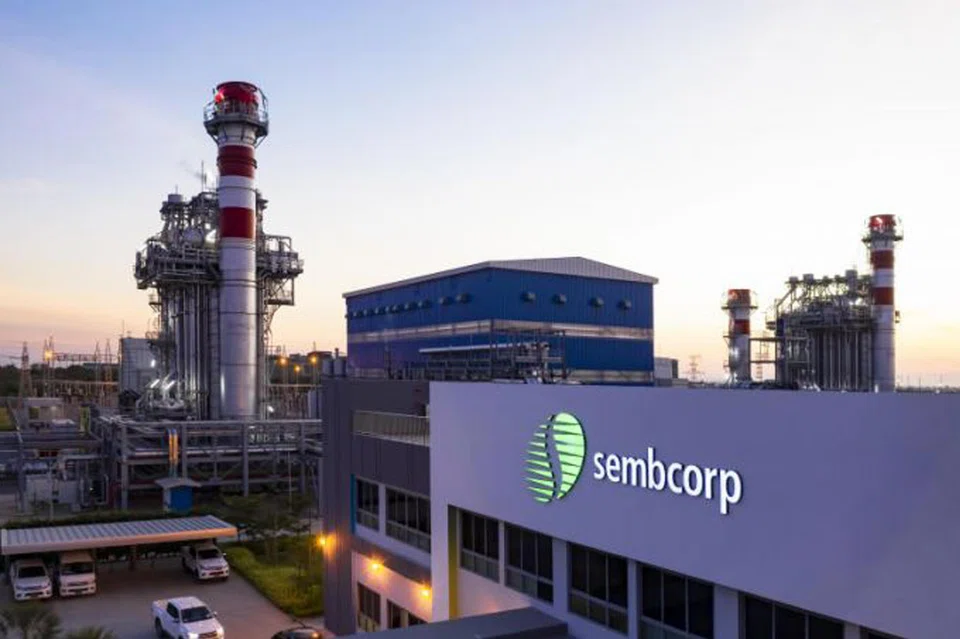
SEMBCORP Industries posted a 15 per cent year-on-year rise in net profit to S$412 million for the second half of its financial year ended Dec 31, 2023.
This was mainly due to higher contributions from the gas and related services, as well as the renewables segments, the energy group said on Tuesday (Feb 20).
Earnings per share stood at 23.12 Singapore cents for the period under review, up from 20.09 cents in the corresponding year-ago period.
Revenue for the period fell 14 per cent to S$3.4 billion, from S$3.9 billion the year before. This was due to lower gas prices, as well as lower power prices from the gas and related services segment, offset by higher turnover from the renewables and other businesses segments.
The group proposed a final dividend of S$0.08 per share for the half-year, bringing the total dividend for FY2023 to S$0.13 per share. Once approved by shareholders at the Apr 23 annual general meeting, the dividend will be paid out on May 9, after the record date on Apr 30.
For the full year ended Dec 31, 2023, net profit was up 11 per cent to S$942 million; revenue was down 10 per cent to S$7 billion.
At a briefing on Tuesday to discuss the company’s latest financial results, Sembcorp’s group chief financial officer Eugene Cheng described FY2023 as a “watershed year” for the company – one in which the group posted a net profit before exceptional items that was a record-high in its operating history.
The group’s profit before exceptional items of its gas and related services segment increased 30 per cent to S$809 million in FY2023, driven chiefly by higher power prices in Singapore.
Sembcorp’s chief executive Wong Kim Yin said the confidence level of executives in the group’s future earnings and cash flow is now “much stronger” than it was last year. This, he said, is reflected in the board’s decision to recommend a final dividend of S$0.08 per share.
In the past, the group would have opted to suggest that such a dividend figure be broken down into a final dividend and a special dividend, he said.
“The special (dividend) is not recurring. We are not confident that we can recur,” he said. “What we’re saying (today) is that next year… my investors would expect us to sustain, if not grow it.”
Wong said Sembcorp is confident of maintaining or growing its dividend payouts to shareholders, particularly because the company has a bigger earnings base. It is also no longer exposed to “merchant risks” as it has locked in a significant proportion of its contracts, which will protect the company’s earnings even if revenue declines materially, he said.
For the renewables segment, Cheng said a bulk of Sembcorp’s contracts are contracted. One rare market in which the company is not contracted is Singapore, he said.
Wong said Sembcorp’s green portfolio in Singapore has a “scarcity value”, as the company is one of the very few players in the city-state. And the company actively tries to package its deals in a way that lets it drive higher margins for its brown-energy segment.
He said the company is focusing on long-term contracts with interested parties, which in turn give it the “mileage and competitive advantage”.
Sembcorp is one of the local-listed energy bigwigs that has embarked on a shift to a greener portfolio. The group had announced a strategic plan late last year to transform its portfolio from brown to green.
Former oil-and-gas conglomerate Keppel, too, had begun in 2022 the transformation of its business model into that of an asset manager.
Both Keppel and Sembcorp have ditched their offshore and marine arms as part of their shift towards greener portfolios. These two units now collectively form Seatrium.
“Moving forward, we are putting money into renewables and our renewables are backed by long-term contracts,” said Wong. “The team has put in a very deliberate and very concerted effort to have shifted the risk profile of the entire portfolio from what it was when I first came into the company.” He stressed that Sembcorp has delivered stronger earnings with the same assets it had back in 2020.
“We knew the potential of the assets, we knew that we could take advantage of the situation – of the market volatility and the tightness. But… what we want is visibility and predictability, so that we can decisively – without having to look back – move into our green portfolio,” he added.
Looking ahead, Wong said there is no single portfolio that is bulletproof, and there are certain areas of its business the company will pay closer attention to in the coming quarters.
For instance, Sembcorp has two investment properties in China – the Sino-Singapore Nanjing Eco Hi-tech Island and the International Water Hub.
Against brewing real-estate troubles in China, some listed companies are opting to write off their assets there and book a loss.
For now, Sembcorp makes annual impairment assessments for both these assets, but Wong said there is still “headroom” above what the company has in the books for these two assets. They also constitute a small part of Sembcorp’s portfolio, he said.
“Unless something very bad happens in China, we will be one of the last to suffer from this,” said Wong. “Someone else will fall like a pack of cards well ahead of us if they are over-exposed to real estate in China.”
Shares of Sembcorp ended Tuesday 1 per cent or S$0.06 higher at S$5.81 on a cum-dividend basis.
TRENDING NOW

Once staunchly pro-China, Malaysian Chinese businesses are now distancing themselves from Beijing

Grab CEO’s wife Chloe Tong on life with Anthony Tan and finding her purpose

Could stablecoins be the future of money?

ST Engineering opens tech-focused aircraft maintenance facility in Changi; to create over 500 jobs

