

Sembcorp Industries posts strong H2 earnings on higher energy prices


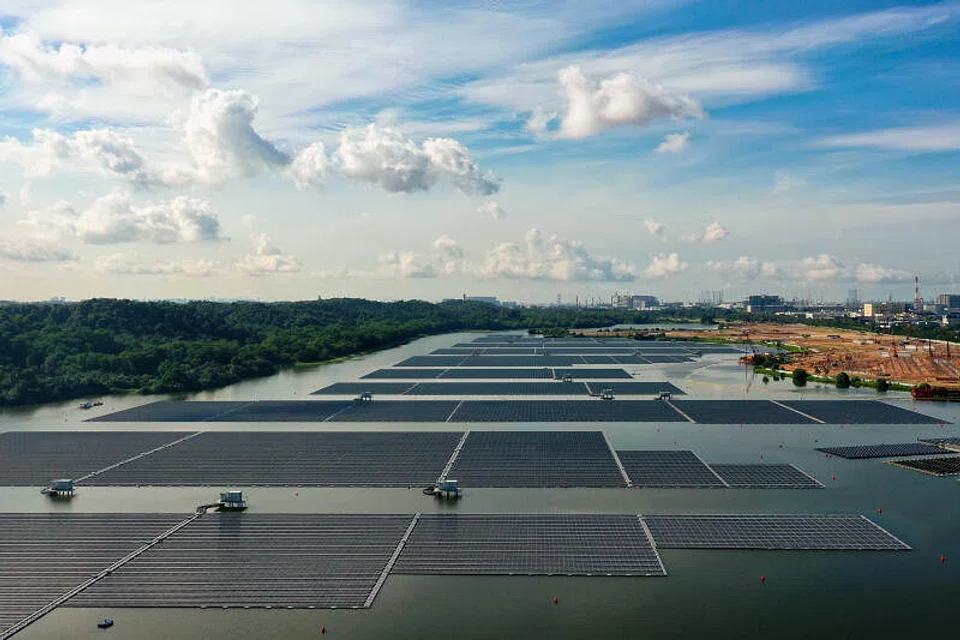
SEMBCORP Industries U96 has reported a net profit of S$233 million for the 6 months ended Dec 31, 2021, reversing its loss of S$866 million a year ago.
This comes as turnover from continuing operations increased by 59 per cent year-on-year to S$4.5 billion, from S$2.83 billion, the group said in its financial results on Wednesday (Feb 23).
The energy and urban development company attributed turnover growth to higher energy demand as economies recovered from the pandemic, as well as high fuel prices during the current period that led to increases in power prices, despite maintenance shutdowns in Singapore, Myanmar and India.
Earnings per share (EPS) from continuing operations therefore grew 18 per cent to S$0.1306, from S$0.1109 in H2 FY2020.
Meanwhile, its earnings per share from a non-continuing operations basis was S$0.1306, compared to the loss per share (LPS) of S$0.4852 in the year-ago period.
The board is proposing a H2 FY2021 final dividend of S$0.03 per share, down from S$0.04 in the year-ago period, to be paid on May 10 upon approval.
Including an interim dividend of S$0.02, this would bring the total dividend for FY2021 to S$0.05 per share, up from the S$0.04 total dividend for FY2020.
For the full year, the group recorded a net profit of S$279 million. It had reported a loss of S$997 million in FY2020.
EPS from a continuing operations basis was S$0.1563, up 99 per cent year on year from S$0.0784.
On a non-continuing operations basis, EPS was in the black at S$0.1563, compared to the LPS of S$0.5681 in FY2020.
Turnover from continuing operations went up by 43 per cent to S$7.8 billion, from S$5.4 billion.
In particular, group president and chief executive of Sembcorp Industries Wong Kim Yin noted that tightness in energy markets towards the fourth quarter of last year raised margins in the power markets that it operated in, such as the UK and Singapore.
"We captured all that in the fourth quarter and to be honest, we didn't see the extent to which it was coming," he said, noting that while macroeconomic conditions remain for tightness to persist, and that the company remains cautious in projecting growth in this segment.
Additionally, Wong noted that the company is considering the renewal of its liquefied natural gas (LNG) contracts in Singapore, which expire in 2028. As the current reserves are depleting, he said that the cost of extraction for every unit of gas is going to be more expensive than it was 20 years ago when gas was first extracted.
He also said that the company has been awarded an LNG licence to import LNG into Singapore, making its portfolio more complete.
"We are the largest importer of natural gas in Singapore and we intend to keep it that way," he said.
As for the impact of a higher carbon tax on the company, Wong noted that the company co-generates steam and power for clients on Jurong Island from its power plants, which makes it more efficient in generating revenue as compared to its competitors.
"From a competitive landscape perspective, ours, being co-generation facilities selling steam as well and having a slightly higher efficiency puts us in a better competitive position," he said.
In his Budget speech on Feb 18, Finance Minister Lawrence Wong announced that the carbon tax would increase at least thrice within the decade and reach between S$50 and S$80 per tonne of greenhouse-gas emissions by 2030.
Furthermore, the FY2021 results come less than a year into the group's strategic transformation plan, said Wong Kim Yin, group president and chief executive of Sembcorp Industries.
The group had previously laid out a roadmap to transform its portfolio to green from brown, grouping its businesses under 4 main segments - renewables, integrated urban solutions, conventional energy, and other businesses and corporate. These segments were based on the internal reports used to determine the allocation of resources and assess performance of the operating segments.
The company aims to make 70 per cent of its net profit from sustainable solutions and have 10 GW of gross installed renewables capacity by 2025. In FY2021, 35 per cent of net profit was made from such solutions.
Wong noted that the group had secured 2.9 GW of new renewable energy projects across key markets in 2021, and its gross renewables capacity installed and under development will reach 6.1 GW upon completion of its 658 MW portfolio acquisition in China in the first half of 2022.
Regarding the company's ability to source these acquisitions, he credited the group's team on the ground in China and the trust that it has had with its partners.
While he declined to reveal the company's pipeline of upcoming acquisitions, he said that the numbers are large enough that the company is "comfortable" that they will be able to meet their 2025 targets.
As the company diversifies its portfolio of sustainable solutions, Wong said that its renewables portfolio will also become less concentrated. Notably, the company revealed previously that lower wind resources in India dented its net profits in the first half of 2021, with revenue falling to S$24 million from S$33 million in the same period a year earlier.
He added: "Our focus on execution is delivering results and we are pushing confidently towards our target of 10GW of gross installed renewables capacity by 2025."
Shares of Sembcorp Industries closed at S$2.51, down 0.8 per cent or S$0.02, on Tuesday.
READ MORE:
- Brokers' take: CGS-CIMB raises Sembcorp target price to S$2.96 after adjusting valuation methodology
- Sembcorp signs 12-year agreement to supply power to Indian state Andhra Pradesh
- Sembcorp Industries' UK unit to construct 360 MW energy storage system
TRENDING NOW

Once staunchly pro-China, Malaysian Chinese businesses are now distancing themselves from Beijing

Looking beyond looming CEO succession, should UOB potentially pursue a transformative merger?

Could stablecoins be the future of money?

Grab CEO’s wife Chloe Tong on life with Anthony Tan and finding her purpose

