Semiconductor startup Silicon Box to create up to 1,200 jobs with manufacturing facility

Yong Jun Yuan
Published Thu, Jul 20, 2023 · 05:08 PM
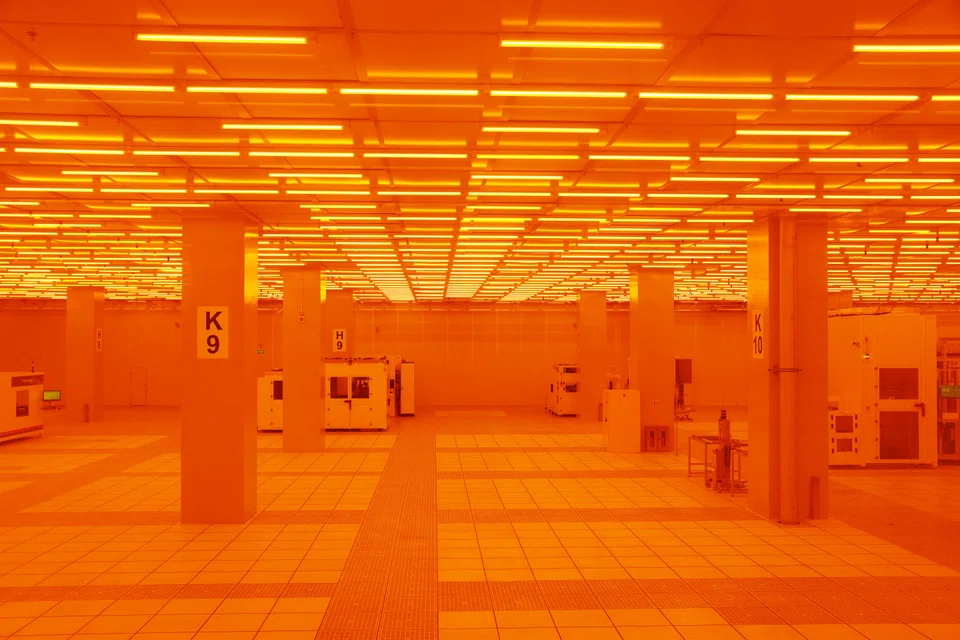
    • Silicon Box's semiconductor manufacturing facility will be worth US$2 billion when it is fully fitted out, although it did not indicate when this might happen.
    • Silicon Box's semiconductor manufacturing facility will be worth US$2 billion when it is fully fitted out, although it did not indicate when this might happen. PHOTO: REUTERS

    SINGAPORE-BASED semiconductor startup Silicon Box will hire up to 1,200 workers in the next two years in areas such as computer science, engineering and design with support from the Economic Development Board (EDB), the company said on Thursday (Jul 20).

    At the launch of its 73,000-square-metre semiconductor manufacturing facility at Tampines, the company’s co-founder and chief executive, Han Byung Joon, said that the company aims to solve unique challenges around chiplet adoption in advanced semiconductor chips.

    Chiplets combine multiple smaller chips within a single package, and have been increasingly adopted by companies such as Apple and chipmaker AMD because they afford greater flexibility, performance and efficiency than traditional chip designs.


    Han was previously the chief executive and chairman of semiconductor assembly and test provider Stats ChipPac. Co-founders Dai Weili and Sehat Sutardja were also co-founders of Marvell Technology Group, which currently produces networking chips used in data centres.

    Han said that with 20 years of experience operating companies in Singapore and overseas, he has an “enduring love” for the nation, and was drawn to the nation by the availability of talent, ease of doing business and a “very efficient” government.

    At the launch of the facility, EDB chairman Png Cheong Boon said that the agency will continue to strengthen the competitiveness of the semiconductor industry to tap growth opportunities in areas such as digitalisation and electrification.

    “Despite near-term headwinds arising from factors such as high interest rates and continued inflationary pressures, the semiconductor industry’s long-term growth trajectory remains very strong,” he said.

    This will include growing the talent pool in Singapore by exposing more students to the field and training 1,000 doctoral students over the next 10 years to undertake research, engineering and design.

    EDB will also continue to drive public and private sector research in key areas of microelectronics research.

    Former Trade and Industry Minister Chan Chun Sing announced in January 2021 that the nation has a 10-year plan to grow its manufacturing sector by 50 per cent, and to maintain its share of about 20 per cent of the nation’s gross domestic product.

    Silicon Box was founded in 2021. It has since managed to raise about US$208 million from a series A funding round and from conditional commitments known as “simple agreements for future equity” from family offices, the founders, as well as venture capital firms such as BRV Capital and Ignite Innovation Fund.

    The company said that the factory will eventually cost US$2 billion when fully fitted, but did not provide a timeframe for when that might happen.

    “I think we will generate enough cash flow ourselves so we can fund our own growth. (With) this much demand in the world, I don’t think I would have any problems,” Han said.

    Traditionally, semiconductor chips have been made up of transistors linked together by electronic circuits on a single chip. Sutardja said that the chiplet approach allows companies to put their own chips together with more existing integrated circuits as if they were Lego blocks. Existing memory interfaces or USB interfaces could be packaged with other units, such as the central processing unit, which would see more innovation.

    For instance, the initial cost of building a traditional chip from the ground up based on the three-nanometre leading-edge process node would cost about US$300 million to US$400 million.

    As the chip is more complex, a few small blocks of errors could cost another US$100 million to fix, Sutardja added.

    Silicon Box estimates that chip designers can save up to three-quarters of costs when designing graphical processing units (GPUs) and high-performance computing chips using chiplet designs.

    GPUs have seen great demand in recent months as tech giants and startups use them to generate AI models, such as the large language models that power products such as ChatGPT and Google’s Bard.

    The company also aims to improve on these designs by building shorter interconnections between these chiplets using “sub-5-micron” technology to help these chips perform better together.

    This refers to the width of the individual interconnections between the chiplets. Han noted that while other facilities have created interconnections that are 15 to 20 microns wide, the company believes that it can narrow the width down to five microns or smaller.

    “We’re going a little bit smaller with new equipment and more advanced equipment and materials,” he said.