Serial Achieva seeks access to capital markets to grow regional IT distribution business
It will do so through a reverse takeover transaction with Catalist-listed Axington

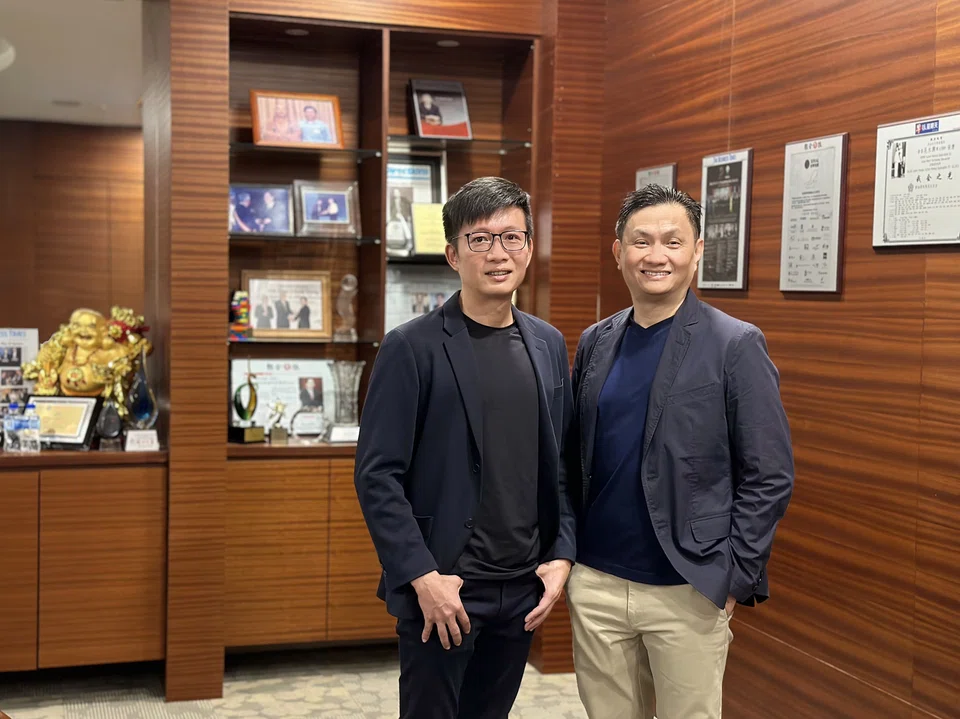
IN its bid to grow in South-east Asia, IT products and computer peripherals distributor Serial Achieva is seeking access to capital markets through a reverse takeover (RTO) transaction with Catalist-listed Axington Inc.
Serial Achieva mainly distributes consumer products, but chairman Sean Goh sees an opportunity for the company to move towards serving the enterprise space.
In particular, he believes that the company has an opportunity to sell more in-demand server components to large-scale users, such as cloud service providers, which are key players that are trying to leverage artificial intelligence (AI).
Such components include Nvidia graphics processing units, which are used to accelerate the creation and usage of AI models and have been in short supply.
“When supply is tight, naturally the margins become better,” he said.
The transaction has taken some time to complete, as the deal first surfaced in September 2022.
The RTO transaction is now expected to be completed on Jun 27, and includes a listing of compliance placement shares as it is required to have at least 15 per cent of its issued share capital held by at least 200 public shareholders.
Serial Achieva’s chief executive officer Kenny Sim said that this was due to a misunderstanding on the Singapore Exchange’s part that the company was attempting to engage in a chain listing.
A chain listing refers to the listing of an existing listed issuer’s subsidiary or parent company, with substantially similar assets and operations. Such listings are normally not allowed on the exchange.
Serial Achieva is a wholly owned subsidiary of mainboard-listed Serial System , which distributes semiconductor components and medical devices, among other businesses.
Sim said: “It took some time to explain that the business model of Serial (System) as a semiconductor distributor versus Serial Achieva as a component peripherals distributor is very different.”
Goh said that when Serial System first acquired Achieva, the company hoped to deepen its relationships with product manufacturers, such as display manufacturer Viewsonic, by selling them semiconductor components and also distributing their end products.
Now, he hopes that the listing will shine a light on Achieva’s potential as a separate business and give it the opportunity to tap capital markets for funds.
According to a bourse filing on Jun 14, Axington said that Serial Achieva issued 12.5 million shares at S$0.20 each as part of the compliance placement.
This will result in gross proceeds of S$2.5 million. In particular, 54.1 per cent of the proceeds will go towards the company’s expansion plans in South-east Asia.
Serial Achieva currently has a presence in Malaysia and Thailand, and Goh hopes to expand into Indonesia, Philippines and Vietnam.
Unlike Singapore, he said, these countries have much lower levels of digital penetration. Since these countries are larger, he believes that the company’s expertise in moving products around will still be “pretty important”.
He added that there are additional benefits to distributing for more countries. By aggregating demand across more countries, he believes that the company will be able to negotiate better prices on procurement deals.
To compete against existing local distributors, he also plans to form joint ventures with local partners to enter new markets.
“What we are trying to do is really to be in all these different countries, regionalise the business (and) enable us to have leverage with our suppliers,” he said.
Even if these developing countries are not yet in a position to catch up with AI, Goh said that there is significant Chinese demand for computing power in South-east Asia as they seek to sidestep Western export restrictions placed on advanced computing equipment.
“The only way they can get access to this sort of computing power is to set up data centres outside of China, and that will be in countries such as Malaysia, Vietnam, Philippines or Indonesia,” he said.
Already, companies such as Bytedance have been found to be renting Nvidia chips for AI computing, while Tencent and Alibaba have reportedly discussed setting up data centres in the US with Nvidia to gain access to chips.
It is not yet clear if such developments will face greater scrutiny from Western authorities in the near future.
Meanwhile, Serial Achieva has posted losses since 2022.
In the half year ended Jun 30, 2023, Serial Achieva’s net loss declined year-on-year to US$427,000, from a loss of US$499,000 a year earlier, as revenue grew 19 per cent to US$21.4 million.
Goh attributed the net loss to currency loss as the ringgit and baht weakened significantly against the US dollar. The company purchases its products with US dollars and sells them in local currencies.
“Our margins don’t allow that, we don’t have that buffer,” he said, adding that he expects Asian currencies to stabilise this year, and that the company has also started to hedge its foreign exchange exposure.