

SGD bond issues buck regional trend in H1 to hit S$11.6b as banks tap favourable conditions

Raphael Lim
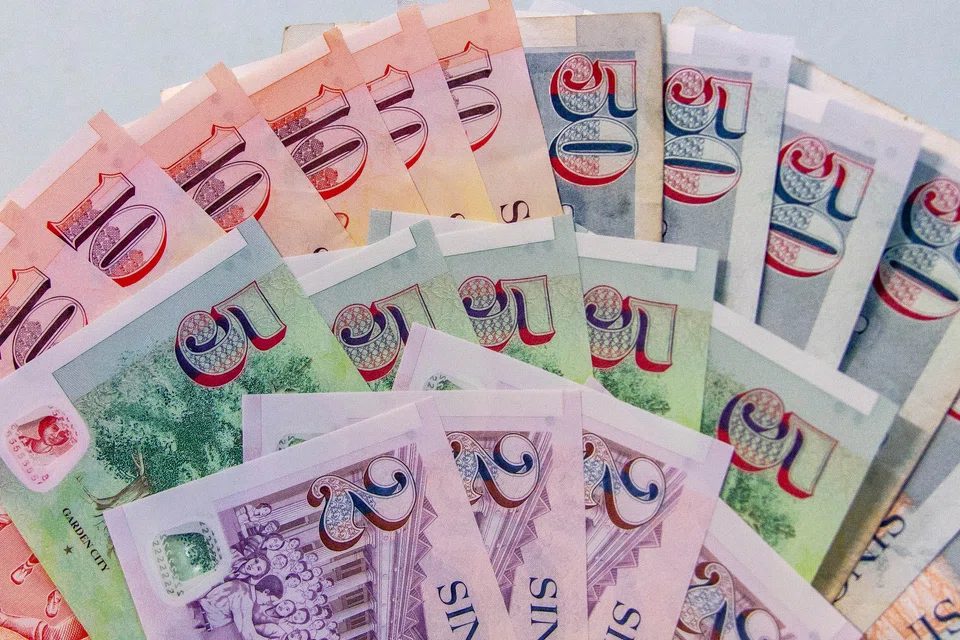
SINGAPORE dollar-denominated bond issuances remained resilient in the first half of 2022 despite the challenging macroeconomic environment of inflation and tightening monetary policy, and there are suggestions demand could continue to be steady.
Market participants said volumes rose around 6 per cent compared to H1 2021, which was a better performance than that of G3 (USD, yen and euro bonds) issuance volume across Asia ex-Japan.
Foreign financial institutions (FIs) raising SGD debt have been among the drivers of activity, and the issuance momentum could carry through for the rest of the year.
“The rising rates experienced by the market so far, and expectations of more… rate hikes to come, are seeing SGD bond issuers still active in tapping the market with more urgency before funding rates increase further,” said Clifford Lee, global head of fixed income at DBS.
By DBS's estimations, SGD bond issuance volume was S$11.6 billion in H1 2022. This stood in contrast to Asian ex-Japan G3 issuance volume, which was down by 40 per cent, he said.
According to Lee, the region's G3 issuance market has chalked up its “worst performance in decades” due to the volatility created by shifts in central banks’ policies.
Dealogic data also showed total deal value from SGD bond issuances in H1 2022 at its highest since H1 2019.
OCBC Credit Research said in a note this month that factors driving the SGD bond market’s resilience include a significant pool of SGD corporate credit investors being buy-and-hold investors through volatile times.
On the issuer front, meanwhile, the bank cited the “overall quality of issuers with solid fundamentals” that were also willing to price with new issue concessions – factoring in the heightened risk of future rate increases and market volatility – resulting in relatively attractive yields on new issuances.
DBS’s Lee said investors have asked for new issue premiums in 2022, whereas such premiums were not required last year. Corporate issuers are looking at a premium of 5-15 basis points, while for perpetual issuers this is around 25-50 basis points.
Banks raising capital
Financial institutions (FIs) were the largest contributor to total issuance volume in the first half of 2022, replacing the government-linked sector that had been top in 2021, OCBC analysts noted. FIs priced some S$4.8 billion in issuances during the first 6 months of the year, accounting for 41.5 per cent of the total SGD issuances.
A number of Europe-headquartered FIs, such as HSBC, BNP Paribas, Barclays and ABN Amro, were among the issuers, with activity picking up in June. Issuances included Tier 2 (T2) and Additional Tier 1 (AT1) capital instruments.
“The relatively large issue sizes also indicated still-solid demand for bank capital instruments in the SGD space after a hiatus for the past few years,” the OCBC analysts said.
Valerie Lee, head of debt syndicate for Asean and South Asia at Standard Chartered Bank, noted the growing use of the SGD market for capital funding on top of the more well-established US dollar (USD), euro and sterling pound markets.
“The SGD market has emerged to become the fourth largest for banks’ capital securities globally,” she said, noting that European banks have raised some S$2.6 billion of T2 and AT1 capital in the past 3 weeks alone.
“SGD is also the only Asian currency market which offers international banks the opportunity to raise benchmark-sized capital offerings at highly competitive spreads.”
Compared to G3 currencies, local currency markets tend to be more resilient to uncertainties and volatility caused by inflation and geopolitical uncertainty due to captive demand, she added.
DBS’s Lee also noted that cross currency swap conditions at the moment favour SGD issuances, as issuers can get cheaper funding with an SGD issuance than a USD issuance.
“I expect more investment-grade issues in the SGD market this year, both from Singapore and foreign issuers,” he said, adding that there has been healthy investor interest for high-quality investment grade names in SGD and G3 markets.
StanChart’s Lee, too, noted the supportive foreign exchange and interest rate market technicals for foreign issuers.
“Foreign issuers that have issued in SGD have managed to achieve savings of up to 50-75 basis points against their home currency on an after-swap basis,” she said.
Yield-focused private bank investors are also savvy when it comes to European banks’ capital instruments, she added, noting that recent SGD T2 or AT1 trades have offered the “rare opportunity” to gain exposure to global systematically important banks at yields north of 5 per cent and 8 per cent, respectively.
“Private banking clients’ preference to enhance their yield through subordination and their familiarity with the structural specifics of banks’ capital products have facilitated a natural bid for these SGD-denominated products,” she said.
Investor demand to continue
Stephen Bates, head of transaction services at KPMG in Singapore, noted that most bond issuers have maintained a strong credit profile; specifically non-bank Singapore securities callable or maturing in 2022, which have been in demand.
“With ongoing geopolitical tensions, volatility of the equities market and valuation adjustments of over-valued stocks from recent SPAC (special purpose acquisition company) listings and IPOs in the US, (we) will likely see investor demand for bonds strengthen going into H2 2022,” he said.
While OCBC analysts expect issuances for 2022 to be lower year on year, they continue to see issuers coming to market for refinancing. Even if Mapletree’s S$700 million in perpetual securities are not called at their first call date in November this year, they noted around S$11 billion of bonds and perps would still need to be replaced as they come due or get called.
StanChart’s Lee, too, believes bond issuance activity in the second half would be sustained.
“The SGD market has provided much-desired stability – something that the G3 currencies markets have been lacking since the second half of 2021. We expect the SGD market to continue to be attractive for foreign issuers in the second half of 2022,” she said.
DBS’s Lee is also optimistic on issuance activity: “I expect to see increased issuance urgency among issuers as concerns of further rate hikes loom in the horizon. This will likely drive SGD issuance volumes in 2022 to match or even exceed last year’s, if the market holds up and stays functional.”
TRENDING NOW

Grab CEO’s wife Chloe Tong on life with Anthony Tan and finding her purpose

Tech titans including Nvidia’s Huang, OpenAI’s Altman join Trump, Xi at White House state dinner

Ex-Sembcorp Marine CEO Wong Weng Sun acquitted of charges in Brazil corruption case

Singapore launches national semicon brand initiative, inks R&D deals

