

SGD to strengthen, USD expected to peak against most currencies in 2023
But the Singapore dollar unlikely to outpace regional and global as much as it did last year

Jude Chan
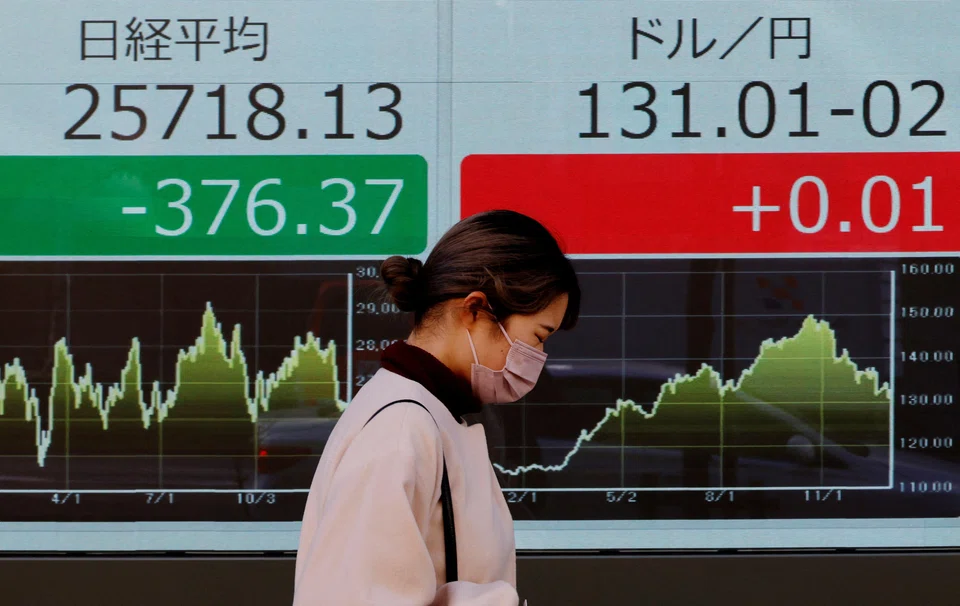
THE Singapore dollar (SGD), which bucked global currency trends to stand firm against the US dollar (USD) in a year of volatility and uncertainty in 2022, could strengthen further this year as the greenback peaks, market watchers say.
“The SGD is among the most sensitive to the direction of USD in Asia, so a stalling of USD momentum should allow the SGD to appreciate,” said James Cheo, chief investment officer for South-east Asia, Global Private Banking and Wealth, HSBC.
“Due to our view that the USD strength has peaked, we believe the SGD has more upside potential for 2023. With inflation remaining sticky and the labour market tight, further policy tightening is likely,” he added.
“We are bullish on the SGD and expect USD-SGD to strengthen to 1.32 by the end of 2023.”
However, the SGD is not expected to outpace its regional and global peers with the same degree of success it enjoyed last year.
“USD-SGD has the highest correlation with the broad USD index in Asia, but we doubt the SGD can outperform as significantly as it did in 2022 without similarly aggressive policy tightening by the central bank,” HSBC’s global foreign exchange (FX) research team said in a recent report.
“Against the projected backdrop of a broad USD correction in 2023, we believe the South Korean won (KRW) and Thai baht (THB) have the most room to recover in Asia, from a valuation perspective, and considering how they can also benefit if mainland China reopens its borders,” the team added.
Global currencies had faltered against the USD in 2022, as decades-high inflation led the US Federal Reserve to raise its benchmark interest rate to the highest level in 15 years since December 2007.
The US Fed hiked its federal funds rate seven times in 2022, taking it to a targeted range of between 4.25 per cent and 4.5 per cent.
“The forces that propelled the USD towards its highest valuation in decades have been turning less supportive and a correction should unfold,” HSBC’s analysts said.
“Slowing global growth is showing signs of bottoming out, suggesting the low point of the cycle could be approaching, especially relative to very bearish consensus expectations.”
“USD rates remain elevated compared to other currencies, but the speed of further gains is likely to slow from here, which may also curb rate volatility and remove another leg of support for the USD,” they added.
Emerging Market recovery
Jefferies equity strategist Simon Powell believes the peaking of the USD may be good for Asia.
“2022 saw a surging USD driven by Fed tightening. If that tightening is now maturing, 2023 could see the potential for dollar weakness that could further benefit Asian markets as their currencies see relative appreciation,” he said.
That said, Powell expects global economic conditions to still continue to deteriorate, as inflation remains high and market conditions tighten.
“However, Asia could be the best of a bad lot and avoid an outright recession. In the past shocks of the DotCom bust and the global financial crisis (GFC), Asia bounced back quickly, and we expect that it can do the same in 2023,” he said.
The way OCBC head of research and strategy Selena Ling sees it, China is “the elephant in the room” for Asia in 2023.
“Given the importance of China’s economy and market for Asian economies, there will be knock-on impact on manufacturing, trade, investments and also confidence levels for the regional economies,” she said.
“For Asean, the reliance on China as part of the manufacturing supply chain – especially in the electronics sector – and as a key export market and important source of tourism also cannot be underestimated,” Ling added.
From a top-down perspective, analysts say things are generally seen as changing for the better in 2023 for most Emerging Market (EM) currencies after a difficult year in 2022.
“When the Fed stops hiking rates, the broad USD index will likely correct from overvalued levels and financial market volatility should subside. We could also see signs of ‘green shoots’ in EM growth sometime (in 2023),” HSBC analysts said.
Developments such as China’s lifting of Covid-19 curbs and support of the property market, they added, could “very well revive some portfolio inflows to EM”.
OCBC’s Ling, however, warns that it might be still “premature” to call the peak of monetary policy tightening in Asean, especially if the Fed continues to nudge its expected terminal rate higher in the interim due to persistent inflationary pressures.
“For 2022, Developed Market (DM) economies had a more challenging time navigating the rapid frontloading of monetary policy tightening… whereas EM economies appeared to escape the worst of this from both the growth and inflation perspective,” Ling said.
“The USD was king, and we saw several key levels being breached, such as for the euro and British pound.”
“However, 2023 may see a reversal where market attention is focused more on EM economies whose monetary policy tightening pace has lagged,” she added.
“If capital outflows materialise based on the DM-EM divergence story, then Asean central banks may have to keep going with the monetary policy tightening.”
TRENDING NOW

Grab CEO’s wife Chloe Tong on life with Anthony Tan and finding her purpose
Port giant PSA could be a prized candidate in Singapore’s pursuit of high-quality listings

Chan Yeng Kit: The ‘serial job hopper’ who’s now SPH Media’s new executive chairman
Singapore mortgage rates rise after Fed hike: What homeowners should look out for

