SGX aims to be the single-point access to Asia
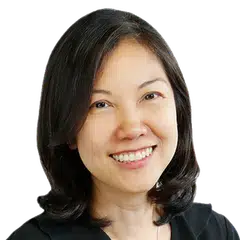
Angela Tan
Singapore
SINGAPORE Exchange (SGX) remains steadfast in its vision to provide products and services necessary for investors to have an efficient, single-point of access to Asia, even as Hong Kong Exchanges & Clearing Ltd makes a bold takeover bid for London Stock Exchange (LSE).
At SGX's 20th Annual General Meeting on Thursday, shareholders asked about the exchange's strategy and whether it needs to respond to the rival's move.
"We want to be a platform for participants that access Asia. Today, in our equities market, cash and derivatives combined, we offer a coverage of almost 99 per cent of Asia's gross domestic product,'' SGX's chief executive officer Loh Boon Chye told shareholders.
"With lower (interest) rates likely to stay for longer, generally it is harder to find returns,'' he said. In such an environment, investors looking for incremental returns will have to look for growth across multiple asset classes, not just equities.
In the last two years, the exchange has invested in platforms that would ensure it can scale up these asset classes.
Kwa Chong Seng, SGX's chairman, said the board spends a lot of time on strategy. "Singapore is a very important trading centre, the third biggest foreign exchange platform in the world after New York and London. We are fortunate that Asia is growing faster than the rest of the world. So we have a lot of opportunities ahead of us,'' he said.
"But one of the things we find is that as markets develop, you have to invest and you have to be early.''
Mr Kwa cited the successful launch of SGX iron ore futures as a venture it invested in early. "If we invest well and keep our focus, we will be able to grow the businesses that are very sticky and that will stay with us,'' he said.
Mr Loh said SGX has been positioning itself along macro and investor trends that reinforce its strategic focus to build a multi-asset exchange over the last three years. These trends include a low interest rate environment, Asia's dominance in global growth and the internationalisation of the Asian markets, including China.
Since SGX was formed 20 years ago through the merger of the Stock Exchange of Singapore (SES) and the Singapore International Monetary Exchange (Simex), the landscape has changed.
"What we have seen is the shift beyond single asset class exchanges, and beyond just the business of trading and clearing," he said.
In addition to equities, exchanges have added commodity derivatives. There has also been a shift towards the foreign exchange and fixed income asset classes.
New services and infrastructure have been added. These include index businesses as more investors use indices to manage their investment portfolios, and leverage technology to build new platforms.
In FY2019, the exchange expanded its products and service offerings across asset classes to build up its multi-asset business. It grew its international presence, setting up new offices in New York and San Francisco, and strengthened the London team.
SGX invested in companies such as Trumid, BidFX and Freightos to support the growth of its fixed income, currencies and commodities (FICC) businesses, widening its partnerships and networks.
"Overall, we delivered a strong performance, with highest revenues in derivatives on the back of record volumes and open interest,'' Mr Loh said.
For fiscal year 2020, SGX intends to further expand the equity product range. Investors will be able to trade more equity indices and the underlying stocks, whether through structured products or derivatives. It will also expand the suite of products to complement its iron ore products, with more freight derivatives.
It will focus on growing the adoption of its fixed income, commodities and FX trading platforms for the over-the-counter (OTC) market. It will also digitise processes and enhance services in the the cash equities market.
Connecting OTC and exchange trading and clearing is an area Mr Loh sees significant growth opportunities.
"Asian FX futures trading volume accounts for only US$17 billion per day. This is the space that SGX is operating in. Today, more than US$330 billion of derivatives are still traded OTC and this, in our mind, can be 'futurised'. In other words, the opportunity for the Asian FX futures market to grow is significant,'' he said.
SGX, which has made strategic investments in several companies, will now focus on deepening collaboration for mutual growth.
"We will also continue to build new partnerships and strengthen our global network to facilitate debt and equity fundraising for companies,'' he said.
The exchange will be pushing to increase the international distribution of its pan-Asian offerings, as well as to promote its index business globally. "Overall, we like to grow performance of each of the asset classes,'' Mr Loh said in reply to queries on SGX's future growth drivers.
"Our aim in the next five years is to double revenues in FICC business line. We will also grow our overall equity business...and scale up our data, connectivity and indices (DCI) business,'' he said.