SGX expands market connectivity with IDX; eyes stronger collaboration with regional bourses
Navene Elangovan
A DEPOSITORY receipt linkage scheme and cross-listings of exchange traded funds could be set up between the Singapore Exchange (SGX) and Indonesia Stock Exchange (IDX) in the next few years.
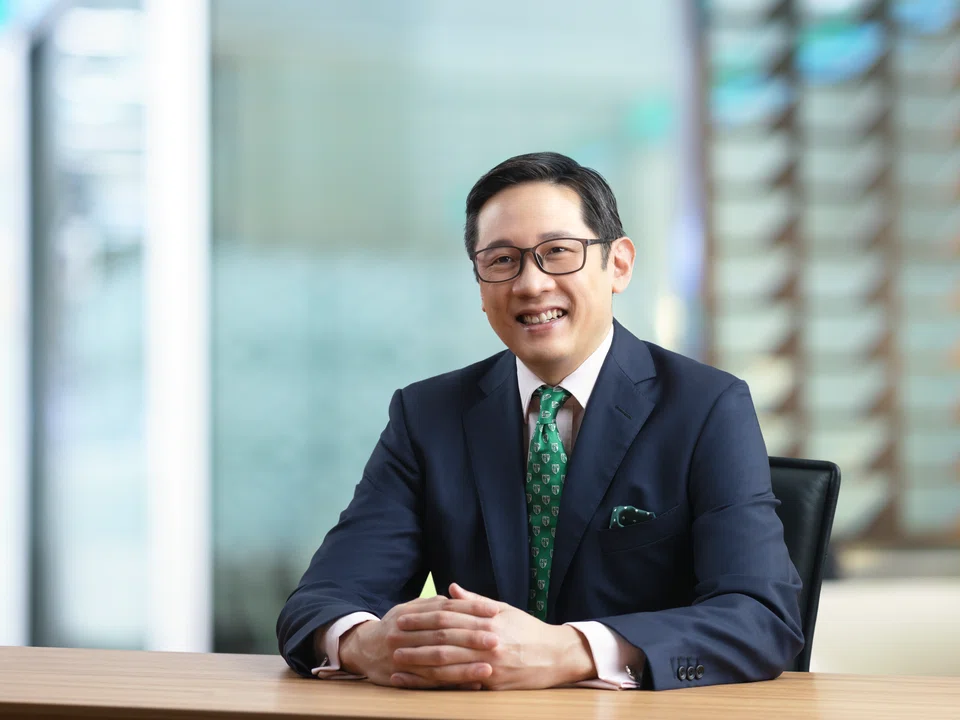
These will be possible under a recent Memorandum of Understanding (MOU) inked between both exchanges which will allow them to lay the groundwork for greater market connectivity, said SGX Group’s president Michael Syn.
“The MOU is the first step because it states the intention and then resources to be put to work on the regulatory side and the exchange side to work it all out,” said Syn, who also heads SGX’s global markets division.
Unlike the depository linkage scheme with Thailand, the collaboration with IDX will be “broader in scope”, he added.
SGX and IDX will also explore facilitating dual listings and creating indices as part of the MOU.
The collaboration with IDX is part of SGX’s efforts to foster greater market connectivity with regional bourses, said Syn in his first interview with The Business Times since his appointment as SGX president last October.
With Asean’s economy set to thrive, the capital markets in the region have to do more to benefit collectively from the Asean’s growth even as individual countries maintain their sovereignty, said Syn.
To this end, SGX will collaborate with regional bourses in a “federated” manner, where different market infrastructures are connected despite their differing currencies and capital controls.
Syn said he expected greater collaboration across Asean in the next five to seven years, beginning with the stock markets and followed by the derivatives markets.
However, he acknowledged that there is “no guarantee” that collaborations within Asean markets would perform well.
“But there is a theory that says that this (collaboration) makes sense from a commercial portfolio management and economic history perspective – which is that eventually markets grow. And when they grow to a certain size, people will want to invest in them,” said Syn.
On areas that SGX could push ahead against its peers, Syn said that as a developed market, Singapore has “a much bigger” investor pool than emerging markets.
Thus, “any significant company” in Asean which has to conduct business internationally and raise hard currency will eventually list in a developed market such as Singapore, said Syn, citing the example of Philippine liquor giant Emperador’s secondary listing on SGX in 2022.
Governance reforms
On whether governance reforms such as those in Japan could help to boost company valuations here, Syn said that governance reform alone “is not the proximate driver of wealth creation”. Markets also have to pay attention to other factors of wealth production.
In the case of Singapore, the market has to prepare for a digital economy where people live their lives as digital natives, said Syn. To this end, it will be important to harness data and turn it into insights and information for the marketplace, he added.
Exchanges can also provide transparent, reliable and accurate data to help companies to improve valuations, said Syn.
Syn said that as the economy in the digital space starts to mirror the real world economy, more companies will need marketplaces such as Singapore’s which are already regulated.
Future-proofing
When asked about his priorities as president and head of global markets, Syn – who joined the bourse in 2011 as senior vice-president – said that the group will continue to focus on its mission and vision.
“I think we should be very clear that the basic purpose, vision and mission is all in place. And this is, in a way, trying to make sure that we deliver our resources more accurately or bring new resources to bear,” said Syn.
He added that SGX has to think about how it will “future-proof” its technology. This is especially so in an increasingly deglobalised world where SGX will have to find ways to work with other market zones so that investors continue to use and access the Singapore market.
Syn shared that SGX is embarking on “a quite intense review” of how it will future-proof its technology in the next five to 10 years, including aligning the laws, regulations and risk practices between Singapore and other regional markets.
Said Syn: “The role that I have is to try and make sure that for every dollar or hour that our people have money to spend, we get more out of it – and we get it faster.”