SGX to launch depository receipts for Airports of Thailand, CP All, PTT E&P

Uma Devi
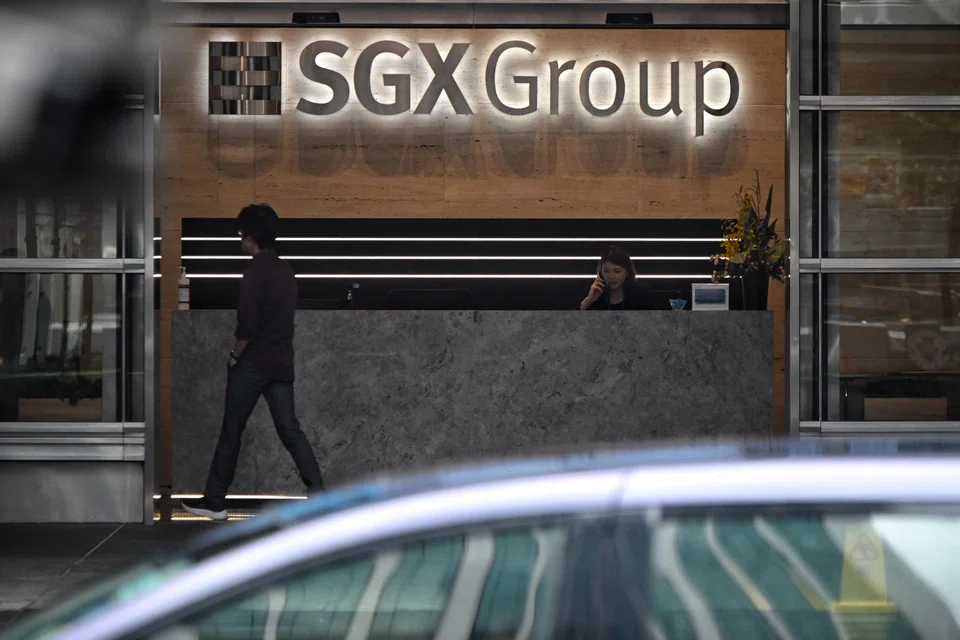
SINGAPORE investors will soon be able to buy direct exposure to three of Thailand’s largest listed companies, through newly launched Singapore depository receipts (SDRs).
The Singapore Exchange (SGX) announced on Tuesday (May 23) that it will launch three SDRs under a Thailand-Singapore DR Linkage on May 30. The three Thai stocks are airport operator Airports of Thailand, food retailer CP All and energy play PTT Exploration & Production (PTT E&P).
All are constituents of the benchmark SET50 Index. Airports of Thailand has a weightage of 8 per cent of the SET50, while CP All and PTT E&P each have a weightage of 5 per cent.
The SDR is an unsponsored depository receipt that gives its holders beneficial interest in an underlying security. Each SDR is convertible into the underlying security through an issuance and cancellation process, and will be issued on a 1:1 basis.
SDRs will trade on SGX’s securities market during local trading hours and in Singapore dollars. Investors can trade SDRs through their local brokers.
While local brokerage and exchange fees apply, investors will save on overseas trading fees, foreign exchange fees and management fees.
“With greater connectivity between Singapore and Thailand, investors can now widen their investment horizons and participate in the growth potential of Asean,” said Loh Boon Chye, chief executive of SGX.
“I am optimistic the SDR will spur increased participation across borders and create more vibrancy in our capital markets, and for the DR Linkage to be the catalyst to spark further collaboration between exchanges in this region.”
Speaking to reporters at a briefing ahead of the launch, SGX’s head of equities and senior managing director Michael Syn said Thailand was a suitable pick for the SDRs because the country’s economy is “nothing like (Singapore’s)” in terms of the companies listed on the stock exchange.
These three companies are “interesting” and “potentially popular names” that could pique retail investor interest, he added.
Target investors include both retail and institutional investors, except the “very large ones”, such as pension funds, which would tend to trade directly in those markets.
“There are significant companies outside Singapore, like in Thailand, which do domestic and slightly regional business. If you want to have an Asean portfolio, you have to slowly also incorporate those businesses into your portfolio,” said Syn.
Building a regional portfolio can be difficult for investors, particularly retail ones, Syn added. Barriers to entry include foreign currency requirements and capital controls.
For instance, an investor wishing to buy a stock on the Thai stock exchange would need Thai baht. Foreign investors would therefore incur currency exchange charges. SDRs would mitigate such costs.
Syn declined to comment on specific Singapore companies that will feature in SDRs, saying the list has yet to be finalised. Beyond Thailand, other markets that could be considered for these SDRs include Indonesia and Malaysia, as well as Vietnam and the Philippines.
Serene Cai, head of securities trading at SGX, added that the exchange will look at the “jurisdiction and quality” of companies for these SDRs. Some factors include the size of the company, liquidity and its free float.
Market watchers generally termed the launch of Thai-underlying SDRs as a positive move for the Singapore market.
Melinda Sam, chief executive of the Securities Association of Singapore, said the move “brings added efficiencies to access markets in the region”.
“We appreciate exchanges broadening the product shelf that allows us to cater to our clients with different investment offerings,” she said, adding that the Thailand-Singapore DR linkage will boost the vibrancy of both markets.
S Nallakaruppan, president of the Society of Remisiers, said the move would bring about a certain level of “diversification” for the local stock market, which is currently heavily skewed towards stocks in the banking and finanical sectors, as well as real estate investment trusts.
The Thai stock market, he said, has stocks in industries such as agriculture and mining, which could give investors more options.
Nallakaruppan, however, said he is not expecting a “big bang” type of interest from investors given that markets are currently “on tenterhooks now” with macroeconomic uncertainties and the US debt ceiling woes.
“I think it will be more gradual, and it will gain more traction over time,” he said. “Hopefully this takes off, and it can be replicated for other markets like Vietnam and Malaysia.”
TRENDING NOW
Grab CEO’s wife Chloe Tong on life with Anthony Tan and finding her purpose
US trade chief to consider trade deal tariff caps in excess capacity probe
Bee Cheng Hiang customers’ e-mail addresses exposed in Singapore’s first case of AI-related data breach
DFI Retail to take over Starbucks business in Asia from Maxim’s Caterers