SGX-listed agri-commodity players post resilient earnings despite dent from forex losses and higher rates
Analysts expect crude palm oil prices to remain firm in near term

SINGAPORE-LISTED companies in the volatile agri-commodity sector have posted resilient first-half results this year despite foreign exchange losses from weaker regional currencies and elevated interest rates.
Meanwhile, analysts expect crude palm oil (CPO) prices to remain firm in the near term.
The S&P GSCI Softs index, which measures the performance of all soft commodities weighted on a world production basis, was up around 12.7 per cent on the year as at end-June. This comes as El Nino weather patterns disrupted production and countries adopted protectionist policies, which created supply-demand imbalance.
During H1 FY2024, soft commodities such as palm oil, rubber and cocoa traded at an elevated level in the futures markets amid geopolitical tensions and climate concerns.
On the Singapore Exchange (SGX), Indofood Agri Resources , First Resources and Mewah International all registered earnings growth in H1.
Agribusiness giant Wilmar International registered a 5.2 per cent profit rise to US$579.6 million on the year amid intense price competition as well as sluggish consumption in its main market, China.
“Visibility remains constrained for Wilmar in the near-to-medium term, at least until we see better prospects for China’s growth trajectory,” said Maybank analyst Thilan Wickramasinghe, who has lowered his target price for the company to S$3.25 from S$3.44 upon cutting earnings forecasts.
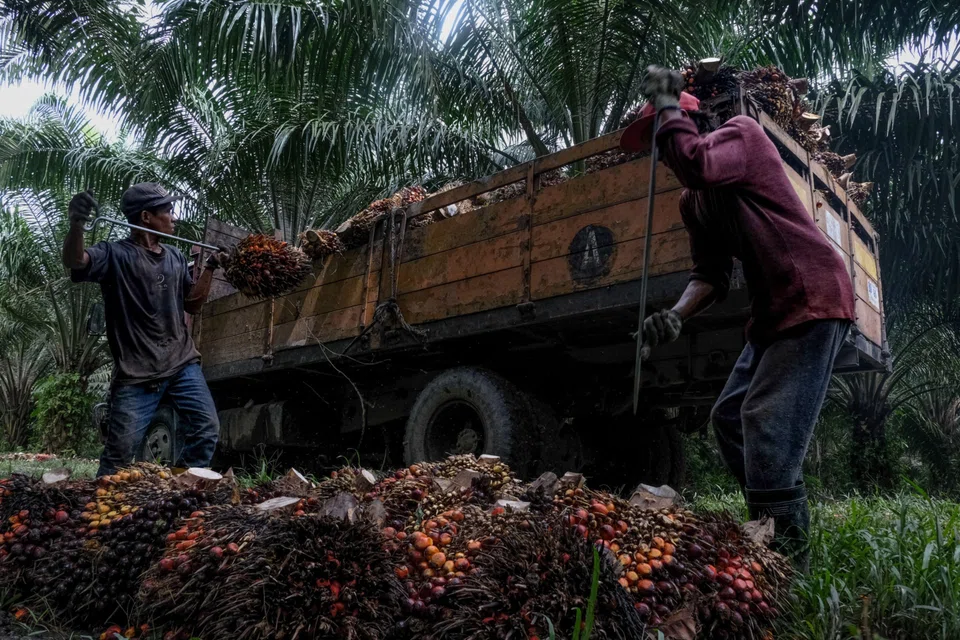
First Resources’s H1 profit grew 45.4 per cent from the corresponding period a year ago, lifted by profit in the second quarter surging 88 per cent on the year on higher fresh fruit bunch (FFB) production volume and the downstream segment returning to the black.
The performances of Kencana Agri , Golden Agri-Resources (GAR) and Bumitama Agri were weaker as the Indonesia rupiah softened against the greenback during the period.
Indonesia-based plantation company Kencana Agri saw the steepest profit drop. Its H1 net profit was down 69.6 per cent at US$568,000 year on year, given a lower revenue and forex losses mainly derived from US dollar-denominated bank loans.
GAR posted 44 per cent lower earnings of US$102 million despite a higher revenue. The group attributed the profit drop to unrealised forex loss, higher net financial expenses and higher income tax expenses.
Analysts noted that GAR’s disappointing earnings were mainly caused by El Nino-affected FFB output. “While productivity should improve in the second half as the weather has since normalised, GAR will still end the year with a weaker year-on-year output in 2024,” said RHB’s research team, which lowered GAR’s whole-year earnings forecast by 5 per cent.
Similarly, Indonesia-based Bumitama Agri registered a 27.9 per cent decrease in profit to 856.8 billion rupiah (S$72.2 million) on higher finance costs and forex losses, on top of a weaker FFB output.
Maybank analyst Ong Chee Ting revised Bumitama Agri’s earnings forecast up slightly on an industry-wide upward revision to the CPO average selling price, offset by an output cut on the disappointing H1 results. He raised the company’s price target to S$0.78 from S$0.77 with a maintained “buy” call.
CPO outlook
CPO prices continue to be under pressure due to competition from alternative edible oils, uncertainties over import demand, and expected supply shocks from the La Nina event in H2. This is on top of new legislation from the European Union Deforestation Regulation, which comes into force at the start of 2025.
In the near term, Nomura analyst Raghavendra Divekar expects average CPO price to remain flat at around RM3,850 (S$1,150) per tonne by Thursday (Aug 22), subject to export declines or soybean prices falling that could further lower the price down to RM3,800 per tonne.
He noted that higher soybean production forecast by the US Department of Agriculture, released in early August, as well as significantly higher-ending stocks numbers globally would continue to depress soybean oil prices, which is negative for CPO prices.
Meanwhile, Chinese soymeal inventories have climbed to a seven-year high as domestic feed demand fails to absorb sustained imports. “The oversupply has led to crushers cutting back production or even suspending operations due to limited storage,” said Divekar, noting that such impact on palm oil could be muted given that weak crushing could imply feeble volumes for soybean oil in China.
In a report on Tuesday, BMI Research raised its forecast for the average price of Bursa Malaysia-listed third-month CPO futures contracts in 2024 to RM3,850 per tonne as the CPO prices’ easing throughout H2 has not occurred to the expected extent.
The team expects CPO prices to face bearish headwinds into 2025, falling to an average of RM3,700 per tonne up to end-2024.
“In the near term, increased tension in the Middle East, which could see fuel prices and biofuel feedstock demand increase, represents the principal upside risk to our outlook,” BMI added.
Other agri-commodities players
Mainboard-listed natural rubber Sri Trang Agro-Industry saw its H1 earnings down 24.9 per cent at 298.7 million baht (S$11.4 million), compared with the same period in the prior year, on a significantly higher share of profit attributable to non-controlling interests of its subsidiaries.
Chocolate and confectionery maker Delfi was also hit by the rupiah’s depreciation during the half-year. Its H1 profit dropped 22.3 per cent to US$19.6 million, on top of a 11.8 per cent decline in net sales of its own brands on reduced promotion spending.
Agri-food giant Olam , as one of the largest global suppliers of cocoa beans, coffee, cotton and rice, posted a muted H1 earnings growth on higher finance costs.
While the group expects that its operations in H2 will continue to be affected by geopolitical and macro uncertainties, it also thinks that inflationary pressures will soften, which could lessen its financing burden to tackle price surges of commodities such as cocoa and coffee.
TRENDING NOW
Grab CEO’s wife Chloe Tong on life with Anthony Tan and finding her purpose
Three ex-employees of Envy group join Ng Yu Zhi in bankruptcy
He built the Vingroup empire. Now South-east Asia’s richest man is handing some key roles to his sons
If AI has a one-in-five chance of destroying us, what do we do with the remaining four?