

SGX must find ‘sweet spot’ in culling underperforming firms as regional peers tighten curbs: market experts
The challenge lies in balancing market quality with competitiveness, say market observers
 Add BT as a preferred source
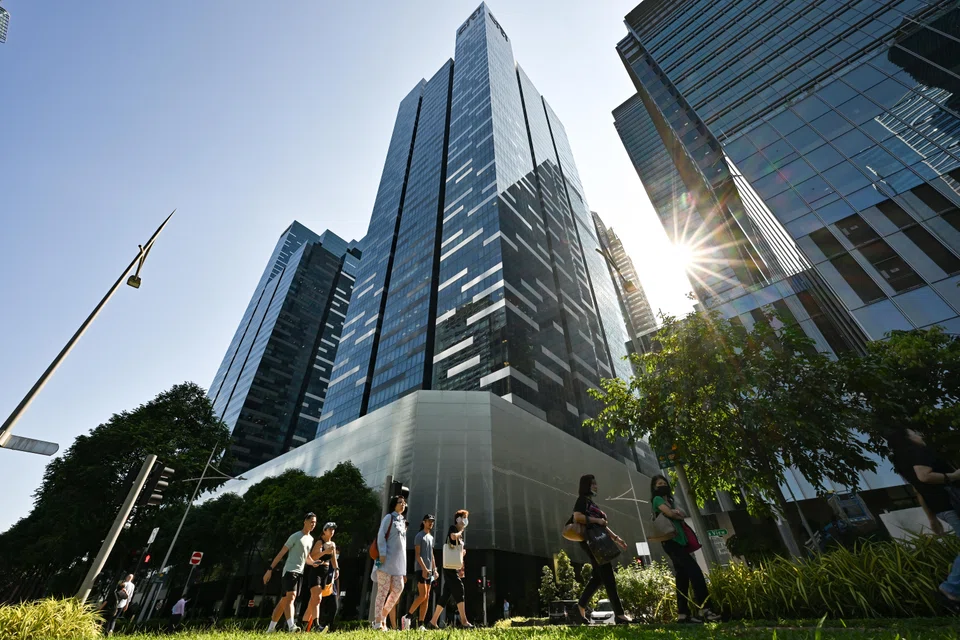
[SINGAPORE] The Singapore Exchange (SGX) may need to calibrate its current approach in dealing with underperforming companies, particularly as regional peers tighten rules on so-called “zombie” firms, market observers say.
The term “zombie firm” emerged in the 1980s and gained prominence in the 1990s, when economists linked the persistence of weak, heavily indebted companies to Japan’s economic stagnation.
“Most of us will describe them as loss-making firms that do not seem to be creating a semblance of progress,” said James Leong, chief executive of Singapore-based asset manager Grasshopper Asia.
Such problematic firms are not unique to Singapore, with Japan and Korea also having a significant share of companies that report persistently negative returns.
Even though such companies exist, the financial watch list was removed in October as part of a shift to a more transparent disclosure-based regime by Singapore Exchange Regulation (SGX RegCo).
The bourse regulator acknowledged feedback from a public consultation in May 2025 that the watch list might hinder companies’ ability to secure funding or attract customers, depress share prices and restrict investor exit opportunities.
Getting “zombie firms” back into shape
In Korea, there have been drastic moves to tighten delisting criteria. For example, starting from Jul 1, companies with a market capitalisation below 20 billion won (S$17.5 million) will be delisted from the Kosdaq market. The threshold will rise to 30 billion won at the start of 2027.
With Japan keeping up its focus on corporate governance reforms, something it started in 2022, many firms with low market capitalisation continue to delist. In 2025, a record number of 125 companies left the Tokyo Stock Exchange.
Lee Ooi Keong, managing director at board and C-suite advisory firm Clover Point Consultants, is concerned that “SGX has moved in the wrong direction on zombie firm discipline”.
SEE ALSO


He said the stigma and self-fulfilling prophecies provided some justification for the removal of the financial watch list, but cautioned that “the cure may be worse than the disease”.
Lee pointed out that SGX had earlier removed its minimum trading price watch list in 2020.
“Removing these (watch lists) as well as the delisting regulations simply allows loss-making or suspended stocks to remain on the SGX for a very long time,” he added.
Professor Mak Yuen Teen, director of the Centre for Investor Protection at NUS Business School, considers it “a mistake to totally remove mechanisms for culling zombie firms”.
In his view, at least one such safeguard should have been retained, specifically the financial watch list. He suggested that the framework could have been strengthened by adding a criterion covering companies that receive a disclaimer of opinion or a qualified opinion from auditors.
The financial watch list required companies to improve their fundamentals and achieve profitability. It targeted firms with three consecutive years of losses, giving them two years to turn their performance around.
However, there are arguments against such “label-based” mechanisms.
Jimmy Seet, capital markets partner at PwC Singapore, explained watch lists can become self-fulfilling, further restricting funding options for otherwise recoverable businesses.
Instead, SGX relies on disclosure requirements, including mandatory reporting of a third and subsequent consecutive year of losses.
“This continued requirement ensures that investors remain informed about a company’s financial health, thereby supporting informed decision-making without the need for label-specific watch lists,” Seet added.
Replacing watch lists with disclosure requirements, Clover Point Consultants’ Lee noted, puts the onus on investors to act on that information.
Finding that sweet spot
Beyond the debate over watch lists, market observers say the broader challenge for SGX lies in balancing market quality with competitiveness.
Grasshopper’s Leong believes liquidity is a more pressing issue than “zombie firms”.
The deeper structural constraint, he said, is limited trading interest in smaller local counters. Instead, retail investors seeking small-cap opportunities often gravitate towards larger, more liquid markets such as Nasdaq or Hong Kong Exchange.
When it comes to zombie firms, Lee pointed to SGX’s Catalist board as a key area of concern. About 59 per cent of companies listed there are unprofitable, while 86 per cent are trading below their initial public offer price.
“Catalist has a higher incidence of loss-making companies and accounts for less than 1 per cent of market capitalisation despite being a third of all listings,” he added.
Leong also cautioned that if a large number of low-quality and lightly regulated companies are allowed to list on the Catalist board without being required to improve their performance, it could become a concern.
“In various other markets, they are required to generate more revenues or increase market caps…those are good mandates,” he added.
PwC’s Seet said: “In my view, the ‘sweet spot’ lies in a regime that enforces high standards of disclosure, governance and market conduct.”
Additionally, he sees regulatory support for non-performing listed companies to pursue restructuring and turnaround plans as beneficial – helping to maintain SGX’s competitiveness relative to its peers.
Decoding Asia newsletter: your guide to navigating Asia in a new global order. Sign up here to get Decoding Asia newsletter. Delivered to your inbox. Free.
Copyright SPH Media. All rights reserved.
TRENDING NOW

Asia-Pacific aviation: is up really the only way?

Philanthropy should belong in the family wealth conversation: Standard Chartered Global Private Bank

Russia’s ‘pivot to Asia’ takes a turn as it prioritises ties with isolated regimes over bigger economies

Income Insurance CEO Andrew Yeo resigns, company in process of identifying successor

