

SGX-Nasdaq dual-listing bridge to debut in mid-2026; resulting IPOs could tap EQDP funds
The changes to the Securities and Futures Act could pave the way for more tie ups between SGX and other exchanges

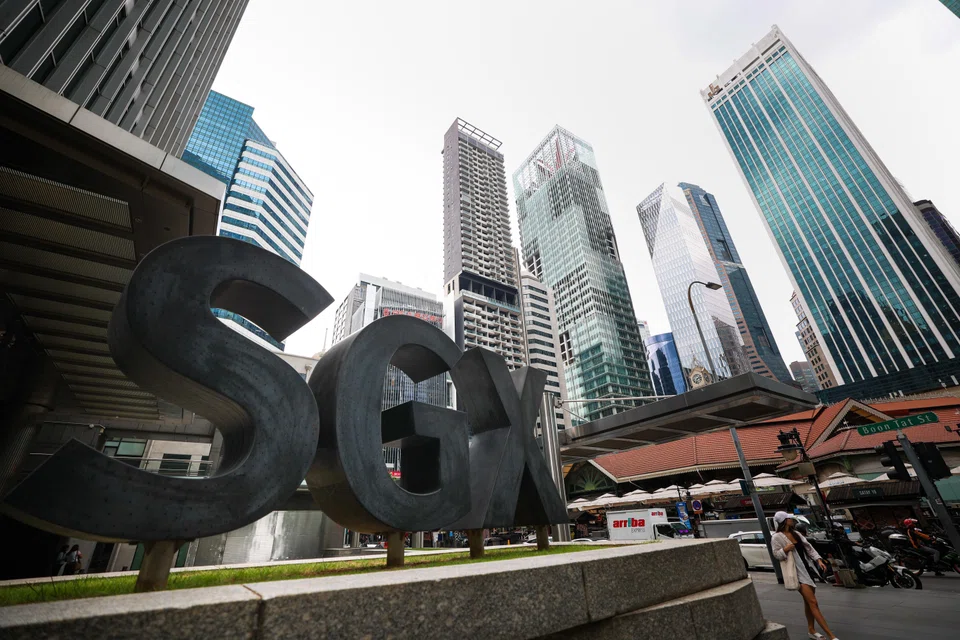
[SINGAPORE] Plans for the much-anticipated dual-listing bridge between Singapore Exchange (SGX) and Nasdaq are going smoothly, with the launch expected in mid-2026.
In an update on Thursday (Apr 30), the Monetary Authority of Singapore (MAS) and the Singapore Exchange Regulation Company (SGX RegCo) said that rules and frameworks are being harmonised with those of the US and Nasdaq.
MAS and SGX RegCo had earlier issued consultation papers, on adapting the regulatory framework and new listing rules, respectively, for the SGX-Nasdaq dual listing board.
Tan Boon Gin, CEO of SGX RegCo, said it is rare to see this level of interest and engagement in its consultation paper.
“I can also say that the profile of the companies that have expressed interest is exactly the profile we had expected to see: companies that are well-known here in Asia and that have global ambitions,” he said in response to queries from The Business Times.
The new listing rules will align the initial public offering process with Nasdaq’s timeline and process.
Issuers doing a dual listing on the Global Listings Board (GLB) are expected to receive the eligibility-to-list letter from SGX RegCo shortly after Nasdaq’s approval. Arrangements are in place between SGX RegCo and Nasdaq for coordination and regulatory cooperations – so that it will be unlikely for one exchange to approve the listing and the other to reject it.
As proposed earlier, the minimum market capitalisation will be S$2 billion, with 15 per cent of the IPO value or S$75 million available for the Singapore tranche, whichever is higher.
Of the Singapore tranche, 5 per cent or S$50 million, whichever is lower, will be reserved for retail brokers.


To harmonise this with Nasdaq rules, there will be no separate ATM subscription for retail investors. They will need to subscribe for a GLB IPO offer through a broker.
Shortfalls in retail demand may be reallocated to institutional investors.
“We have focused on simplifying the dual-listing process while ensuring sufficient allocation to the Singapore market,” said Tan.
MAS noted that there was feedback from market participants on how to minimise friction and streamline the IPO process for dual listings.
Other suggestions to further harmonise regulatory requirements in the areas of investor outreach, prospectus registration timing and process are also being considered, where feasible.
These included engaging institutional investors prior to lodging a prospectus to gauge interest, and issuers and underwriters communicating with intermediaries earlier to prepare for engaging retail clients.
MAS and the relevant authorities will retain full discretion to mount enforcement action against breaches in Singapore.
MAS and SGX will make the final decision on all listings and prospectus registrations in Singapore.
Within the adapted framework are opportunities for more tie-ups with exchanges that follow the standards of the International Organisation of Securities Commissions.
This gives MAS the flexibility to enter into arrangements with other exchanges, noted Robson Lee, partner at Kennedys Law. This would also reduce the implementation time for future arrangements, he noted.
Once the amendment to the Securities and Futures Act is passed, “MAS is empowered and given the authority to make regulations and come up with details for GLB and subsequent other arrangements”, said Lee.
Supply and demand
The GLB will help with providing a supply of investible companies to tap the funds available under the Equity Market Development Programme (EQDP), said Kenneth Tang, deputy head of Asian equity at Amova Asset Management.
The Singapore market has been riding the EQDP high, but without adequate supply, it would be a bubble, he said.
“The GLB should be seen as a solution for supply, and not just for the main bourse, but a supply where Singapore becomes more aligned with a global IPO or a bourse,” he added.
The GLB represents a call option on liquidity to Tang, who noted that the Singapore market has been left out of mega deals for many years. This dual-listing bridge will allow access to local liquidity pools here as well as to larger global funds in the US.
“Liquidity gives birth to more liquidity. This is a way to tap into a greater liquidity pool that we hope will one day give rise to 3 billion to 4 billion in average daily volumes on the SGX.”
Amova’s Tang noted that the Singapore market is currently dominated by banks and real estate investment trusts, with the GLB potentially being able to provide options that the Singapore market lacks.
Since the GLB was first announced in Jan 2026, market players have seen increased inquiries and discussions about dual listings using the bridge.
But Jimmy Seet, capital markets partner at PwC Singapore warned that this is not for every company.
“Companies should first assess whether they are prepared to operate within two regulatory and investor environments, including managing investor relations and expectations, and liquidity dynamics across both markets.”
Potential listees must be aware of the internal controls and governance rules applying to operating in the US capital markets. Having a listing in the US means companies are exposed to higher scrutiny in financial reporting, and the requirements under the Sarbanes-Oxley Act, the law enacted after major accounting scandals such as Enron and Worldcom.
Seet said: “Building a sustainable controls framework takes time, and companies would be well advised to start preparing early to ensure they are ready to withstand the level of auditor and regulatory scrutiny expected in the US market.”
Robert St Clair, who heads investment strategy at Fullerton Fund Management, said these companies are likely to have a strong presence in Asia, or are looking to tap the capital markets in the US.
He added that these companies probably want to list on Nasdaq, but may not be big enough to do it without the support of their home market, he added.
These companies might come from the industrials segment, which has been generating alpha in the Singapore market for a couple of years now, said St Clair.
Coupled with the ongoing manufacturing reshoring in the US, it could make sense for industrial firms, especially green and clean energy firms, he added.
“Industrials has been one sector that’s been a very positive story, because their weight is not so large, but they have achieved solid alpha for the last couple of years because the external demand story is so positive.”
Local market players will have to quickly tie up with US market participants to be able serve companies going through the GLB listing process, said Kennedys’ Lee.
Local issue managers and underwriters might not have a deep network to sell into the US, something local US players would be able to provide.
The companies that will come through the GLB pipeline will also be different from the companies that investors are familiar with on SGX.
Lee said: “It is important that the entire ecosystem – investors as well – have a different mindset towards looking at a company that may not have a profit track record, but has the potential for growth.”
Decoding Asia newsletter: your guide to navigating Asia in a new global order. Sign up here to get Decoding Asia newsletter. Delivered to your inbox. Free.
Copyright SPH Media. All rights reserved.
TRENDING NOW

DBS, OCBC, UOB rout lops billions off STI as inflation, rate concerns spook investors

Grab CEO’s wife Chloe Tong on life with Anthony Tan and finding her purpose

OCBC sheds S$8 billion in value as shares close nearly 6% down; analysts cautious on banks

Deal between tycoon friends sparks scrutiny of Philippine power sector

