SGX new boss sets his sights on bringing in big IPOs
But it's still no lunch break for remisiers; trading has to be continuous, he says

Anita Gabriel
Singapore
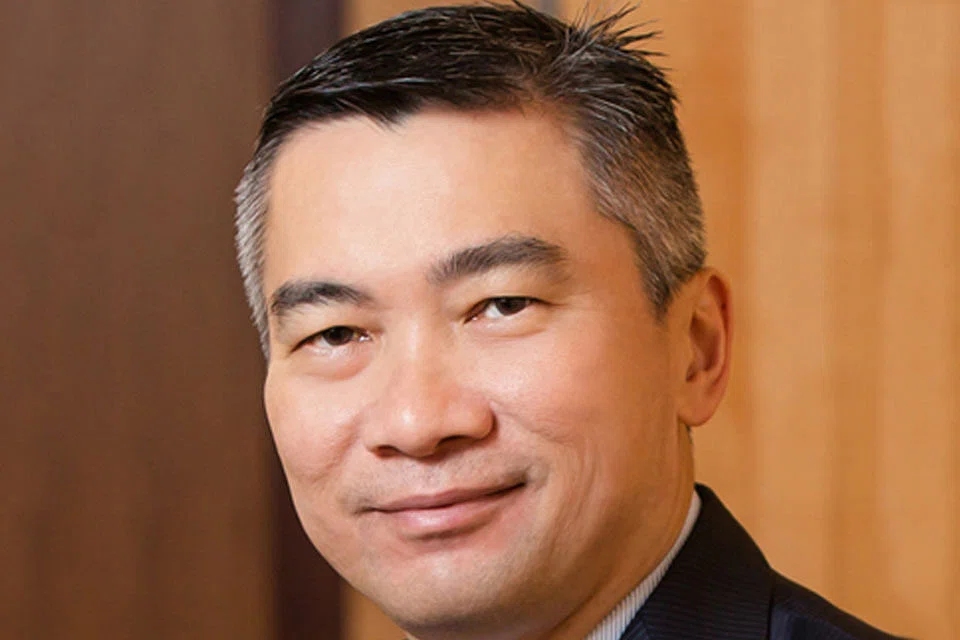
THE newly-installed chief executive of the Singapore Exchange (SGX) Loh Boon Chye, who has actively touched base with market participants, including remisiers, in the three weeks since he took office, has announced that the key sore point among remisiers - their non-existent lunch break - is not coming back.
It was his predecessor Magnus Bocker who scrapped the 90-minute mid-day break, and Mr Loh indicated on Wednesday that he had good reason to keep it scrapped:
"Singapore is an international business hub and SGX is an integral part of that. Continuous all-day trading is an important feature of risk management, and if we want to remain an international business and financial hub, we need to be in line with such best practices."
The 51-year old veteran banker and former head of Bank of America Merrill Lynch's global markets in the Asia-Pacific said in his first media briefing since assuming his post on July 14 that he had received "candid feedback" from industry stakeholders, and was keen to build a "constructive relationship" with them; however, he believed in "mutual accountability and shared responsibility" to build a vibrant and robust exchange.
"If all (our objectives) are aligned, we will factor in the feedback as much as we can and feed that into our strategy," he said.
He said candidly that he did not have to think hard about accepting the position as SGX boss; he had in fact "jumped at it", having come from a 25-year long banking career and nine years on the SGX board until 2012. He aims to tap the network he has built in the region in his new job and bring in the "big" Initial Public Offerings (IPO).
"It is too early to talk about my immediate priorities. But we recognise some challenges, such as the need to bring in bigger IPOs," he said, adding that in this area, the exchange was moving in the right direction.
Its efforts include the direct listings framework between Singapore and the China Securities Regulatory Commission (CSRC), under which China-incorporated companies must seek their regulator's approval before they list on SGX.
The appointment of senior SGX executive Lawrence Wong as the exchange's listing head, who will take up his post in Beijing in September, is part of the drive to build the China business.
Mr Loh said: "We have attracted a lot of interest from a good mix of companies in terms of geography (to list on SGX). But IPOs are dependant on market conditions. While we will continue with these initiatives, the results will take time."
Firms poised to apply for stock offerings here hail from South-east Asia, Japan and China, said Mr Wong at an earlier press briefing on SGX's financial results.
For the full fiscal year ended June 2015, SGX drew 34 new listings, the same as a year ago. However, the size of the offerings were lower; S$2.7 billion was raised, versus S$4.8 billion a year ago.
So far this year, there have been five IPOs, with all the action centred in SGX's Catalist. The one hopeful mainboard listing this year by Manulife US Reit was scrapped on the back of weak market conditions.
"We need to work on the big IPOs... but they have to be quality IPOs. For that, we need a healthy, stable market environment," Mr Loh stressed.
The upside, he said, is that despite the global economic slowdown, Asia has one of the highest growth rates, and companies in the West which are eager to grow in the region will find SGX a "useful platform" to do just that.
Asked whether he plans to shake things up at the SGX or pursue the policies already in place to ensure continuity, he replied: "It's too early for me to say. Let's not forget that Magnus and the team have done a good job. We'll continue to work on some things that were introduced as recently as six or even 18 months ago."
He acknowledged, however that market participants are nursing a great deal of expectations and have drawn up their "to-do list" for him.
"That's encouraging and exciting as people want us to be vibrant and robust. There are many different views, and it's important for me to bring them together and factor them in our strategy," he said.
READ MORE: SGX Q4 profit up 24%