SGX to propose scrapping rule on minimum trading price: sources
Two years after rule effected, SGX now faces wave of delistings in 2020 as the first batch of non-compliant issuers come up against their deadline
Singapore
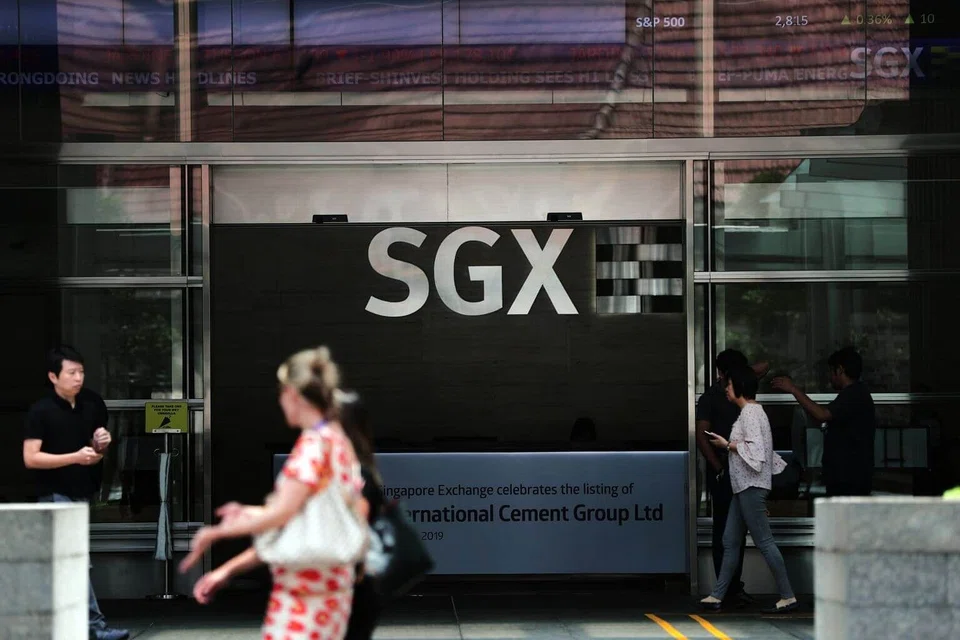
SINGAPORE Exchange Regulation (SGX RegCo) plans to seek public feedback on a proposal to scrap the minimum trading price (MTP) requirement for Mainboard-listed companies, The Business Times has learnt.
A public consultation will pave the way for an eventual reversal of the market operator's decision three years ago to impose the share price hurdle, and could avert the prospect of the exchange having to delist up to 54 companies in June 2020 because they could not raise their share prices in time.
Asked for comment, an SGX spokesperson said: "SGX RegCo regularly and proactively reviews our policies for their effectiveness in meeting their stated objectives for the market. Our focus is on policies of high market impact and the Minimum Trading Price requirement is an example of such a policy."
Under rules that were first adopted in 2016 and then modified and effected in 2017, a Mainboard-listed company must maintain a six-month volume-weighted average share price of 20 Singapore cents and a six-month average daily market capitalisation of at least S$40 million.
Failure to do so will get the stock added to the SGX watch list. Once on the watch list, companies have three years to raise their share price and their market cap, or they will be forced to delist.
The purpose of the rule was to address the risk that low-priced securities were more susceptible to excessive speculation and potential market manipulation. The rule also came about at a time when SGX was seeking to improve the quality of the issuers on the Mainboard.
But one side effect of the rule's introduction is that SGX could face a wave of delistings in 2020 as the first batch of non-compliant issuers come up against their deadline.
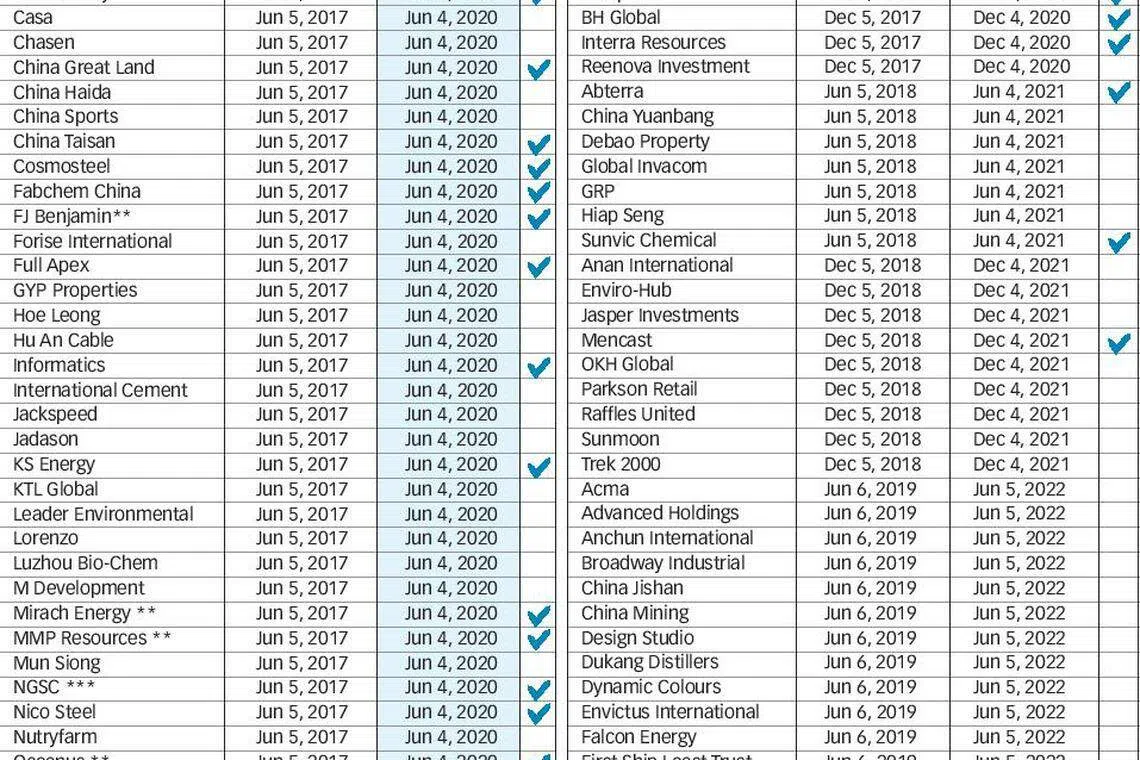
After SGX's first watch-list review under the revised criteria in June 2017, 66 companies were on the list for having too low a share price.
As of June 2019, 54 of those companies were still on the MTP watch list and could face delisting if they cannot raise their share prices by June 2020. Another 41 companies that have been added to the watch list after the initial group face deadlines after June 2020.
The numbers suggest that it is rather difficult for companies to escape the MTP watch list once they have been added to it.
So far, 23 companies have gotten themselves out by transferring to SGX's sponsor-based Catalist board, where there is no minimum price requirement, according to numbers provided by SGX.
Others have tried share consolidation, but none of the companies has managed to exit the list by raising its share price, according to SGX.
Qian Hu Corp, which breeds fish, is among the companies in that first group of additions to the watch list. It underwent a four-into-one share consolidation before the MTP rule took effect to avoid being placed on the watch list, but its share price declined even after the consolidation.
Qian Hu executive chairman and managing director Kenny Yap said he would "pop a champagne" if SGX did away with the MTP requirement.
"We wasted resources simply because they wanted a number: 20 cents," he said, arguing that share consolidation reduced the liquidity of Qian Hu stock because there were fewer shares in the market.
The prospect of facing delisting is particularly painful for Mr Yap, who takes great pride in the fact that Qian Hu Corp has won numerous accolades for its corporate governance and transparency efforts. The company is also profitable, he pointed out.
"I know that at some point in time SGX will say we can move to Catalist," Mr Yap said. "But why do I need a sponsor?... If it comes to a point in time when the exchange asks me to make a decision, I'll make it and tell them, it's your fault, not mine."
Lee & Lee lawyer Adrian Chan said the Mainboard's financial criteria watch list - which puts on notice companies with three straight loss-making years and a market cap below S$40 million - is a good enough gatekeeping mechanism.
"I understand that the introduction of the MTP requirement is intended to elevate the overall quality of the stocks listed on the Mainboard," said Mr Chan, who also sits on a number of company boards. "In addition, lower priced securities are considered to be more susceptible to market abuses and higher volatility.
"However, 'dressing up' the share price through consolidation exercises to meet the MTP requirement does not ultimately address the underlying value of the stock or the profitability of the business of the company. So you could have a situation where a perfectly profitable business triggers a possible default under its loan or other contractual covenants due to the company sliding into the MTP watch list when its share price drifts downwards."
Stefanie Yuen Thio of TSMP Law Corp said the MTP rule is a "blunt tool" aimed at discouraging market manipulation and rigging. But it is no longer necessary with new technology and resources now available to improve market survillance and analysis, she argued.
"The MTP was an arbitrary number but it had very real implications for listed companies whose market capitalisation and trading price traded below the thresholds - they suffered reputationally and had greater challenges getting support from lending banks. Removing the MTP ball and chain will allow them to focus on getting their businesses back on track."