SGX rebrands equities business to SGX Stock Exchange as STI marks 60th anniversary
The move follows the completion of the Equities Market Review Group’s recommendations

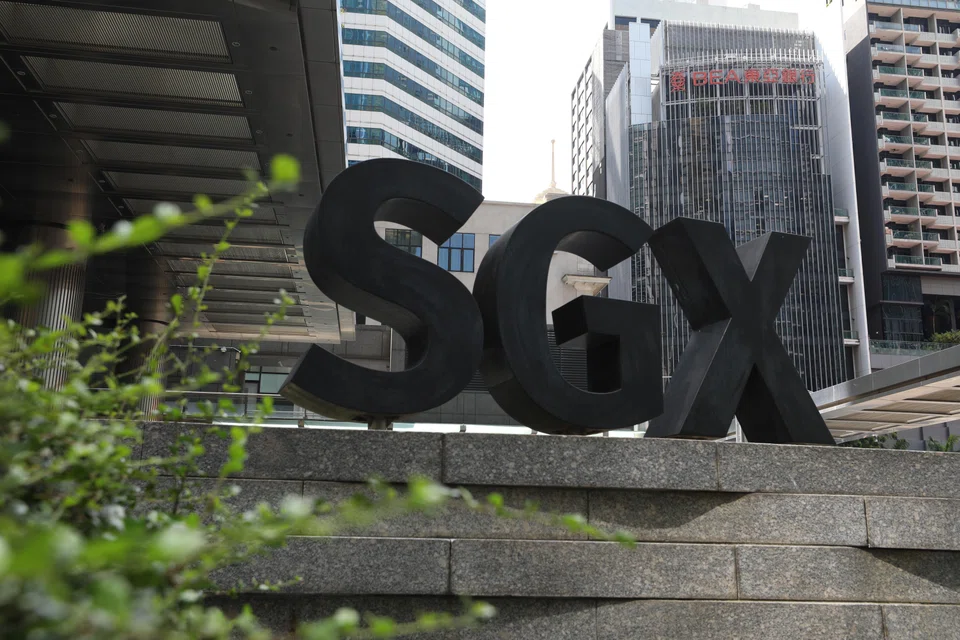
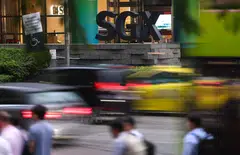
[SINGAPORE] The Singapore Exchange’s (SGX) equities business will now be known as the SGX Stock Exchange, chief executive officer Loh Boon Chye announced at the Straits Times Index’s (STI) 60th anniversary celebration event on Monday (Jan 5).
The rebranding from its previous name, SGX Securities, follows the completion of the Equities Market Review Group’s recommendations; SGX worked closely with partners to implement these ideas into actionable steps.
“As part of this journey, our equities business will adopt a clearer and more intuitive name going forward,” said Loh as he announced the new name.
The equities business’ rebranding, he added, “reinforces its role as the core pillar of SGX group’s multi-asset ambitions and its importance to Singapore as an international financial centre”.
Loh sees the recovery in initial public offering activity in 2025 as an “encouraging start”, adding that the exchange looks forward to welcoming more listings, including by innovative and forward-looking companies.
The STI was established in 1966 as the Straits Times Industrials Index, tracking 30 blue-chip counters on the Stock Exchange of Malaysia and Singapore.
In his speech, Loh noted that the STI reached record highs in 2025 and delivered a total return of over 28 per cent, standing shoulder to shoulder with leading global benchmarks such as the S&P 500 and Nasdaq.
National Development Minister and Monetary Authority of Singapore deputy chairman Chee Hong Tat said at the event that if a longer, five-year view is taken, the benchmark index’s total returns were over 100 per cent in Singapore dollar terms.
He added that the total market value of listed companies also crossed the S$1 trillion mark, while the average daily traded value of securities for the full year of 2025 was the highest since 2010.

“These numbers reflect improving market functionality and stronger two-way interest from market participants,” said Chee.
He also encouraged listed companies to tap into the Value Unlock programme that MAS and SGX have launched, as this will “further enhance and draw in more investor interest into our markets”.
The programme comprises S$30 million in funding across two grants from MAS’ Financial Sector Development Fund. It is designed to build corporate capabilities in strategy, capital optimisation and investor relations.
The importance of this initiative was echoed by panellists during a panel discussion held at the anniversary event on Monday.
Titled “Elevating Potential, Unlocking Shareholder Value”, the session was moderated by Joongshik Wang, partner at EY-Parthenon Asean and Singapore.
Michael Tang, head of listing compliance at Singapore Exchange Regulation (SGX RegCo), emphasised that “unlocking value itself is not the strategy, but it is the end result”.
While markets often cite South Korea and Japan as recent examples of value unlocking, he pointed to former General Electric (GE) CEO Jack Welch as an early pioneer of the concept.
“It is the product of the combined efforts of management, as well as employees; and the main constituents of unlocking value are your employees, customers and products,” said Tang.
He added that for companies, this means understanding their competitive advantages and executing against them.
Lai Yeu Huan, head of Asian equities at Amova Asset Management, provided another perspective on value.
“To us, value exists when there is a gap between these two valuations: the private market valuation versus the public market valuation, which is the value of your shares,” he said.
This is why the fund manager is looking for a plan to bridge these two valuations under the Value Unlock programme.
This point on aligning valuations was echoed by fellow panellist and Centurion chief executive Kong Chee Min.
He noted that the group’s business, particularly in workers’ accommodation, is less well understood by global investors, and that clear communication is critical.
“Value Unlock to us is having the market to recognise our true value of the company and our business,” he said, adding that it also involves narrowing the gap between the share price and the company’s fundamentals.
As a real estate business that is asset-heavy and capital-intensive, Kong said unlocking value also involves optimising debt levels. Given the nature of its asset classes, banks have been supportive, enabling the group to leverage debt to fund both acquisitions and organic growth.
Tang highlighted that, to support long-term growth for companies, board renewal is also important. Measures such as tenure limits for independent directors help ensure fresh perspectives and stronger independent judgement aligned with a company’s plans.
In a similar vein, Lai highlighted that companies must recognise that change is needed and can be implemented, as change drives the realisation of value.
In his view, this willingness to change is what differentiates a “value unlock opportunity” from a “value trap”. Typically, this involves either an ownership change or a management change.
Lai noted that fund managers such as Amova influence companies primarily through the allocation of capital. Their role is to identify companies worthy of investment and direct funds through share purchases or participation in corporate issuances.
“As more recognition is given in terms of the flow of money to these companies, then naturally the valuations will improve,” he added.
However, Tang believes that one of the most important parties “in this whole equation are the companies themselves”.
He said companies need to be able to leverage this opportunity to attract investors by being disciplined in managing their cost of capital, liquidity, dividend policies and share buybacks.
Kong pointed out that the Value Unlock programme and other review group initiatives offer helpful resources with little downside and meaningful upside.
“Why not try?” he added, noting that this is the mindset Centurion has adopted, and one he hopes other companies will embrace as well.
Shares of SGX rose 0.8 per cent or S$0.14 to close at S$17.19 on Monday.
Decoding Asia newsletter: your guide to navigating Asia in a new global order. Sign up here to get Decoding Asia newsletter. Delivered to your inbox. Free.
Copyright SPH Media. All rights reserved.