

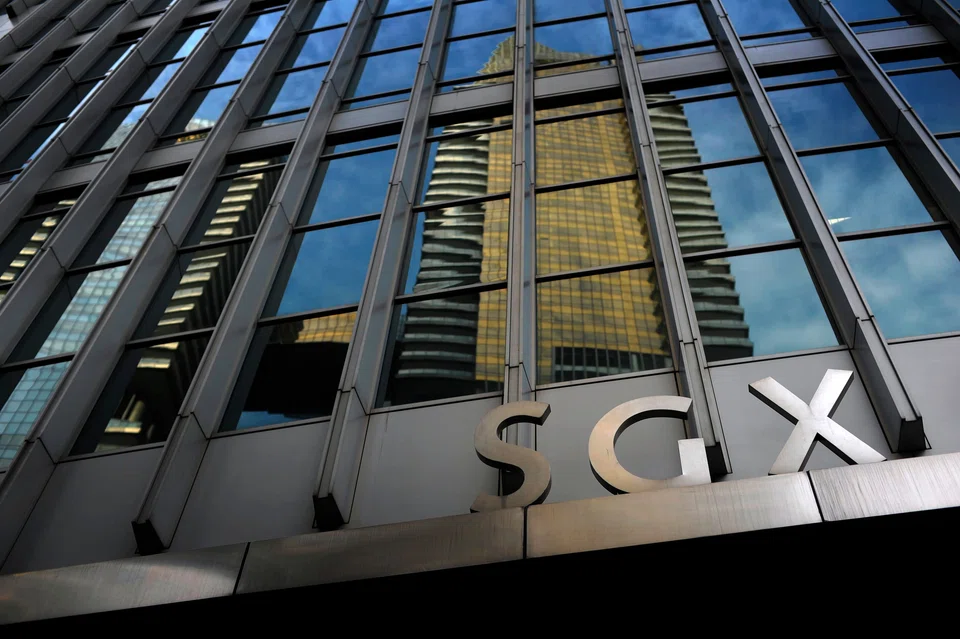
SGX off to strong start with surge in January trading value
Total securities trading value of S$25.3b, up 17% from Dec and 12% year-on-year; launch soon for SGX MSCI Malaysia Index Futures
Singapore
JANUARY turned out to be a promising start in the new year for the Singapore Exchange (SGX), with total trading value for securities hitting S$25.3 billion, up 17 per cent from the previous month and 12 per cent year-on-year. Last month's average daily traded value stood at S$1.2 billion, up 22 per cent month-on-month and 12 per cent year-on-year.
The surge came amid a trading boost from the Keppel Corporation bid to take its property subsidiary Keppel Land private, and also coincided with the introduction on Jan 19 of the 100-share board lot. The latter saw early indications of increased retail participation in Straits Times Index stocks, said SGX.
Meanwhile, the SGX MSCI Malaysia Index Futures contract is also poised for launch soon.
On a year-on-year comparison, total and average daily trading volume of securities fell 52 per cent to 34.5 billion shares and 1.6 billion shares respectively. The trading value jump therefore reflected trading in higher-value stocks.
Over the same period, total trading volumes of Singapore and overseas companies (excluding China) fell while their trading values grew.
The total trading volume of Singapore companies plunged 59 per cent to 17.2 billion shares while the total trading value surged 26 per cent to S$18.9 billion. Similarly, the total trading volume of overseas companies (excluding China) dropped 25 per cent to 11.6 billion shares and total trading value climbed 7 per cent to S$5.3 billion. Meanwhile, both total trading volumes and trading value of Chinese companies and Catalist stocks fell year-on-year.
In January, the total trading volume of Chinese companies fell 63 per cent to 5.7 billion shares and its trading value dropped 58 per cent to S$1.1 billion; the trading volumes of Catalist stocks fell 75 per cent to 6.2 billion shares and the trading value tumbled 54 per cent to S$907 million.
Over at the derivatives space, the total and average daily trading volume in January grew 67 per cent year-on-year to 14.7 million contracts and 739,336 contracts respectively; total derivatives trading volume was down 15 per cent month-on-month.
In January, the SGX FTSE China A50 Index futures traded more than 7.1 million contracts, down 25 per cent month-on-month but up 202 per cent year-on-year. In the same month, 206,383 SGX Indian rupee/US dollar foreign exchange futures traded 23,441 contracts, a 21 per cent increase month-on-month and more than 24 times higher than a year before.
In addition, the SGX US dollar/Singapore dollar FX futures traded a total of 23,441 contracts, three times more than the month before and seven times of the year earlier.
In the commodities sphere, a total of 47,335 SICOM rubber futures contracts were traded in January, an 11 per cent increase month-on-month and a 69 per cent increase year-on-year, while the volume of cleared iron ore swaps and AsiaClear iron ore futures totalled 523,520 contracts, up 60 per cent month-on-month and more than five times the volume a year earlier.
With the addition of the SGX MSCI Malaysia Futures contract, SGX is hoping to boost its South-east Asian derivatives suite, which now offers coverage of Singapore, Malaysia, Thailand and the Philippines.
The SGX MSCI Malaysia Index Futures is a quanto futures contract denominated in US dollars and has a notional contract value of approximately US$12,570.
When launched on Feb 9, two serial month contracts (February and April 2015) and four quarterly month contracts (March, June, September and December 2015) will be listed on the first day of trading.
As an oil exporter, Malaysia is currently feeling the heat of low oil prices, which will impact the country's trade and fiscal balance negatively. However, a CIMB Economics Research report stated that Malaysia can benefit from the recent fall in global oil prices, particularly if global demand is aided by higher discretionary volumes, which then feed into export demand.
TRENDING NOW
Singapore expects all parties to honour commitments, says PM Wong after Indonesia cuts gas exports

Gas Supply may pursue remedies if contract breached following Indonesia’s export cuts: Tan See Leng
SoftBank’s Son plans US$50 billion Malaysia tech outlay: Anwar Ibrahim

Is Manila Asia’s new dining hot spot?

