SGX sustainability reporting requirements timely: Masagos
Singapore
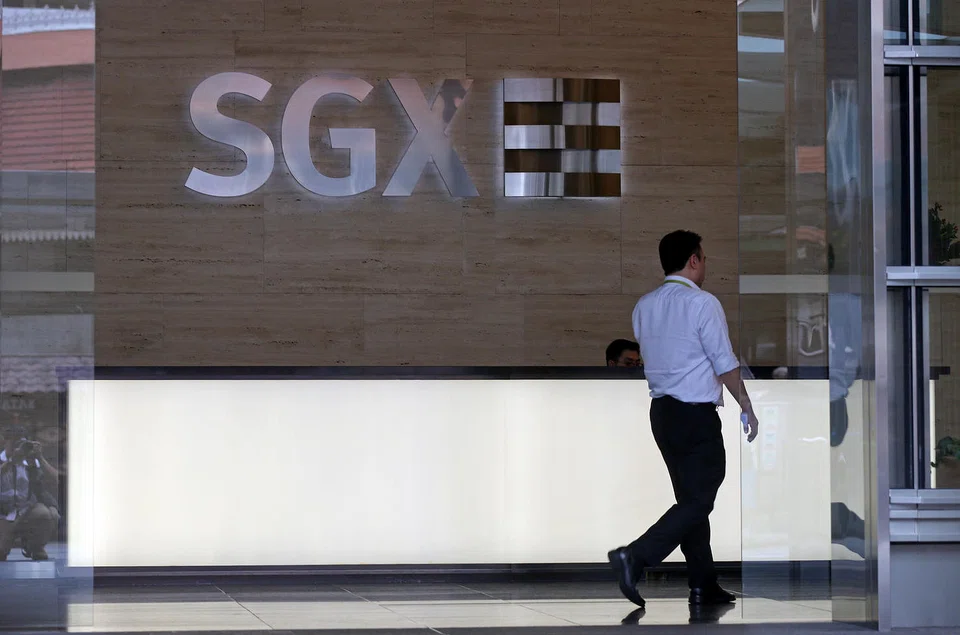
THE sustainability reporting requirements of the Singapore Exchange (SGX), applicable to listed companies, is timely, given increasing demand for such data globally.
Environment and Water Resources Minister Masagos Zulkifli made this point on Tuesday as he reiterated the financial sector's role in hastening the adoption of sustainability practices in the economy.
Delivering the keynote speech at the United Nations Sustainable Stock Exchange (SSE) Global Dialogue being held for the first time in Singapore, he said that the SGX's sustainability reporting requirements will be a key milestone in making it a core mainstream discipline for companies, rather than a niche activity.
"This is also timely. With demand for sustainability data increasing globally, high-quality sustainability reports by companies listed on the SGX will put them on the radar of a wider universe of global investors, thereby broadening the investor base of Singapore's public equities market."
The SGX had, in 2011, introduced a voluntary guide to sustainability reporting; this year, it became mandatory for all listed companies to report - from next year - their environmental, social and governance (ESG) practices. The exchange is working with Global Compact Network Singapore to organise training workshops by sustainability-reporting consultants.
Mr Masagos added: "Sustainability reporting augments financial reporting and enables investors to assess more comprehensively the company's prospects and quality of management. The increased non-financial disclosures enhance transparency and build investor understanding and trust over time."
The SGX also announced on Tuesday that it had joined the United Nations SSE initiative as a partner exchange. The SSE initiative serves as a platform for exploring how exchanges can enhance corporate transparency on ESG issues and stimulate sustainable investment.
The SGX's chief executive Loh Boon Chye said at the event: "As a forward-looking organisation, the SGX has long held the view that attracting investors, value-adding to listed companies, and pushing for more corporate transparency are not mutually exclusive concepts. We look forward to learning from and contributing towards the good work the SSE has devoted itself to."
Separately, a report released on Tuesday showed that the financial sector in the Asia-Pacific has moved signficantly towards embedding climate-risk and responsible-investment principles into core business activities.
But more remains to be done, said the newly-launched Asia Investor Group on Climate Change (AIGCC), which commissioned the report. Financial regulators need to take steps to speed up the shift to low-carbon investment to reduce systemic risks and improve competitiveness, said the report.
Emma Herd, chief executive of the Investor Group on Climate Change, noted that the International Energy Agency has projected that US$7.7 trillion will be needed between 2014 and 2035 for renewable energy and energy efficiency to meet the energy needs of China, India, Japan and South-east Asia - if the world stays within a 2 deg C warming threshold.
She said: "The finance sector has recognised this opportunity and is gearing up fast. While it's clear that progress is uneven and gaps remain - such as a need for greater focus on climate risk in investing - progress over the past two to three years has been remarkable. There's no doubt that a great transition is on."
The report, which reviewed 36 banks, 30 investors and 24 insurers in the Asia-Pacific, found stronger patterns of disclosure on sustainable finance in Australia, Japan, South Korea and Taiwan, though Chinese banks had stronger disclosure on green finance.
About three in 10 institutions factored climate-change risks into their financing operations, though banks were more comfortable discussing opportunities than risks, said the report; 61 per cent of banks referred to green products and 56 per cent provided some quantification of their exposure; only 28 per cent referred to climate-change factors as a reason to limit financing.
The AIGCC was set up to raise awareness among asset owners and financial institutions in Asia about the risks and opportunities associated with climate change and low-carbon investing. Its founding members include BlackRock, Singapore-based clean-energy asset manager Armstrong Asset Management and Australian pension fund AustralianSuper.
It is part of the Global Investor Coalition on Climate Change, a collaboration of four regional investor groups focused on climate change.
"Sustainability reporting augments financial reporting and enables investors to assess more comprehensively the company's prospects and quality of management." Mr Masagos