SGX taps more volumes on bouncy rubber prices

Anita Gabriel
Singapore
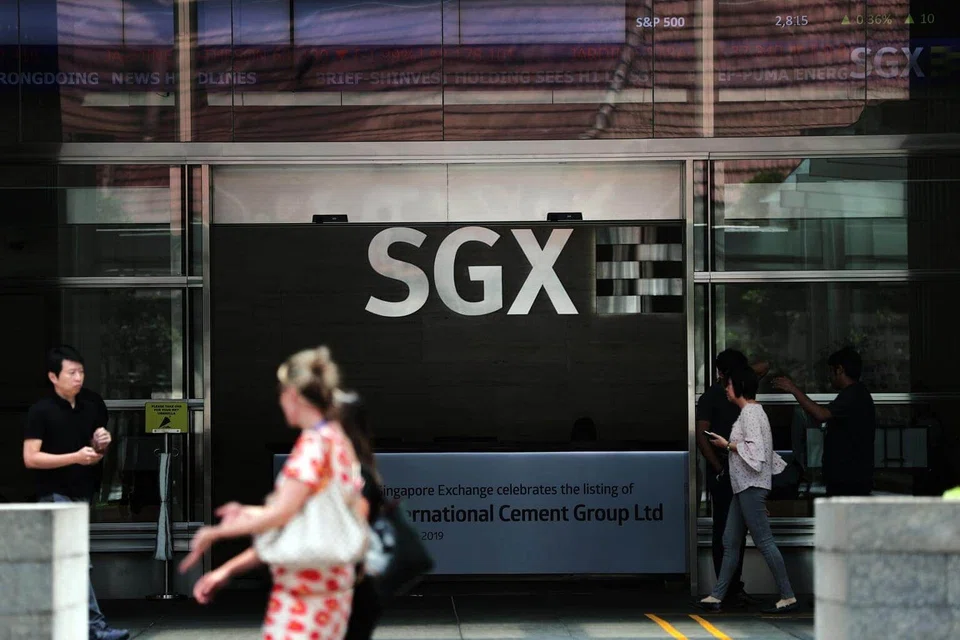
THE Singapore Exchange's Sicom rubber futures - the global price benchmark for physical rubber - could see volumes jump over 10 per cent this year owing to heightened volatility in natural rubber prices, said the exchange's commodities head William Chin.
"That's one million (metric) tonnes over from last year and it's quite significant," Mr Chin told The Business Times in an interview.
The projection is based on trading patterns in the January-April period.
Between January and April, SGX-Sicom's rubber futures continued to lead in the international market, with over half of the market share, he added.
April alone was a "good month" with Sicom's two futures contracts, TSR 20 and RSS 3, having drawn a daily average volume traded of over 8,000 lots. TSR 20 refers to technically specified rubber 20, which is natural rubber's global pricing benchmark and makes up around 90 per cent of volumes traded on SGX. RSS3, or ribbed smoked sheet 3, contracts make up for the rest. Open interest in the two products exceeded 88,000 contracts - a nearly 10 per cent increase from the previous month. The exchange cleared over 907,000 metric tonnes of rubber derivatives over the month.
As a comparison, SGX cleared more than nine million metric tonnes of rubber derivatives for the whole of 2018. This is up 23 per cent from the year before.
Mr Chin attributed the good showing to recent price fluctuations due to uncertainties in rubber demand and supply which has necessitated hedging and resulted in an uptick in derivatives trading. Rallying oil prices, weather-related supply disruptions, government policies and export interventions have been supporting rubber prices this year after a gloomy showing in 2018 but analysts say the bullish factors are being offset by plenty of uncertainty around demand that has turned the outlook fragile for the commodity.
Reflecting that uncertainty is the trajectory of Sicom's TSR 20 futures which has rallied nearly 23 per cent year to date. Similarly, rubber futures on Tokyo Commodity Exchange (Tocom) are also up by 22 per cent.
For one thing, the ongoing US-China trade skirmish over tariffs is expected to hit the automobile sector and hurt demand for TSR 20, a variety that is most widely used by the tyre industry.
Then, last week, China's biggest natural rubber producer Yunnan Natural Rubber Industry Group said it has ceased tapping at its plantations due to drought and a heat wave. China is one of the world's top natural rubber producers and its largest consumer.
"Tapping stopped (in Yunnan province), rubber prices started rising and we saw the futures market react to that. Volatility is trending literally on a daily basis," he added.
In addition, production in Thailand, the world's top rubber producer, slowed down due to the wintering period of the year, tightening supply and providing price support.
Against the uncertain backdrop that has galvanised derivatives trading, the SGX is launching a new options contract on May 27 with the underlying being the Sicom TSR 20 futures, closing the loop on its suite of rubber derivatives comprising futures and forwards which was rolled out nearly a decade ago.
"It's fantastic. The options completes it . . . it's the last lap of how the rubber contracts will be developed. For the TSR 20, it plants a flag on how far we have come and where we have taken the industry," said Mr Chin.
The launch of the TSR 20 options contract marks a milestone for Singapore and the exchange.
"SGX is the first one offering rubber options on TSR20. It only makes sense . . . we are the only exchange where the TSR 20 has deep underlying liquidity to support an options mechanism," said Mr Chin.
The timing for the new product is deliberate and measured as the futures contracts are currently backed by a sufficient level of liquidity.
"I believe this is overdue for our market," he added. "The rubber contract has grown significantly and it is at that stage of the evolution that we are launching options.
"What we are trying to do with the options product is tell the industry that we are giving them an additional risk management tool that can either complement their futures strategy - if they already use that instrument to hedge - or if they don't, options can make them more comfortable . . . it's really quite an easy instrument."