

SGX’s new index needs clear differentiators to avoid being ‘just another index’, say analysts
While it can raise the profile of larger non-STI stocks and attract fund products, analysts call for more clarity on criteria for inclusion
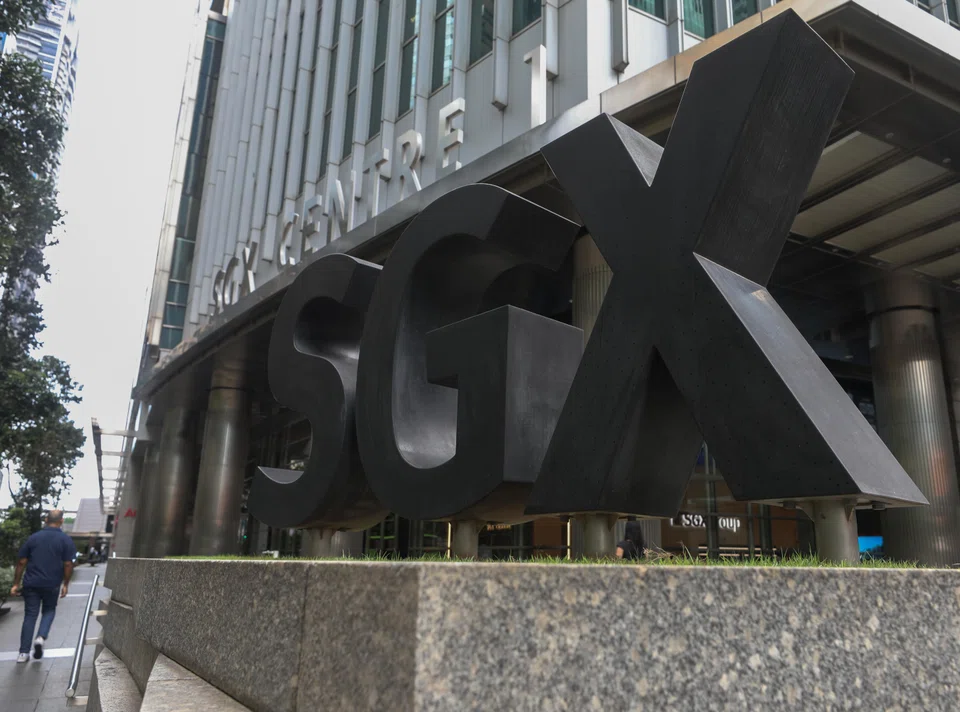
[SINGAPORE] A new index due to be launched by the Singapore Exchange (SGX) could be framed as one that tracks companies earning more than 70 per cent of their revenues at home, or an index centred on mid to large-cap stocks valued at up to S$20 billion, market watchers suggested.
The new index, which will exclude constituents of the Straits Times Index (STI), is meant to “provide a useful lens to track how the next tier of large and liquid companies are evolving”, deputy chairman of the Monetary Authority of Singapore (MAS) Chee Hong Tat said on Friday (Sep 12).
Market watchers welcomed the move, with RHB Bank analyst Shekhar Jaiswal calling it “strategic and constructive”.
Still, some cautioned that without clear differentiation, it risks becoming “just another index”, with non-STI indices such as the FTSE ST Mid & Small Cap Index already in the mix.
What a new index brings to the table
Glenn Thum, a research manager at Phillip Securities Research, said that the new index could raise the profile of larger non-STI stocks and attract fund products around these names. This will, in turn, improve the liquidity and valuations of these stocks.
“But without sufficient liquidity thresholds and investor demand, its impact could be limited,” said Thum.
Similarly, Jaiswal echoed these sentiments, warning that the new index could become “just another index” if there is no clear differentiator.
He noted that the FTSE ST Mid and Small Cap Index, which was launched in July 2025 already comprises 74 constituents across real estate and investment trusts (Reits), business trusts and corporates. Some of these constituents are also part of the STI.
“Unless more clarity is provided on the criteria for inclusion in the new index, (the new index) risks being a subset of the existing FTSE ST Mid and Small Cap Index, essentially excluding STI names. In that case, the incremental value-add may be limited,” said Jaiswal.
Adding value
For the new index to be a meaningful addition to the market, it would have to provide a good representation of a key segment of the Singapore market, said Carmen Lee, head of OCBC investment research.
Among Lee’s suggestions were a Singapore-focused index comprising companies with more than 70 per cent of earnings from Singapore, a mid-cap index as well as a Reit index.
Phillip Securities’ Thum proposed targeting companies between S$500 million and S$20 billion in market capitalisation that have good liquidity and free float. The index should also be reviewed regularly, he added.
Among his picks for the index were ComfortDelGro , AEM , Golden Agri-Resources , SIA Engineering , Singapore Land and UMS . It would “make sense” to include these companies in the index given their size, liquidity and sector relevance, said Thum.
Market watchers also agreed that raising awareness of the upcoming index will be critical.
OCBC’s Lee said it would be “ideal” to have products such as exchange-traded funds (ETFs) that track the new index as this would help to raise investor interest.
Greater information and disclosure on the index’s component stocks, such as weightage, methodology and reserve list, would also help to improve investor’s knowledge of the index, added Lee.
Similarly, Thum said that research material from reputable brokerages on the index will help to raise awareness for the lesser known companies.
Said Thum: “(The new index) risks being ignored like other secondary indices, but it could gain traction if backed by ETFs, clear methodology and strong promotion.”
TRENDING NOW

Once staunchly pro-China, Malaysian Chinese businesses are now distancing themselves from Beijing
Stocks to watch: HPL, Aims Apac Reit, Zico, Advanced Systems Automation, ComfortDelGro
‘How many will survive?’: Bubble fears arise as China’s humanoid robotics face reality check
Smaller board lots can’t fix a market run by three banks

