

Share drubbing reflects DBS's vulnerabilities
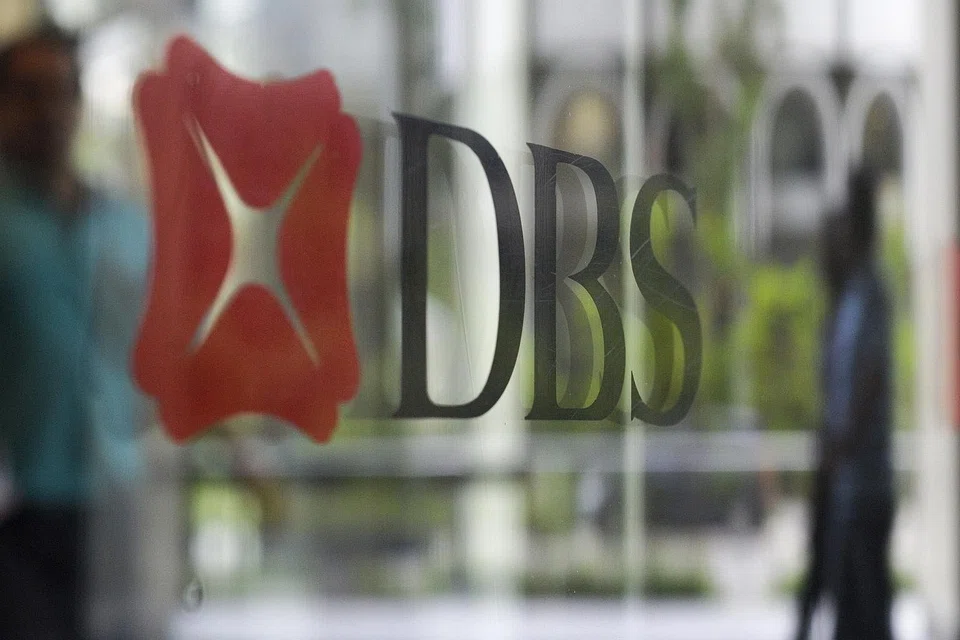
DBS Group Holdings, Singapore's largest bank and South-east Asia's biggest (by assets), is feeling rather unloved as investors desert it in droves.
Often cited as the region's behemoth, it was deposed ignominiously last week by Bank Central Asia (BCA), owned by Indonesia's second-richest person, Budi Hartono. According to Bloomberg, BCA is the region's largest lender by market capitalisation of US$24.5 billion. Many DBS shareholders will be asking "BCA who?", even as they glumly contemplate DBS's market cap of US$23.3 billion based on last Friday's price of S$13.02. It recovered somewhat on Monday to close at S$13.41.
The Jakarta-based bank's shares have continued to rise this year as its Indonesia focus shields it from slowing growth in Greater China, said Bloomberg.
DBS's shareholders have taken a drubbing as the shares have lost about 40 per cent from its July peak. Local rivals OCBC Bank and United Overseas Bank have not been spared either in a global exit from bank shares as investors see the low interest rates crimping into margins, or profits. With loans growth tepid, banks' earnings rise only if there is a hike in interest rates.
In contrast, BCA's share price has risen 18.6 per cent from its August low to 13,350 rupiah (S$1.38) per share as of Feb 11.
To rub salt further into the wound (unintentionally, surely), the Singapore Exchange last Friday said that in addition to gold, Indonesian stocks have grabbed the spotlight on the back of improving domestic economic fundamentals, making the Jakarta Composite Index Asia's best-performing benchmark so far this year.
In terms of turnover, SPDR Gold Shares was the most active exchange traded fund (ETF) in both the month-to-date (MTD) and year-to-date periods, with MTD turnover surging more than five-fold year-over-year. The db x-trackers MSCI Indonesia Index UCITS ETF was ranked the eighth most active in the MTD.
In terms of performance, db x-trackers MSCI Indonesia Index UCITS ETF and SPDR Gold Shares ETF also posted the highest total returns in the MTD and YTD periods.
Stung by the market-cap loss, DBS protested that it continues to be the region's top bank by assets and profits. "Market capitalisation is driven by stock price fluctuations that do not always reflect our underlying business."
Hah! A year ago DBS sang a different tune on market capitalisation.
It celebrated hitting S$50 billion in market capitalisation and marked Singapore's jubilee year by giving 18,000 employees ranked vice-presidents or below each a S$1,000 hongbao. Dishing out S$18 million was no chump change because market capitalisation is real value - ask anyone who sold the stock at S$21.
Triple whammy
But market capitalisation is also perception, and for many shareholders that sentiment is rather tattered around the edges right now.
Perception is that DBS is vulnerable to China's slowdown, low oil prices and the ripples from these two major events, some which can be guessed at but much is unknown.
What is known is that DBS faces a triple whammy - rising bad debts amid low growth and low interest rates. A recent UBS commentary said: "Worst not yet over. Provisions may not peak until 2H16/2017 while Singapore banks could see structurally slower growth in the next 2-3 years. As such, we don't expect a strong rerating."
DBS has no choice but to venture outside of Singapore unless it wants to just be POSBank, selling mortgages and banking on the local population. Singapore with 5.5 million people doesn't provide enough business to any medium sized company, let alone a bank.
In contrast, Indonesia is not just Southeast Asia's largest economy, its estimated population of over 255 million people makes it the world's fourth most populous country and the largest Muslim country, and a domestically centric bank has plenty of business at home.
Singapore companies have been investing offshore for a few decades and the risks are plenty, and well documented.
For the banks in particular, their forays into China and the region will mean their fortunes will go up and down along with the booms and busts of these economies. In the first nine months of 2015, DBS got 67 per cent of net earnings in Singapore, 32 per cent from Greater China and the rest from South-east Asia and the rest of the world.
Hopefully lessons have been learnt from the 1997 Asian financial crisis and the 2008 global financial crisis. These, plus a vigilant regulator, likely mean the local banks expand offshore within robust risk management parameters.
DBS's non-performing loans (NPL) ratio as at end-September 2015 for Singapore was a low 0.4 per cent against a high of 3.2 per cent for South and South-east Asia, while Hong Kong and Greater China each registered 0.7 per cent. OCBC and UOB show similar patterns in NPL ratios - low at home and Greater China and highest in South-east Asia.
Some of the noise around DBS and by extension, the Singapore banking sector, seems overblown.
DBS's capital position, as well as "AA-" and "Aa1" credit ratings, are among the highest in the Asia-Pacific. The bank has also been named "Safest Bank in Asia" by Global Finance for seven consecutive years from 2009 to 2015.
Singapore banks will see not a few casualties as the R-word or recession increasingly gets bandied about, but they are overall resilient. Just ask the Indonesians who put their money here.
TRENDING NOW

Two Singapore-listed palm oil firms named in Greenpeace report on Indonesian plantation fires
Singapore Airlines flight returns to San Francisco after ‘unruly’ passenger incident

Singapore looking into which companies responsible for haze-causing fires: PM Wong

Deluge IPO 3.86 times subscribed ahead of SGX debut

