Shell on selling its first-born in Singapore and its energy transition and growth plans
Its product range includes petroleum, lubricants and plastics, as well as cleaner fuels such as sustainable aviation fuel and LNG

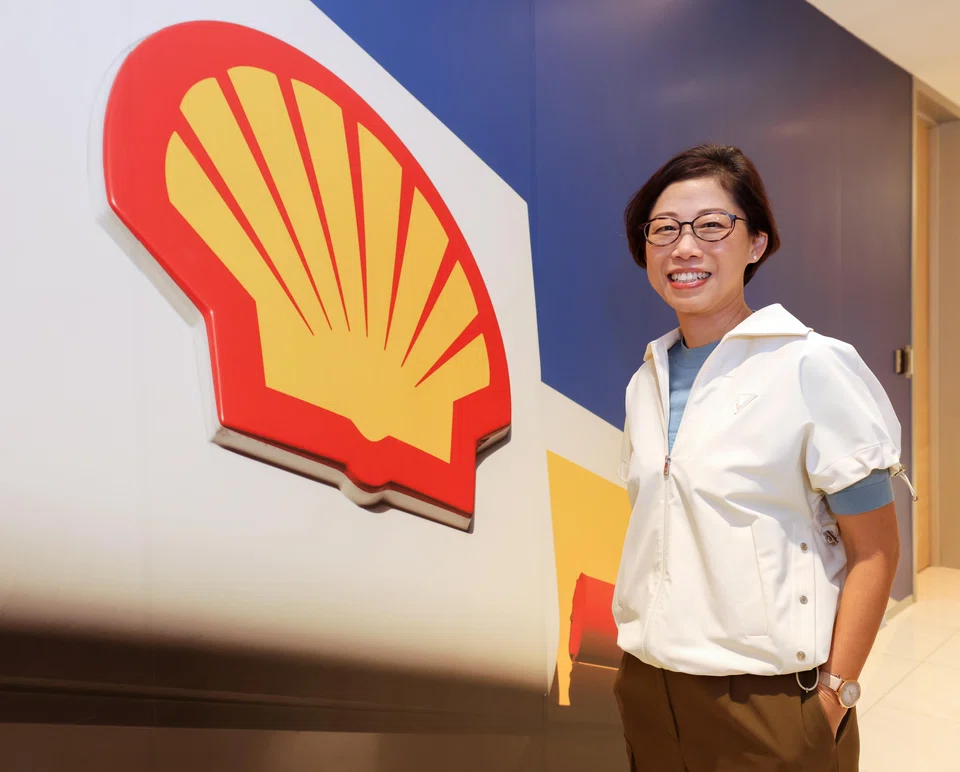
WHEN news broke of Shell’s sale of its assets on Pulau Bukom including a refinery and ethylene cracker in May, some market watchers read the move as a retreat from Singapore.
But Shell Singapore chairperson Aw Kah Peng told The Business Times that it was just part of moving the group’s portfolio up to more lucrative businesses in the region. Globally, there is also a direction to reduce Shell’s carbon footprint.
“Bukom was the first refinery in Singapore, there were a lot of emotions (attached to it),” she said. Shell was the first oil major to set up a refinery in Singapore with Bukom opening in 1961. Over the years, Bukom became synonymous with Shell’s presence in the country. Shell Singapore currently employs 2,900 people, with the Bukom divestment not completed yet.
With Shell CEO Wael Sawan’s strategy of reducing the energy giant’s carbon footprint and focus on its most profitable businesses such as liquefied natural gas (LNG), a strategic review of Shell’s assets in Singapore started in June 2023, culminating in the sale of the Bukom assets in under a year.
Just weeks later, Shell announced the acquisition of LNG player Pavilion Energy from Temasek. This acquisition is also in line with global direction to expand Shell’s LNG business by 20 to 30 per cent by 2030.
The two transactions are part of adapting to the changing competitive environment, as Shell predicts LNG demand will grow by 50 per cent by 2050. The bulk of Pavilion Energy business is in Singapore, an important hub to serve Asian markets, Aw noted.
“South-east Asia, China, South Asia are all growing markets for LNG. We are trying to ensure that we are in position to participate in that growth,” she said.
As power generation companies (gencos) transition away from coal in the region, LNG will be the best substitute given its availability at scale, said Aw. Shell Singapore has been in the LNG market for about 10 years now, and entered into a joint venture (JV) with Keppel in 2016 to start an LNG bunkering business to supply marine vessels with LNG as fuel. The JV recently did its 200th ship-to-ship LNG bunker.
“We have to consistently invest and do it over the long haul; there are no quick wins in this type of business,” said Aw.
The Bukom and Pavilion deals are just part of Shell seizing opportunities, and fit into the global direction and strategy that the company has. Shell Singapore’s product range includes products such as petroleum to lubricants to plastics and now cleaner fuels such as sustainable aviation fuel (SAF), LNG and even electric vehicle charging points.
Energy transition
Energy transition has been a key part of Shell’s strategy and direction at the global level, with its latest target to be a net-zero emissions energy business by 2050. The company is also targeting US$10 billion to US$15 billion of investments in low-carbon energy solutions.
On the local front, Shell Singapore has a low-carbon solutions business which includes LNG and SAF. With the government mandating all flights departing Singapore to use SAF from 2026, this means the industry has a clearer direction on which to act, said Aw.
“They are giving the industry notice to get there, but we already have the capacity and capability to supply SAF today,” she said.
Energy transition services such as carbon capture solutions, however, will take time as a longer-term play, as many parties are involved.
A business that Shell Singapore has built up quite considerably is its EV charging network, which it launched in October 2019 and is still expanding. Aw noted that even as the network was being rolled out, Shell Singapore has had to upgrade the initial chargers to fast chargers due to the pace of technology advancement.
Half of Shell Singapore’s 57 service stations now have an EV charger, with three stations in Tampines, Pasir Ris and Lakeview providing EV charging via solar panels on the rooftops of the stations and other Shell buildings. Shell’s EV charging network also includes malls and public estate car parks.
Understanding what works in Singapore is key, such as having chargers in public housing car parks, as a large majority of the population live in public housing, said Aw.
With the speed of energy transition picking up, Shell Singapore sees its role as an innovator in this regard, helping to move the conversation forward, having pioneered an electric ferry between Pulau Bukom and Singapore and EV charging points before the government announced broader initiatives.
However, it will not be an energy transition with no regard for the costs.
“We believe in energy transition but it has got to be sustainably profitable; we are not shy to say we have to make it, otherwise we cannot reinvest into innovation,” Aw said.
Unprecedented pace of change
The time taken from review to selling the Bukom assets was less than a year, a reflection of the fast pace at which Shell is moving. For Aw, the challenge of looking for growth while being consistent with the global direction and strategy of moving towards cleaner fuels has led to considering and assessing businesses an oil major would never have looked at before.
With the business in Singapore spanning decades, changes can be emotional to seasoned Shell Singapore employees. However, if the change was needed, Aw said that people would make it work.
“We’re going to have to say we have the capacity to do these things, the capacity to change and use the opportunities in the right way.”