Sheng Siong, Japfa among winners from food inflation: analysts

AS COMMODITY prices soared last year, so, too, did the share prices of commodity producers and distributors. This year, as food prices soar, investors could expand their portfolios to include not only palm oil producers but also food manufacturers.
Tighter food supplies will lead to greater bargaining power for food companies, as well as gross margin expansion, said UOB Kay Hian (UOBKH) analyst Kampon Akaravarinchai in a report earlier this month.
RHB analyst Jarick Seet said investors can best take advantage of the food inflation theme by seeking out companies that have demonstrated the ability to pass on costs to consumers without affecting demand.
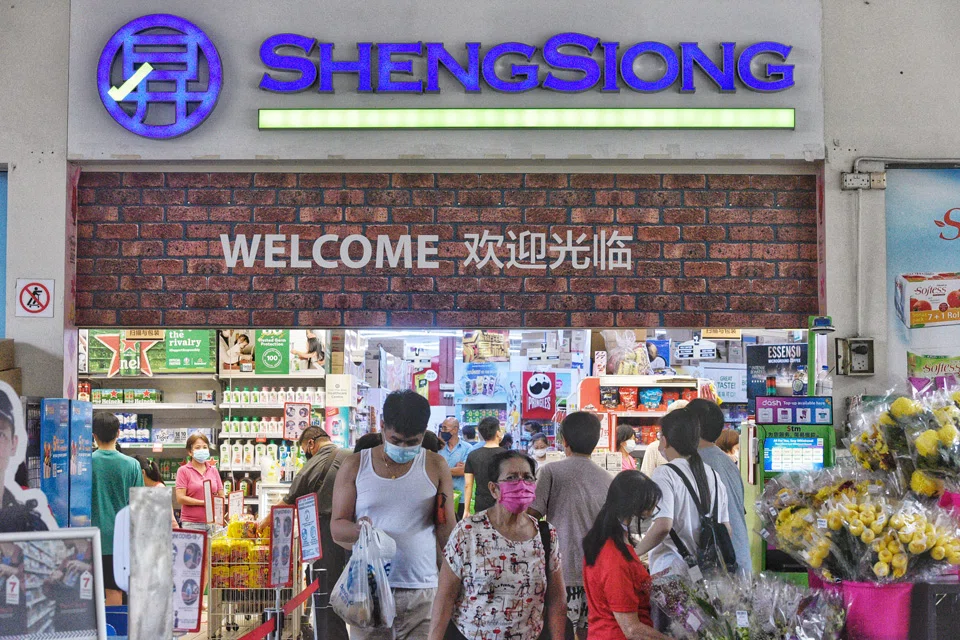
Seet reckons supermarket operator Sheng Siong Group could be one such name, as the group has shown itself capable of maintaining its margins in the past.
Food Empire is another company that has traditionally been able to pass on costs to consumers, said Seet. The company did this last year due to higher freight and raw material costs.
Terence Chua, a senior analyst at Phillip Securities, said Japfa is also a potential beneficiary as it supplies chicken in Indonesia.
“With Singapore now potentially looking at getting its chicken sources from Indonesia as part of (its) diversification strategy, this could potentially lead to higher broiler prices, which will benefit (Japfa),” he said.
Analysts at Lumen Capital Investors (LCI) have identified Wilmar International as a stock that could deliver returns for investors. They noted that past periods of “significantly higher global food inflation” in 2007-2008 and 2010-2011 “have shown to meaningfully support Wilmar’s earnings performance”.
The company also achieved sustained earnings growth momentum during commodity price downcycles, and amid investor concerns about US-China trade tensions and swine fever during the second and third quarters of 2018.
“With the spectre of rising food inflation risks as an economic spillover from the Russia-Ukraine conflict, there are tailwinds from elevated input prices which could support Wilmar’s mid and upstream businesses,” said the analysts.
Outside of Singapore, UOBKH’s Akaravarinchai has Thailand’s Charoen Pokphand Foods as his top pick for the sector.
The company’s farm business accounts for 55 per cent of its total sales, and should benefit as its cost base falls slightly in H2 due to a high base effect. Among other things, Akaravarinchai noted that energy, fertiliser and logistics costs, while still higher than they were last year, are now trending downwards.
UOBKH also has a “buy” call on chicken meat supplier GFPT. The company should benefit from higher export volume due to strong demand from Japan and the European Union, as well as higher average selling prices following demand recovery this year.
“For the domestic business, we expect chicken prices to remain high, driven by the domestic and tourism demand recovery,” said Akaravarinchai.
Potential losers
On the flip side, some companies may struggle with the higher prices. Phillip Securities’ Chua said Sats’ food business could see some margin pressure in the short term as it can take weeks or months before these can be passed through to its customers – the airlines.
Meanwhile, food and beverage operators that are unable to raise prices but have to remain competitive, or those that do not have a “product niche”, will likely be hit by rising food prices, RHB’s Seet said.
“Many restaurant operators will also likely be impacted by rising costs and declining customers,” he added.
Indirect alternatives
LCI analysts also suggested investors allocate part of their portfolios to direct investments in commodities themselves, as well as indirect investments into companies such as palm oil plantations, protein producers and agricultural equipment manufacturers.
Stephen Dover, chief market strategist and head of the Franklin Templeton Institute, said innovation will be needed to meet global food needs.
Such innovations might include “high efficiency indoor agriculture, startups developing alternative proteins, or helping companies build supply-chain resilience” and will require “large capital inputs from equity, fixed income and private markets”, he said.
TRENDING NOW
He built the Vingroup empire. Now South-east Asia’s richest man is handing some key roles to his sons
US dollar falters after Iran’s offer to reopen Hormuz sends oil lower
Temasek’s Wan Chee Foong to helm PIL, Lars Kastrup to be board adviser
Despite the de-dollarisation debate, demand for dollar liquidity in Asia is growing