Should investors participate in SIA's big rights issue?
Transaction is about more than just investors like Temasek getting a decent return

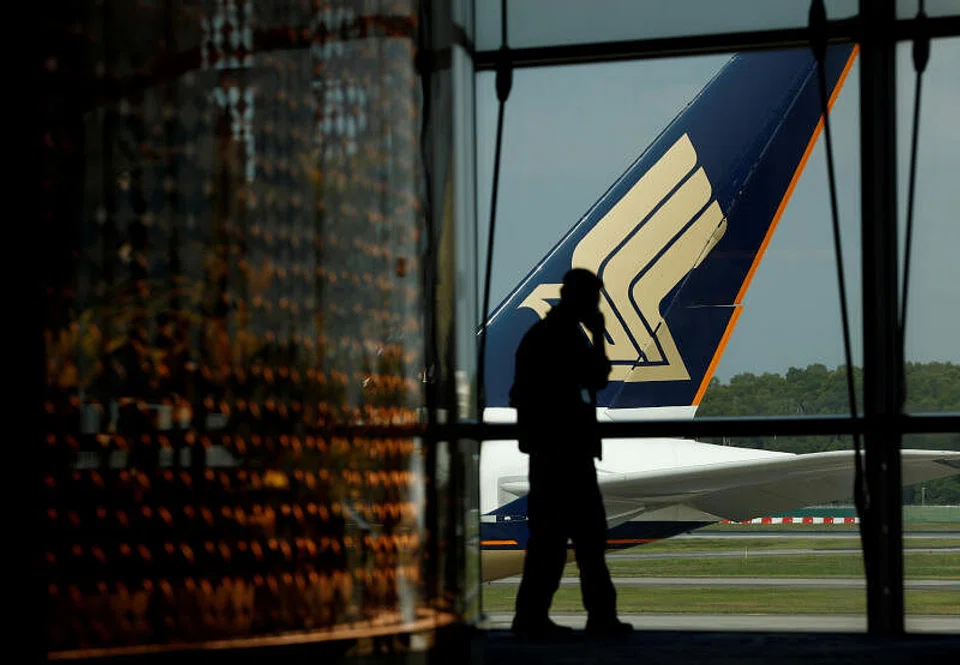
UNLESS I have no choice in the matter, I never fail to choose Singapore Airlines (SIA) over its competitors when I travel, even if it means paying more for the ticket. And, let's face it, flying with SIA always costs more.
Yet, I have never felt the urge to own shares in SIA, because its investment fundamentals are simply terrible. It operates in an industry plagued by cut-throat competition. Fuel costs are unpredictable, and have swallowed up almost one-third of its revenue over the past decade. SIA also has to constantly invest in new aircraft in order to maintain its edge.
No doubt, the company has first-rate management. Since 2000, the airline has coped with the fallout of the 9/11 terrorist strike, the Global Financial Crisis, massive volatility in oil prices, and the rise of low-cost carriers. Through it all, for every full financial year, SIA has managed to stay in the black and pay a dividend.
Even so, there is only so much that excellent managers of a fundamentally poor business can do to impress investors. Over the past decade, with all the pressures it has faced, SIA's earnings have amounted to less than 3.9 per cent of its revenue. Over the same period, its annual return on equity averaged less than 4.6 per cent.
For long-term investors, owning SIA shares would have brought nothing but disappointment. From end-2009 to end-2019, before the market began worrying about Covid-19, shares in SIA delivered a total return of minus 13.3 per cent, according to Bloomberg data. The Straits Times Index (STI) returned 54.3 per cent on the same basis.
Tapping shareholders
Now, in order to weather the Covid-19 pandemic, SIA is tapping its shareholders for some S$8.8 billion, an amount that is higher than its current market capitalisation of S$6.5 billion.
SIA plans to raise S$5.3 billion through a 3-for-2 rights issue of 1.78 billion new shares at a deeply discounted price of S$3 each. A further S$3.5 billion is to be raised through a 10-year mandatory convertible bond (MCB) issue, on the basis of 295 MCBs for every 100 existing shares held.
The rights MCBs are priced at S$1 each. They come with a zero coupon, but are redeemable semi-annually at the option of SIA, at prices calculated to deliver an annual yield-to-call of 4 per cent per annum for the first four years, 5 per cent for the subsequent three years, and 6 per cent for the next three years.
After 10 years, the accreted value of the MCBs will be converted to new SIA shares at an initial conversion price S$4.84, which is 10 per cent above the theoretical ex-rights price of S$4.40. The conversion price will be adjusted for dividends, share splits, new share issues and share consolidations.
SIA will also seek shareholder approval to issue a further S$6.2 billion worth of MCBs on similar terms in the future. So, SIA could soon have as much as S$15 billion in fresh equity. In the meantime, the company has obtained a S$4 billion bridge loan to support its liquidity requirements.
Temasek Holdings, which owns nearly 55.5 per cent of SIA, has agreed to vote in favour of the rights issuances, and subscribe to its entitlements. It will also take up any unsubscribed rights shares or MCBs.
How will this massive infusion of cash at this critical moment change SIA's fortunes? Should investors jump in now?
Shares, MCBs or bonds?
The sheer size of the rights issues, and the backing of Temasek, have probably removed any doubt in the market that SIA will survive the Covid-19 pandemic. Yet, until major economies along SIA's key routes get the virus under control, the airline will not be able to get its business off the ground again.
In the meantime, it seems unlikely that there will be much appetite in the market for SIA's cash call. Since it was announced, shares in SIA have tumbled more than 15 percent.
In particular, it will be interesting to see how the MCBs trade in the market after they are issued. Investors get no current income from holding them, but bear very significant downside risk while getting little upside potential.
If SIA's business fails, the accreted value of the MCBs would simply be converted into worthless shares. On the other hand, if SIA's earnings take off and its share price rises strongly, the MCBs could be redeemed at prices that leave holders with returns of as little as 4 per cent per annum.
If I were a shareholder of SIA, and inclined to remain invested, I would take up my entitlement to the rights shares but sell off my entitlement to the rights MCBs, and hunt for other investments in the market with superior risk-reward characteristics.
Within SIA's own capital structure, some investors might be interested in SIA's bonds. Last year, the company issued S$750 million worth of retail bonds with a coupon of 3.03 per cent that mature in 2024.
These bonds were trading well above par until last month, when they sank to almost 19 per cent below par. Since SIA announced its big Temasek-backed cash call, the bonds have rebounded but are still trading 8 per cent below par.
Protecting SIA, Singapore
So, why is Temasek backing SIA's cash call given the seemingly paltry returns and high risks?
Clearly, there is a larger purpose to this transaction than Temasek earning a decent return. In fact, the deal was effectively announced by Finance Minister Heng Swee Keat, during his Supplementary Budget Statement in Parliament on March 26.
"I welcome Temasek's decision to lend support to SIA. SIA is an outstanding airline and a strategic asset for Singapore," Mr Heng said. "Through the government's support for the aviation sector, and if necessary more direct support measures, we will make sure that SIA is able to come through this in good shape."
SIA itself said in its press statement later that day: "The aviation sector is a key pillar of Singapore's economy, supporting more than 12 per cent of the country's GDP and 375,000 jobs. The group is at the heart of the aviation ecosystem, with SIA, SilkAir and Scoot accounting for more than half of the passengers flying in and out of Changi Airport."
So, one could argue that by supporting SIA at this crucial moment, Temasek is effectively protecting its entire portfolio of Singapore investments.
Yet, is it not risky for such a large slice of the economy to rest on a business with such poor economics as SIA? A couple of decades ago, I would have argued that it is indeed worrisome. Today, I have much less conviction on the matter. The blind pursuit of shareholder value does not necessarily lead to the creation of great products, or good outcomes for society.
Whatever the case, the key challenge now for SIA is to ensure that it is well-positioned to profitably expand its market share once the crisis is over, despite the poor economics of its business. That will involve investing in fuel-efficient planes and salubrious cabin products. It might also do well to experiment with a new brand image.
SIA will never convince investors like me to own its shares, but it is probably more important that it cultivates more customers like me for whom no other airline measures up.