

SIA adopts multi-pronged approach to keep its edge
Key strategies beginning to take shape as airline continues to tackle headwinds

Singapore
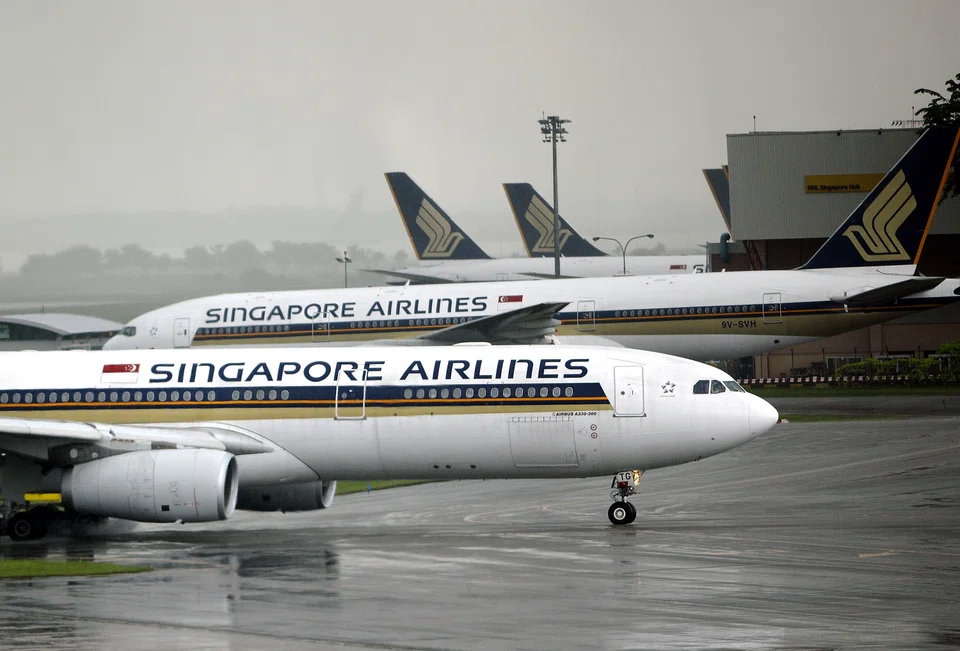
SINGAPORE Airlines' key strategies are starting to take shape as it continues to combat a challenging operating environment and positions itself for the future.
At a briefing on Friday morning, chief executive Goh Choon Phong outlined key milestones that the group has achieved as well as plans for the year ahead.
The group unveiled its fourth-quarter results on Thursday, registering a near 47 per cent year-on-year jump in net profit to S$39.6 million on the back of lower fuel costs. Revenue for the quarter rose 6.9 per cent to S$3.88 billion, while operating profit swung into the black at S$91.9 million.
For the full year, SIA saw a net profit of S$367.9 million, up 2.3 per cent, on revenues of S$15.57 billion, which included contributions from subsidiary Tiger Airways.
To maintain its edge against fast-growing competitors, investments continue to be made towards new aircraft, retrofitting existing aircraft and enhancing its lounges. The carrier is set to introduce premium economy from August on selected routes, starting with Sydney. The group, which is investing some S$80 million to roll it out on planes such as the Airbus A380, Boeing 777-300ER and A350, will start marketing the product after a launch event next week. It has already received some bookings for premium economy, said SIA's management.
In addition, the group is poised to take delivery of three A350-900s in the current financial year, which is part of its fleet renewal plans for a more fuel-efficient fleet. Its first A350 will arrive in early 2016.
Some analysts expect that the SIA's yields could improve with the new products, while the newer planes will reduce unit operating costs.
CEO Mr Goh said: "The A350 will usher in new economics of operations, for long haul especially. The reality is the current aircraft is simply not as efficient when it comes to long-haul operations. With (the A350s) coming in, we now have more opportunities to look at how we can expand long haul."
Meanwhile, plans are in the works to improve its SilverKris lounges in Manila, Brisbane and Bangkok, following refurbishments to lounges in Hong Kong and London.
On network connectivity, aggressive efforts in recent years have enabled it to build partnerships and codeshare agreements resulting in 180 additional destinations and over 8,000 weekly frequencies through its codeshare partners.
"There're quite a few more being worked on," added Mr Goh.
Where capacity is concerned, though, SIA will maintain a prudent stance for the current financial year ended 2016, with capacity growth likely to remain flat year-on-year. Overall capacity is also slightly affected by the introduction of premium economy, which will reduce the number of existing economy seats on planes that offer the product. Regional wing SilkAir, on the other hand, is expected to post double-digit capacity growth of about 13 per cent in FY16.
Efforts also continue for closer integration between short-haul budget subsidiary Tiger and medium/long haul budget carrier Scoot, as the group seeks to fend off rivals in the low-cost carrier segment.
Commenting on its outlook, the group flagged ongoing headwinds in the operating environment, such as stiff competition from rivals, an uncertain economic environment and currency fluctuations. In the case of the weaker Japanese yen, for instance, this is boosting inbound travel into the country from China, which diverts traffic flows to Singapore and broader South-east Asia.
CIMB analyst Raymond Yap said: "While SIA will continue to face long-term structural challenges from the Middle East carriers and LCCs, we think SIA will enjoy stronger profits in the medium term from lower fuel prices, fleet renewal and product enhancements, and the successful restructuring of Tiger."
Separately, SIA reported its April operating statistics on Friday, with SIA's systemwide passenger carriage (in revenue passenger kilometres) falling 5 per cent year-on-year, against a 3.3 per cent reduction in capacity. This caused passenger load factor to drop 1.4 percentage points to 75.3 per cent.
"Demand was generally softer this April on account of the Easter traffic shift into the month of March," the group explained.
Shares in SIA closed at S$11.71 on Friday, up seven cents.
TRENDING NOW

KKR founders among investors buying 42% of Peter Lim’s Valencia; club valued at US$1.4 billion

Singapore’s central gas buyer affirms Indonesia’s role as ‘important partner’ amid export review warning

Why the biggest business decision about AI isn’t which model to choose

NEA issues notices to 10 Singapore-based companies, including Wilmar and APP, over haze

