SIA Engineering CEO says aviation recovery uncertain as economy wobbles

Yong Jun Yuan
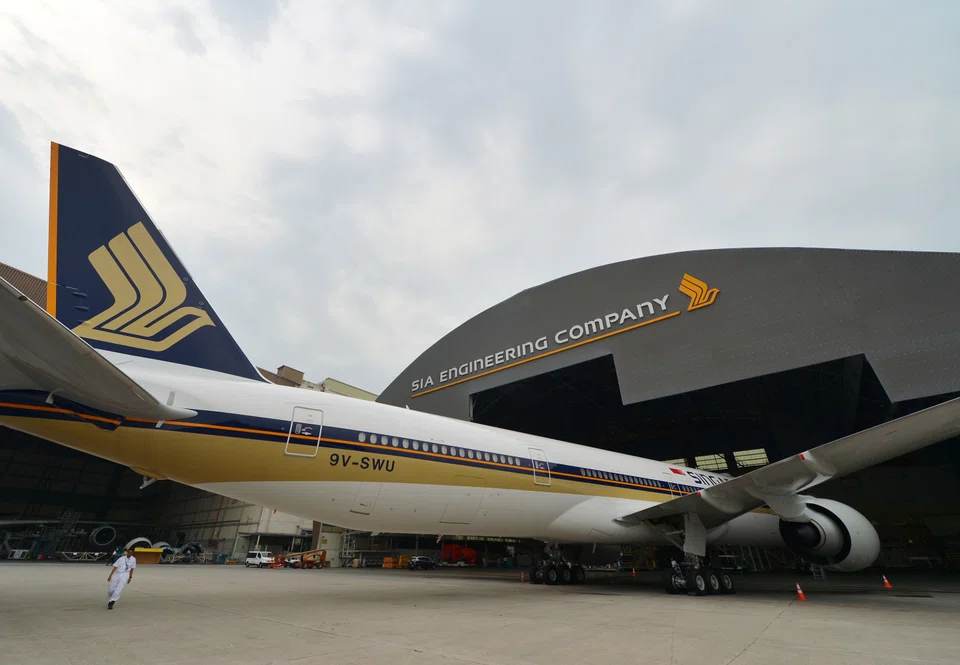
AIRCRAFT maintenance provider SIA Engineering Company (SIAEC) handled 78.7 per cent of pre-pandemic flight volumes in March this year, but the next 20 per cent of recovery will not be as certain, chief executive Ng Chin Hwee said on Tuesday (May 9).
At a media and analyst briefing, he said macroeconomic factors could weigh on further growth.
Ng noted that airlines face aircraft availability constraints and difficulties recruiting crew. Inflation and a tight labour market, meanwhile, have placed upward pressure on wages.
In the second half of the group’s FY2023, net profit fell 20.4 per cent to S$33.9 million. This was despite a 43.4 per cent rise in revenue to S$433.8 million.
Notably, staff costs rose by 51.3 per cent to S$234.4 million with the government’s pullback of its wage support measures.
Chief financial officer Ng Lay Pheng said the rise in staff costs could also be attributed to increases in headcount and overtime pay as well as the lifting of pandemic-era pay cuts and no-pay-leave arrangements.
CEO Ng stressed that the company has been able to retain workers despite the headwinds that the industry faced during the pandemic.
“The labour market, obviously, is generally very tight... The aviation industry, at one point in the depths of the (Covid-19) crisis, was no longer seen as sexy...
“That posed some challenges (as we tried) to ramp up the recruitment of technicians as well as engineers, but it has not gone to the extent of affecting or disrupting our operations,” he said.
Of SIAEC’s line maintenance operations, the CEO said staff strength is almost 90 per cent of pre-pandemic capacity.
He noted that the company has had “some measure of success” passing through some of the wage cost increases, although it is also focused on driving higher productivity.
The company managed to sign new contracts with airlines such as Qantas and Air Macau, and renew contracts with others such as Air India and Thai Airways.
Work has been significantly skewed towards light maintenance checks over heavy checks. Light checks require fewer man hours, which could potentially mean lower revenue.
The number of light checks conducted at SIAEC’s Singapore base rose 63.2 per cent to 568, while the number of heavy checks went up by only 1.1 per cent to 94.
CEO Ng said that this was due to newer aircraft – such as the Boeing 787 and the Airbus A350 – requiring fewer man hours for checks.
“One can also make money from light checks. The secret is, obviously, to stay very efficient, to stay lean in our operations.
“Where there are light checks, we make sure we compact them and try to reduce the turnaround time so that more aircraft can come in,” he said.
Despite the drive to stay efficient, supply chain disruptions may also lead to parts shortages that could affect turnaround times.
“There are clearly some issues also with supply chains and that, indeed, can constrain the ability of the shops to... achieve the turnaround time,” CEO Ng said.
But he noted that such issues have largely been manageable, although he could not foresee how long the supply chain constraints would last.
SIAEC’s share price closed S$0.07 or 3.2 per cent higher at S$2.29 on Tuesday.
A DBS analyst report released on May 9 noted that the declared final dividend of S$0.055 per share was higher than expected, implying a dividend payout ratio of 93 per cent. It also represents a dividend yield of 2.4 per cent.
The chief executive said that while the company does not have a dividend policy, it aims to restore pre-pandemic levels of dividend payouts to shareholders.