

SIA expects robust demand for near-term, peak periods this year

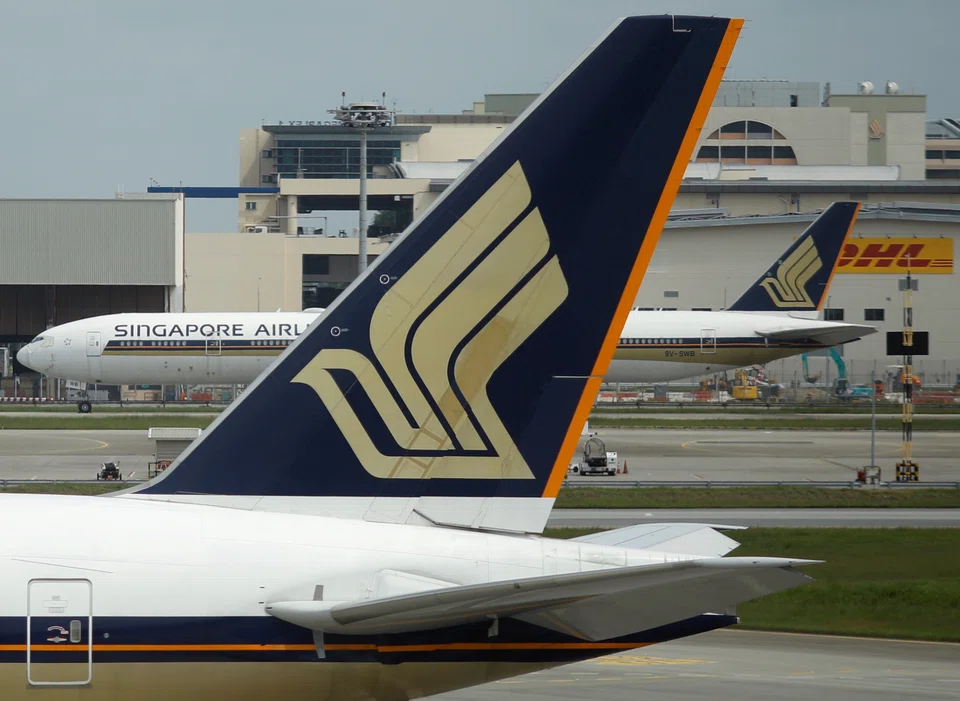
SINGAPORE Airlines (SIA) is experiencing robust demand, not only for this quarter but also for the peak travel season at the year-end, even as it ramps up capacity amid elevated passenger yields.
Lee Lik Hsin, executive vice-president of commercial operations at the flag carrier, said: “Demand is robust in the near term, and also across peak periods of the year, which include the summer and the year-end period.”
He was fielding questions at the listed airline’s briefing for the media and analysts on Wednesday (May 17), a day after the group reported record earnings for the financial year 2023 until March.
The demand for air travel in the near term is underpinned by the recovery in air travel in East Asia, SIA had said on Tuesday.
Strong demand bumped up its earnings to S$1.2 billion for the second half of FY2023, reversing a loss of S$125.2 million in the corresponding year-ago period. This has enabled the carrier to post full-year earnings of S$2.2 billion – the highest in its 76-year history – for FY2023, a turnaround from its net loss of S$962 million in FY2022.
Corporate travel has recovered “nicely”, though not yet to pre-pandemic levels, the soon-to-be chief commercial officer of SIA added. “But it is far, far above some of the very, very pessimistic projections that people had at the start of Covid.”
SIA is raising group capacity to about 90 per cent by March 2024, from about 80 per cent as at end-March. It has not resumed capacity to 100 per cent for the Chinese market yet, as it would take some time for Chinese travellers to return to the level of pre-pandemic traffic.
DBS equity research analysts said they expect a further contraction in yields, as competition intensifies: Rival airlines are ramping up their flight capacities. “However, given current supply-demand dynamics, the return to normal levels will be a gradual process, in our view.”
There was a 6 per cent to 7 per cent sequential dip in passenger yields across SIA and its budget airline Scoot in Q4 FY2023, noted the analysts. Nonetheless, passenger yields for SIA and Scoot were still 20 per cent and 37 per cent higher respectively than at pre-pandemic levels.
Costs have risen in FY2023. This includes staff costs, which have doubled to S$3.1 billion. SIA explained that the jump in labour expenditure was partly due to bonus provisions in tandem with the record performance. The group now has some 24,000 employees on its payroll, up 12.3 per cent year on year.
SIA is considering purchasing more sustainable aviation fuel, with details to be announced, although chief executive Goh Choon Phong noted that carbon offset take-up by passengers is “not very strong”.
SIA’s full-year dividend per share of S$0.38 (including the proposed final dividend of S$0.28), translating into a payout ratio of 52 per cent, has “greatly” exceeded DBS analysts’ expectation of S$0.25. It “should enhance investor sentiment on the stock”, they said.
SIA shares jumped as much as 3 per cent to S$6.10 in early morning trade – their highest in nearly three years – after gapping up when the market opened on Wednesday, compared with a 0.3 per cent decline for the Straits Times Index. Its shares closed 1.5 per cent or S$0.09 higher at S$6.01.
TRENDING NOW

Once staunchly pro-China, Malaysian Chinese businesses are now distancing themselves from Beijing
The middle power moment arrives in South-east Asia – but not for Asean

DBS, OCBC, UOB face rate hike reality check

Vietnam’s northern provinces, not Hanoi or Ho Chi Minh City, are powering near 10% GDP growth

