SIA may need funds again with slow recovery but it has several options besides tapping MCBs

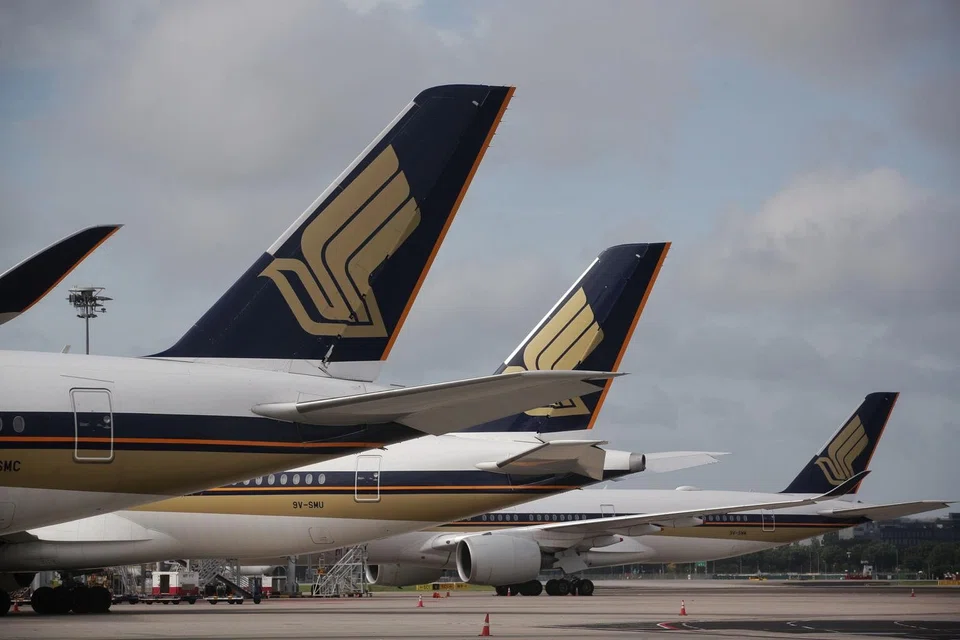
THE S$8.8 billion that Singapore Airlines (SIA) raised in a rights issue last year is almost depleted, but global air travel is not coming back in full swing soon. Fresh waves of infections are being reported across the globe, and vaccination rates have been hit by a supply snag. SIA might, therefore, need some fresh funds.
The national carrier has done a great job of raising cash so far. On top of the rights issue, it has sold bonds totalling S$2 billion. This included a maiden issue in US dollars. It has also secured financing of S$2.1 billion on some of its aircraft.
To conserve cash, SIA also deferred capital expenditure of more than S$4 billion. It has shrunk its labour force, and cut the remunerations of management and directors.
But the company's monthly cash needs are still significant. From Dec 14 to Feb 24, for instance, SIA used S$1.1 billion from its rights issue proceeds for operating, refunds, and aircraft and aircraft-related payments.
To fund its cash needs, SIA has the option of issuing another S$6.2 billion in mandatory convertible bonds (MCBs).
The approval from shareholders for this issuance will expire at the next annual general meeting (AGM) or at the date by which SIA must hold its next AGM, which is July 31.
Tapping the MCBs would allow SIA to increase its cash without adding to its debt load. SIA had total debt of S$12.2 billion as at end-December, and a net debt-to-equity ratio of 0.33 time. The MCBs would also not be dilutive to SIA's shareholders until they are converted later.
The MCBs do, however, carry a higher yield-to-call - at 4 per cent to 6 per cent. Comparatively, SIA's other bonds pay a coupon of between 1.625 per cent and 3.75 per cent.
In addition, response to SIA's issue of MCBs last year was tepid. Controlling shareholder Temasek Holdings, which underwrote the rights issue, ended up mopping up a substantial chunk of them.
By contrast, there was strong demand for SIA's issue of US dollar-denominated bonds earlier this year. The company received subscriptions of US$2.85 billion for its US$500 million issue of 3 per cent bonds.
SIA could also choose to issue more equity. Its shares have appreciated significantly enough in recent months that a new issue would not be as dilutive as before. In fact, by some estimations, SIA's shares are now more expensive than they were pre-pandemic.
One other option SIA could tap is the issuance of perpetuals. Telecoms company Singtel recently announced a S$1 billion perpetual securities offer, with an initial coupon of 3.3 per cent.
In the current market environment, SIA really has no shortage of funding options. And this is probably just as well.
Many countries are struggling to get the pandemic under control, while others have problems persuading their residents to be inoculated with vaccines that are said to pose a risk of causing blood clots.
These complications are likely dampening travel demand. SIA had expected capacity to hit 25 per cent of pre-covid levels by end-March, but it only reached 23 per cent.
It forecasts capacity to be at 27 per cent of pre-pandemic levels by June. But at that level, the airline will barely be able to break even.
Although Singapore is in talks to create air travel bubbles with several territories - including Australia, Taiwan and Hong Kong - these quarantine-free arrangements would hardly move the needle for SIA given the controlled number of travellers that would be allowed initially for governments to assess the situation.
The take-up rate for these bubbles may also be low, depending on the rules associated with them. For example, Hong Kong intends to make it mandatory for its residents to be vaccinated as a condition for the travel bubble in its attempt to encourage jabs.
Taiwan's bubble with Palau didn't pan out as well as the governments had envisaged, despite having been launched with fanfare and receiving a warm response initially. The bubble was reportedly weighed down by onerous restrictions and high travel costs, registering as few as a single digit of Taiwan travellers at times. Flag carrier China Airlines was forced to scrap at least one unprofitable flight with only two bookings.
The runway to recovery for airlines appears long, and SIA may want to seize the opportunity in the current environment to add to its cash holdings.