SIA's minority investors have a chance to ride air travel recovery under Temasek's wing

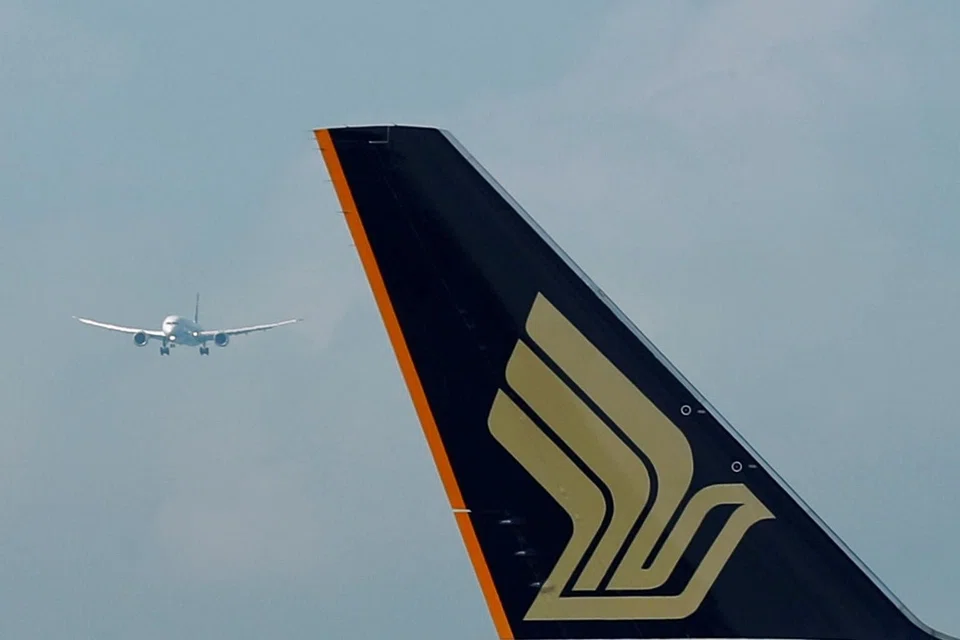
STATE investor Temasek Holdings has spent over S$12 billion underwriting the rights issues of flag carrier Singapore Airlines (SIA).
That is more than SIA's market value of under S$8 billion at the time its cash calls were announced last year.
Would minority shareholders of SIA have been better off if Temasek had just taken SIA private? And should they now be clamouring for a privatisation?
Probably not.
In fact, minority shareholders stand a chance of riding a recovery made possible with Temasek's funding.
Comparisons with SMRT
Securities Investors Association (Singapore) or Sias recently asked if the airline, which has been listed on the Singapore Exchange mainboard since 1985, had considered a privatisation.
Sias had drawn parallels to public transport operator SMRT Corporation, which was privatised in 2016 by Temasek.
Shareholders of SMRT had been offered S$1.68 per share - a premium of 15.5 per cent to the stock's 12-month volume weighted average price just before the offer was announced.
The comparisons of SMRT and SIA may seem logical given that both companies are strategically important to Singapore as vital elements of our transport network.
Both also have a common controlling shareholder. But that is where their similarities end.
At the time it was privatised, SMRT's bottom line was on the downtrend and its management had been guiding that red ink was imminent because of expected capital expenditure and changes to the operating models for the public transport network.
The company was then profitable, but its prospects as a duopoly - operating alongside mainboard-listed SBS Transit in the local market - were limited. It could neither set its own fares nor control the number of commuters it served.
The situation at SIA, however, is quite the reverse.
SIA may appear to be in worse financial shape than SMRT. And its immediate prospects are limited.
It is facing its greatest headwinds since 1947, when it began services as Malayan Airways.
But the company operates in a global travel market in which it can control its ticket prices and passenger numbers - and indeed it has done so very effectively over the years.
It had mostly been profitable before the pandemic, and the worst has probably passed. The carrier may be down, but it is definitely not out.
Backing from Temasek
Minority shareholders who bought SIA's shares when they were at a five-year high of S$8.30 (adjusted for corporate actions) in 2018, are certainly sitting on large paper losses today.
And it isn't clear yet the extent to which SIA will recover.
But for many other shareholders, Temasek's willingness to back SIA is likely to be a plus in the long run.
For one thing, Temasek's subscription to the company's mandatory convertible bonds is keeping the airline afloat without immediately diluting the minority. By underwriting the recent rights issues, Temasek has also allowed SIA to raise much-needed funds while still giving shareholders the opportunity to get some very cheap shares.
SIA is now better capitalised and may have the advantage over some of its peers as global travel returns.
With the strength of Temasek behind it, it also has the ability to raise the funds it needs - apparent from recent fund raisings at low coupon rates.
SIA's flight path to recovery may yet be disrupted by some detours in the form of new variants of the coronavirus. But vaccinations are being rolled out, and there is pent-up demand for air travel.
At this point, the downside risk for SIA is much smaller than it was - and the upside potential for investors much greater.