Sias: Minority shareholders should reject offer for Global Palm shares
 Add BT as a preferred source
Yong Hui Ting
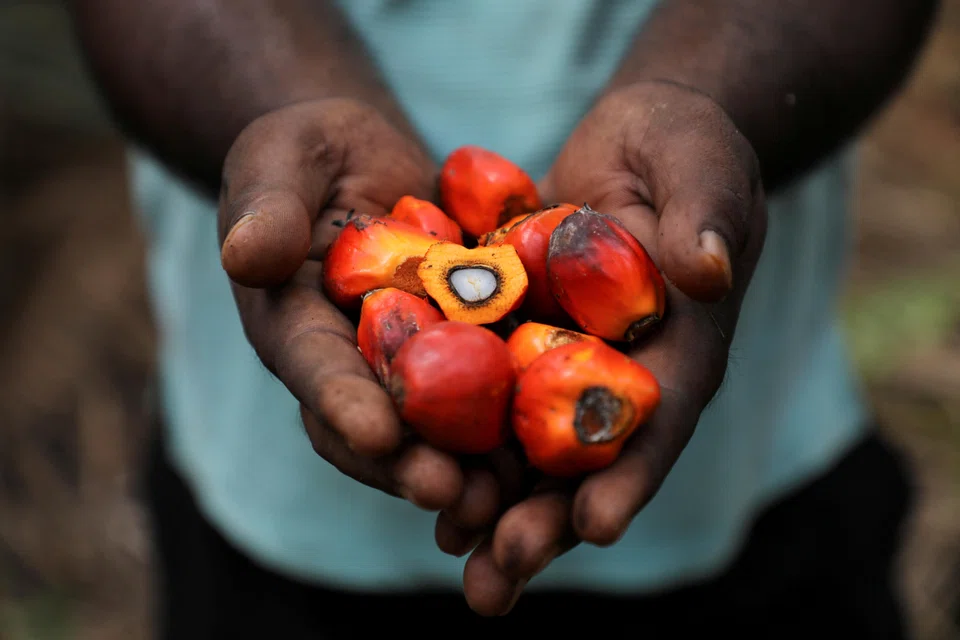
MINORITY shareholders of mainboard-listed Global Palm Resources (GPR) should reject the offer by its chief executive and family members to take the company private at S$0.25 per share, said the Securities Investors Association (Sias) in a statement on Monday (May 8).
The investor watchdog is also asking the offerer to raise its offer price, as it deems the present offer as “clearly wholly unsatisfactory”. It also disagrees with the evaluation of the independent financial adviser, Provenance Capital, that the offer is “fair and reasonable”.
To recap, the palm oil producer earlier launched an offer to take the company private through special-purpose vehicle ATH Holdings – an investment vehicle of certain members of the Adijanto family and the holding company of GPR.
At the time, ATH Holdings had irrevocably undertaken to accept the offer for its shares amounting to 206.9 million, or 83 per cent of total issued shares in the company, excluding treasury shares. It also intended to exercise its right to compulsorily acquire all the shares if it owns or controls 90 per cent or more of the issued shares.
The offer to buy shareholders’ out should be at a level where there is “adequate margin for offerors to extract value from their purchase, but also sufficiently high so that shareholders do not end up feeling short-changed”, said Sias. The watchdog group does not think the current offer price meets any of these conditions.
It noted that in the IFA’s evaluation of the offer, only two Singapore-listed companies were taken into consideration due to the arbitrary market cap limit of S$500 million. Eight other companies listed on the Indonesian Stock Exchange were also considered.
“Sias acknowledges this is a judgement call, but urges shareholders to ask themselves whether it really is appropriate not to consider firms listed in the home market in favour of several in an overseas market when arriving at valuation metrics,” it said.
Further, when compared to recent going-private transactions on the Singapore Exchange, GPR’s offer price is the second lowest in terms of price-earnings ratio and substantially below the mean price-to-earnings ratio.
Sias also noted that during GPR’s initial public offering in 2010, the company listed at the price of S$0.46 per share – a 118 per cent premium over its net asset value (NAV) then. The current offer price of S$0.25 per share represents a 22 per cent discount to the current revalued NAV of around S$0.32.

“The question has to be asked: If the company could raise money from the public at a price that was a large premium to asset value, then why should it be allowed to buy everyone out now at a discount?”
At the time of offer, the Adijanto family cited the exercise as an opportunity for shareholders to liquidate and realise their investment at a premium to prevailing trading prices.
Delisting the company will give management greater control and flexibility to improve efficiency and competitiveness; the company will also save on the compliance costs that come with its listing status, it said.
Shares in GPR closed unchanged at S$0.25 on Monday.
Decoding Asia newsletter: your guide to navigating Asia in a new global order. Sign up here to get Decoding Asia newsletter. Delivered to your inbox. Free.
Copyright SPH Media. All rights reserved.