

Sias to revive independent equity research 'a year from now'
CEO David Gerald says setting up of unit is in response to retail investors' demand and it should be fully sponsored by the authorities.
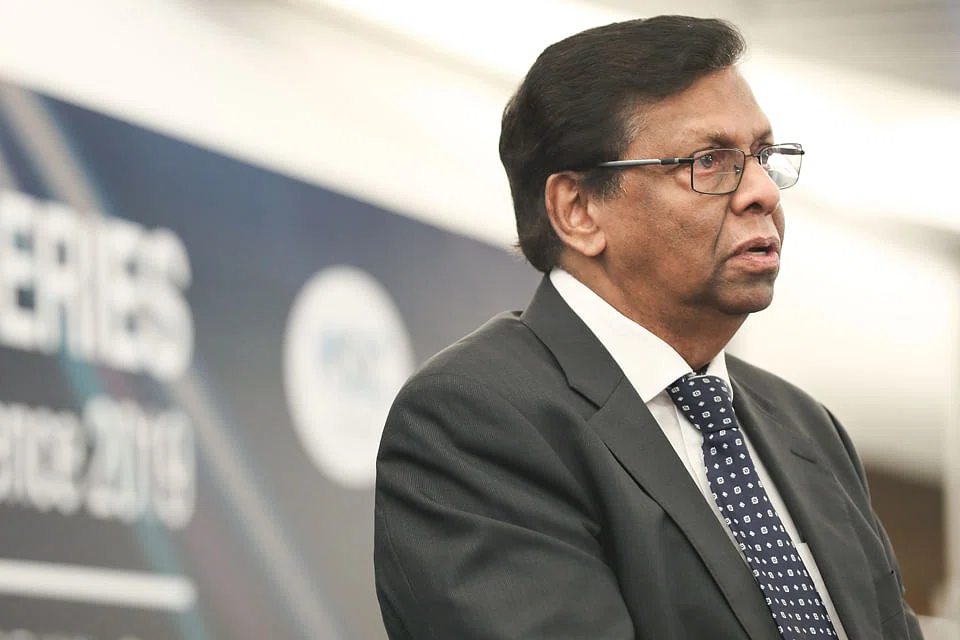
RETAIL investor watchdog Securities Investors Association (Singapore) is resurrecting its equity research unit to resume coverage on small to mid-cap Singapore-listed companies, which it had shut down back in 2013 when brokerage-backed research was ubiquitous.
In an interview with The Business Times, David Gerald, Sias founder, president and CEO, says he is eyeing a small outfit and is essentially doing this in response to retail investors' demand.
The outfit will likely comprise one research head with at least eight to 10 years of experience, together with four analysts, one administrative officer and another event management person to run the unit.
It would probably cost S$1.2 million to S$1.3 million a year to operate. Funding is a perennial problem, but instead of relying on subscriptions like the previous time, Mr Gerald thinks this venture should be fully sponsored by the authorities.
Sias is still in discussions with the Monetary Authority of Singapore (MAS) on the funding. After finalising that aspect, Mr Gerald hopes to launch the equity research unit within a year from now.
Incidentally, at the start of this year, Deputy Prime Minister Heng Swee Keat, who is also finance minister, had launched an initiative to be funded by MAS and administered by the Singapore Exchange, which includes a research talent development grant primarily to cover listed mid- and small-cap enterprises.
Under this grant, MAS will fund 70 per cent of the salaries of fresh graduates hired as equity research analysts, as well as 50 per cent of salaries for re-employed and experienced analysts.
The central bank will also earmark funds to crowdsource initiatives aimed at boosting the equity research ecosystem, supporting research such as industry or sector primers, and other innovative ways to distribute research and disseminate enterprise information to investors.
Mr Gerald is for the idea, noting that there is a vacuum in the coverage of small and mid-caps. Even many large-caps are not covered because local securities companies have downsized their analyst staff strength and ceased coverage on many counters, he notes.
"We can make use of this in the initial stage of funding, since we need independent funding and not corporate funding ... But in the long term, it has got to be fully funded by an independent source still," he says.
Its previous research venture had ended due to lack of funding. In 2004, Sias started a subscription-based research where subscribers paid S$120 a year to receive recommendations on listed stocks. At the time, the initiative was also funded by the SGX-MAS Research Incentive Scheme, which stopped after three years. In 2013, the research arm ceased operations. Its chief analyst, Roger Tan, then began a research company known as Voyage Research.
But Mr Gerald has learned from his past experience. He says the impending equity research unit within Sias would have to be an independent body with an independent board and a Chinese wall that separates it from Sias' other dealings with listed companies.
"Sias doesn't interfere with its findings, nor read its reports. That's how we did it before," he says.
One could say investor education ran in Sias' veins right from the beginning. Investor education has been a priority for the association since the 1990s when it was birthed from the Clob (Central Limit Order Book) saga after Malaysia imposed capital controls in the Asian Financial Crisis and froze Clob shares worth billions of ringgit, held by around 172,000 Singapore investors.
Today, Sias is still credited as having played an instrumental role in helping the mom-and-pop investors recover some or most of their money.
But Mr Gerald says one thing the Clob saga revealed was how ignorant Singaporeans largely were about investing. They had little or no knowledge about investing and willingly parted with their hard-earned money without really understanding what they were investing in and the accompanying risks. This includes himself, he admits.
"They only had one thing in mind - to make money quickly... They were gambling." He decided then that Sias' primary role should be to educate the public on investing. A more authoritative and informed voice needs to replace the "coffee shop analysts" who were at the time zealously recommending stocks to people.
"I myself would go to a car repair shop and hear fellows talking about stocks. Out of curiosity, I would ask them what they think I should invest in, and they would give me a list of stocks with no knowledge of governance in the companies, business strategies or performance.
"It was all just rumour-mongering, so naturally many people lost money in the stock market, because they did not know how the market works."
Around that time, the government had also decided to deregulate the stock market, along with the financial sector, to promote competition and enterprise and give international institutions more incentive to root more activities in Singapore.
This led to a shift in Singapore's capital markets to become a caveat emptor, or "buyers beware", market, running on "minimum protection and maximum knowledge". The onus was on investors to understand product features and risks before making an informed decision.
For this reason, the government started MoneySense, Singapore's national financial education programme, in 2003. Sias has worked with MoneySense on various community education programmes such as MyMoney series, My Money @ Campus in 2018, an investment scam education campaign in 2017, and also a financial planning programme for families for six years.
As part of its investor education efforts, and to improve annual general meetings and the engagement between the board and shareholders, Sias has also made it a point to pose questions on governance, business strategies, and financial statements on annual reports. To date, it has sent more than 1,000 sets of questions to about 600 companies.
Presently, on the authorities' advice, it is also trying to avoid getting funding from listed companies by providing in-kind services, although it continues to receive donations as a charity. This will become more vital when the association starts making recommendations on listed companies, Mr Gerald says.
READ MORE: Sias Investors' Choice Awards 2019
TRENDING NOW
Who is Leo KoGuan, the Singapore-based billionaire backing Nvidia’s Jensen Huang?

Demand, tech capabilities position Apac and AI as Skyscanner’s next growth frontiers: CEO Bryan Batista

Higher rates, weaker spending: Is the Philippines entering stagflation?

South-east Asia has lost Nvidia’s best salesman

