

Singapore banking system remains ‘sound and resilient’ amid SVB collapse: MAS

Tan Nai Lun
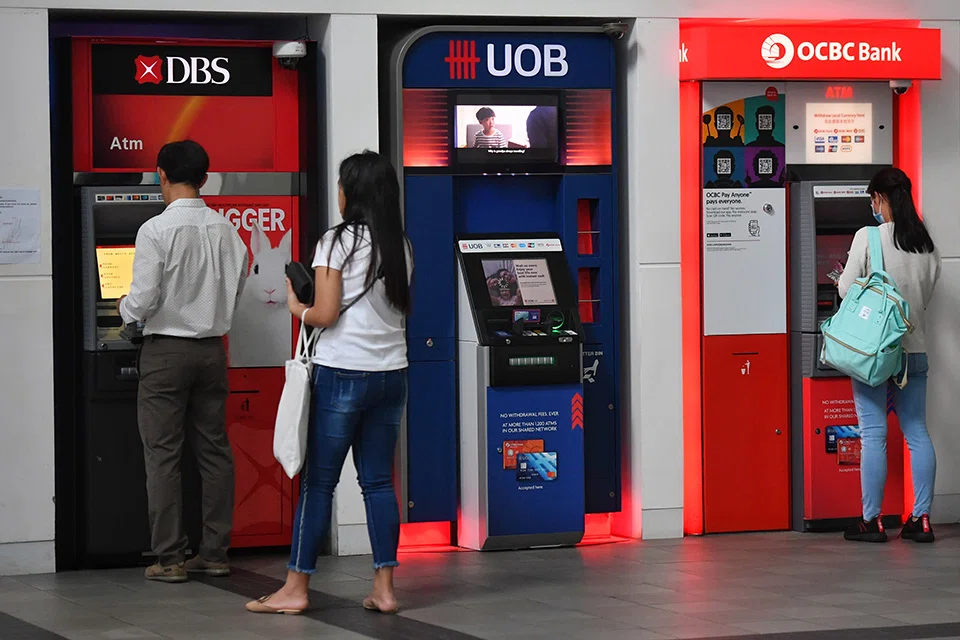
THE Singapore banking system remains “sound and resilient” amid the recent collapse of Silicon Valley Bank (SVB) and a couple of other small banks, said the Monetary Authority of Singapore (MAS) on Monday (Mar 13).
Analysts also expect SVB’s fallout to have limited impact on Singapore’s banks, given fundamental differences between the local lenders and SVB.
In a statement on Monday, MAS said the Singapore banking system has “insignificant exposures to these failed banks in the US”.
All three of Singapore’s locally listed banks confirmed they do not have direct exposure to SVB, Signature Bank or Silvergate Bank. DBS also said its loan exposure to startups is “immaterial”.
Singapore’s banks are also likely able to weather potential stresses from global financial developments given that they have healthy liquidity positions, are well-capitalised and conduct regular stress tests, MAS said.
Adding that it is monitoring developments, the authority said: “MAS stands ready to provide liquidity through its suite of facilities to ensure that Singapore’s financial system remains stable, and financial markets continue to function in an orderly manner.”
Mid-sized regional lender SVB, which specialised in serving startups, is the largest US bank to fail since the 2008 global financial crisis.
Less than 48 hours after the bank announced plans to conduct a capital raise, a wave of withdrawals sent its stock spiralling. SVB was shut down by the California Department of Protection and Innovation last Friday, with the Federal Deposit Insurance Corporation appointed as receiver.
The US government has since stepped in to say all depositors will be protected, and will have access to their funds on Monday.
Meanwhile, SVB was said to be exploring options, including a sale, after its efforts to raise capital through a stock sale failed. HSBC has already said it will acquire SVB’s UK subsidiary for a nominal £1 (S$1.62).
United States regulators have also shuttered New York-based Signature Bank and promised similar protections to its depositors, as they aim to curtail panic and stabilise the financial system.
Analysts remain positive on Singapore’s banking sector, however, given that SVB’s business model is fundamentally different from that of the local banks.
DBS analyst Lim Rui Wen said Singapore banks have a strong capital base with a well-diversified customer deposit franchise, whereas SVB had a huge customer concentration in venture capitalists or tech-related companies.
Sam Wong, equity analyst at Jefferies Equity Research, also expects the impact on Singapore will be very limited, as the fallout is a result of aggressive treasury market operations compounded with concentration risk on the deposits side, which are both specific to SVB’s business model.
The Singapore lenders also have better risk management processes and asset liability management.
Glenn Thum, research analyst at Phillip Securities Research, noted that the three Singapore banks are required by MAS to meet its minimum Liquidity Coverage Ratio (LCR) requirements, while SVB was not subjected to the US Federal Reserve’s LCR requirement as it did not have at least US$75 billion in non-bank assets.
The Singapore local banks’ LCR – of about 144 per cent as at Dec 31, 2022 – would mean that they would be able to withstand a surge in deposit outflows in a worst-case scenario, Thum said.
The Singapore lenders also have a majority of their assets in loans, while SVB has a large concentration of assets in “held-to-maturity” securities, he said.
Amid rising interest rates, Singapore banks were also able to pass on the higher funding costs directly to their customers as the majority of their loans were on a floating rate and the remaining fixed rate loans could be repriced, Thum added.
Analysts at Lim & Tan Securities said any share price decline in the Singapore banks should be seen as an opportunity to accumulate the counters. The research team expects the local lenders’ strength to weather the contagion effect of a bank run, while the fallout is unlikely to cause a financial collapse as SVB’s depositors have been guaranteed with the setting up of a new lending programme by the Fed.
Thilan Wickramasinghe, Maybank Securities Singapore head of research, said he does not expect the fallout to be a major risk, but added that he will still watch for second or third-degree impact. This includes the banks’ exposures to private equity companies, which may have startups in their portfolios that may face a liquidity crunch.
The research team at Lumen Capital Investors said the fallout will likely impact interest rate hike expectations for the upcoming Fed meeting. It expects more banking stress in the next few months, as further quantitative tightening by the Fed is likely to also drain more liquidity out of the banking system.
“The collapse of SVB and the fear of contagion in the US banking sector have put the Fed in a difficult position, with investors hoping for a change in monetary policy. But this change is unlikely to happen as inflation pressures are too high for the monetary policy to soften for the time being,” the team said.
Citi Global Wealth Investments also expects the Fed to take note of SVB’s failure, but does not assume that the monetary policy tightening cycle needs to be reversed at this time. “This is even as we expect SVB’s losses to have direct negative economic impact for firms closely linked to it,” the Citi Global Wealth Investments team said.
Shares of the trio of local banks ended Monday in the red. DBS fell 1.5 per cent to S$32.70, UOB lost 1.4 per cent to S$28.29, and OCBC slid 1.7 per cent to S$12.16.






