

Singapore banks all set to embrace potentially new sustainability disclosure standards
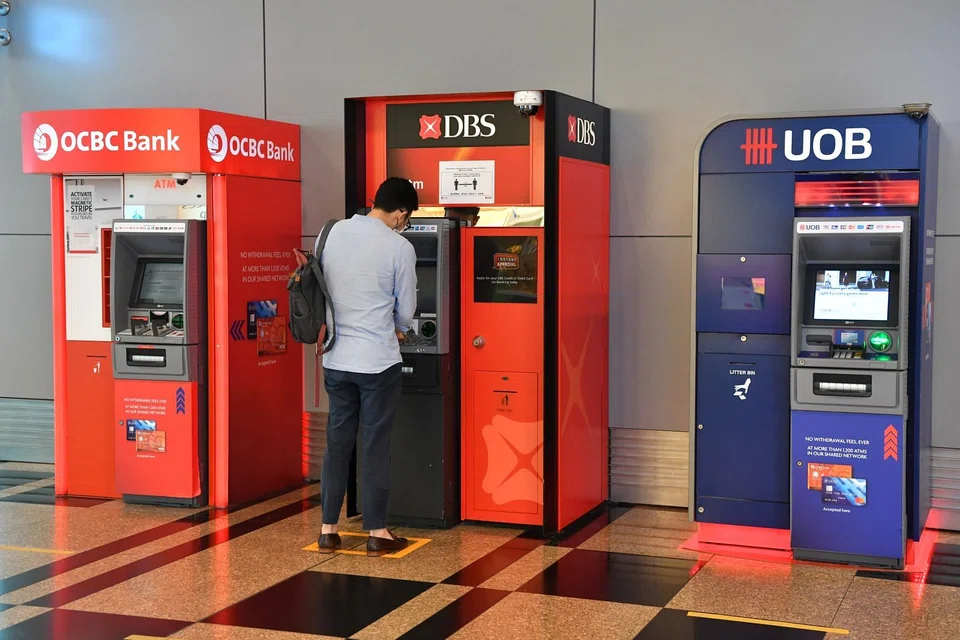
SINGAPORE's banking trio seem all set to embrace the new international sustainability rules that are up for debate and could potentially obligate financial institutions to publish estimates of the carbon emissions linked to loans and investments.
DBS chief sustainability officer (CSO) Helge Muenkel told The Business Times that the bank views the measurement of financed emissions, alongside other ESG data, as "instrumental" in managing the climate crisis. "We believe mandatory climate reporting is imperative, as what gets measured and reported, gets managed," he added.
"What gets measured, gets done", said UOB's CSO Eric Lim, quoting an old saying. He opined that the need for disclosure can drive greater action by banks to shape business practices and enhance risk management capabilities to support clients in global, regional and sectoral transitions.
"Clear, industry-driven reporting standards will help us to ensure that our disclosure addresses the expectations of regulators, investors and broader stakeholders and that they understand the resilience of banks in a low carbon economy," he continued.
OCBC's group head of risk policy Chng Bee Leng said the bank welcomed the efforts by "standard setters and regulators to harmonise rules, raise capacity, and improve data availability, quality and methodologies in support of this new reporting regime."
They were responding to rules laid out in the first draft of the proposed standards on climate-related disclosure requirements published by the International Sustainability Standards Board (ISSB) on Mar 31.
Proposed standards
The ISSB was established during last November's United Nations Climate Change Conference (COP26) to develop a comprehensive global baseline of sustainability disclosures for capital markets.
The efforts will put an end to accusations of "standards-shopping" by companies seeking to flatter their environmental impact and downplay the risk that climate change poses to businesses.
The first draft of the standards sets out that commercial banks would have to disclose several metrics including gross exposure to "carbon-related" industries, absolute gross greenhouse gas emissions and percentage of gross exposure included in the financed emissions calculation among others.
Some of the "carbon-related" industries include oil and gas; chemicals, construction materials, metals and mining, and forest products; air freight and airlines; automobiles; food and beverages products; homebuilding and utilities.
The draft standards are up for public consultation until July 29, with the board eyeing the rollout of a final version by the end of this year.
Singapore Exchange's (SGX) market strategist Geoff Howie said financial sectors across the globe will be exploring the feasibility of such standards, and may even take the opportunity to suggest alternatives.
But the broad expectation is that obligations will be rolled out gradually, in a way that meets the jurisdictional obligations, while facilitating the global trend towards green energy, he said.
SGX currently requires companies to provide climate-related disclosures based on recommendations of the Task Force on Climate-Related Financial Disclosures (TCFD) on a 'comply or explain' basis, which the ISSB draft was partly built upon.
"Biggest challenge since Dodd-Frank Act"
Observers said the ISSB is making a big ask as the provisions include Scope 3 emissions, which cover all other indirect emissions that occur in a company's value chain.
Selena Ling, head of treasury research and strategy at OCBC, raised concerns over the challenges in the monitoring and analysing relevant data.
Notwithstanding the tediousness, there appears to be some consensus in the industry that the exercise would be meaningful, as the data could be used as a proxy to real economy sectors, where broader climate actions must be undertaken and monitored.
Cherine Fok, director of sustainability services at professional services firm KPMG Singapore, remarked that the obligation would come as the financial institutions' biggest data collection challenge since the Dodd-Frank Act was enacted in 2010.
Fok reckoned that it would make banks "much more judicious" in investing and lending activities, ensuring clients meet clearly defined green criteria.
Indeed, Muenkel told BT that DBS has established a taxonomy that defines sustainable economic activities. It states what the bank wants to do more of and what it wants to do less of, and this will change how banks service their clients.
"We see this as a collaborative tool to empower our clients to transition," Muenkel said, adding: "We've observed that companies that embrace sustainability often create better and more innovative products and services, and by doing so, not only future proof their capital structure, but their business model as a whole."
Melissa Low, a research fellow at the NUS Centre for Nature-based Climate Solution, said that when banks stand behind such standards, it sends yet another signal to carbon-intensive companies that shifts need to be made.
Under the current environment, these companies might already be facing severe challenges to their valuations and ability to repay loans due to high carbon taxes or emissions trading schemes and other climate legislation, she noted.
Guiding data
While some might question the practicality and meaningfulness of the financed emissions metric, National University of Singapore visiting professor Vinod Thomas said it makes "eminent" sense to track emissions indirectly promoted by financing for two reasons.
One, the volume of such financing is large - by one estimate, greenhouse gas emissions associated with bank investment, lending and underwriting are 700 times higher than their own direct emissions, he pointed out.
Two, ignoring the effects of lending and only focusing on direct emissions by business entities "misleads on the origins of the damage", he said. China is the largest financier of power plants, oil, gas, and coal, and Japan and the US follow closely behind, he pointed out.
"If there is to be a fighting chance to achieve zero net carbon emissions by 2050, banking and finance need to cut back on their lending for carbon intensive activities and scale up the financing for clean energy and economic activities," Thomas continued.
Publication of both the carbon intensity of the fuels financed and the amount of such financing will be essential guides for the needed transformation, he stressed.
Dr Ryal Wun, the deputy executive director and legal director of Global Compact Network Singapore (GCNS), said requiring financial institutions to be transparent about emissions-linked loans "can only send the right signals".
His sense is that many banks - local or otherwise - are already conscious of the important role they play in creating a better world and safeguarding the global commons, and are prepared to "do the right thing".
In suggesting ways to ensure the effective tracking of financed emissions, OCBC's Ling said local authorities could provide guidance where there are challenges relating to data availability and sources. The authorities could also ensure that accounting methodologies and variables, such as grid emission factors, are consistent with national methodologies which contribute to Paris Agreement goals, she pointed out.
TRENDING NOW

Philippine power giant First Gen rebuffs foreign offers, plans up to US$2.6 billion in expansion

Cliff Tan has 7 million followers and a 4-month waitlist. Why won’t he expand his business?

Could stablecoins be the future of money?

From finance aspirant to Asean CEO: TUV SUD’s Jonas Strahberger on finding people who believe in you

