

For Singapore banks, a lesson on greater transparency from Jamie Dimon
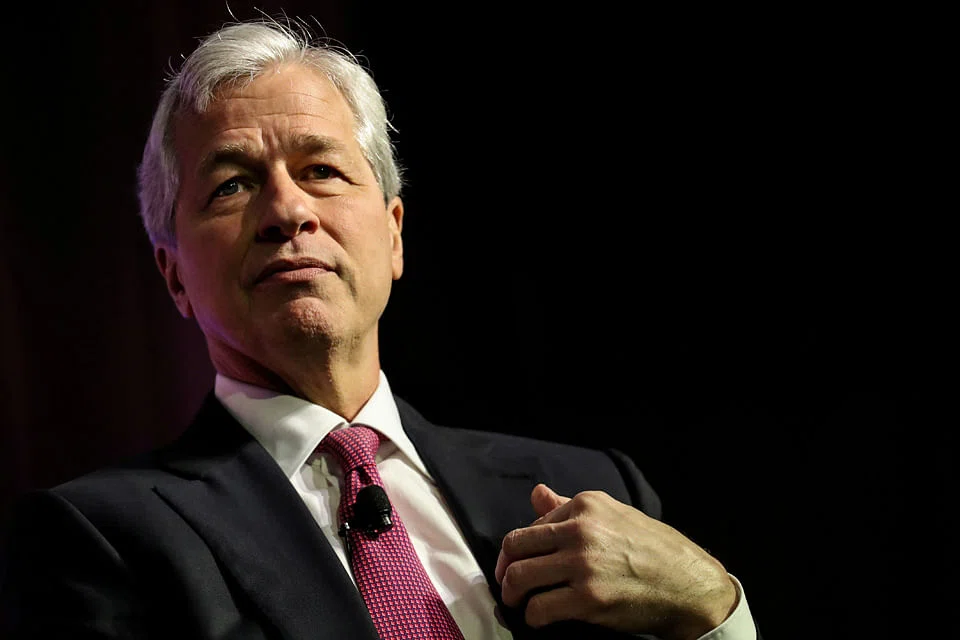
JPMORGAN'S long-standing CEO Jamie Dimon on Monday set out a 23-page shareholders' letter that outlined how the US bank is managing the crisis at hand, as brought on by the global virus outbreak.
It is a lesson on transparency, and a critical one that Singapore-based banks can look to as an example for how lenders here can discuss the impact of the novel coronavirus. For when measured against a display of corporate openness, Singapore banks can push themselves further in explaining the impact of the virus outbreak since the start of this year.
What are the salient pieces of information that banks should soon be much clearer about? These would include the impact on their operations under stressed circumstances, the prospects for shareholders, support for their staff and their jobs, as well as the extent that they have put out relief measures for customers.
In order to discuss this, let's return to the letter from Mr Dimon, in which he discussed how much the bank has offered to small businesses. In the past 60 days, the bank has extended US$950 million in new loans to small businesses, while waiving and refunding relevant fees.
To add, companies have already drawn down more than US$50 billion of their credit revolvers to prepare themselves for the crisis, with this already "dramatically" exceeding what happened in the global financial crisis. This provides perspective on the extent of the unprecedented crisis.
Mr Dimon also set out the bank's capital position under stressed test scenarios. Under an "extremely adverse scenario" that assumes a maximum 35 per cent contraction in GDP in the second quarter, and that US unemployment would keep rising to its peak at 14 per cent in the fourth quarter, JPMorgan would still end the year with strong liquidity and a common equity Tier 1 capital ratio of about 9.5 per cent.
This scenario is so despite assumptions that the bank will continue to lend an additional US$150 billion.
In such a scenario, Mr Dimon was open that the bank's board would consider suspending its dividend payout, even as it is a small claim against the bank's capital base, out of prudence. He spoke about the bank's share buyback policy, again stating that while the bank holds the position that "the highest and best use of our equity is to reinvest it in our own business and... to be able to withstand tough times", the choice of halting buybacks was simply a very prudent action.
"At a minimum, we assume that (the future) will include a bad recession combined with some kind of financial stress similar to the global financial crisis of 2008. Our bank cannot be immune to the effects of this kind of stress," he said.
He prepared shareholders for short-term volatility in the bank's share price, while highlighting that over five, 10 and 15 years, the stock has significantly outperformed the Standard & Poor's (S&P) 500 Index and the S&P Financials Index.
Finally, on employees, Mr Dimon committed to continue paying branch employees for their regularly scheduled hours, even if those hours are reduced or their branch is temporarily closed.
The bank gave all employees five additional paid days off to help manage personal needs such as seeking out childcare.
And it granted a one-off payment of up to US$1,000 to full-time and part-time employees with an annual cash compensation of less than US$60,000, and whose jobs require them to continue working on-site.
Mr Dimon's letter is worth reading. It is also worth turning one's attention back to banks with major operations in Singapore, and asking if they can be more forthcoming on how they are managing the crisis. All banks are fighting fires, yet Mr Dimon - who is recovering from heart surgery - has managed to see that such communication is made a priority.
Singapore-listed companies have been urged by regulators here to provide timely disclosures on the impact of operations from the virus outbreak. For now, the banks have not reported downgrades in their revenue assessments made in February. In the time passed, the virus outbreak has morphed into a global pandemic.
And while relief measures have come fast and furious here, banks can pick up the pace in pushing out meaningful numbers on just how much credit has been extended to needy customers.
Small businesses have gone on record to detail how restrictive the handcuffs from banks remain. In these times, every day counts. No one disputes that banks have to take sound credit decisions, but how they lift certain covenants or handcuffs when businesses need such flexibility the most is something to be watched.
Meanwhile, there are now a tiny handful - and hopefully, isolated - of cases of bankers trying to masquerade some discounts or incremental measures as "relief". These discounts help, but they don't go the whole hog. More importantly, this is not a publicity campaign to be won.
Furthermore, while JPMorgan has laid out ways it will help its employees through this time, and financial institutions such as Citi, Morgan Stanley and Visa have pledged no layoffs, we haven't heard the same assurance from the banks here.
To be clear, the local banks have provided some information. But this has been to varying degrees, and in dribs and drabs. If the banks are indeed pulling all the stops to assist customers and assure their staff, they should communicate their actions.
Banks that will stand out in difficult times are those that are clear and transparent about the pain ahead, demonstrating leadership that walks hand-in-hand with businesses, shareholders, and employees.
And as Mr Dimon rounded up his letter talking about his fervent hope for America, financial institutions based here should take this time to articulate their commitment to the survival of Singapore. In this time of crisis, banks must be clear on the heavy responsibility that lies on their shoulders, and be ready to speak to it with stout conviction.






